Qatar and Tehran confirm framework for U.S.–Iran memorandum, with signing set for Friday in Geneva
Iran says the text of the so-called Islamabad memorandum has been finalised and will be signed Friday in Geneva. Qatar's prime minister publicly welcomed the framework, with Pakistan thanked for brokering the conditions.
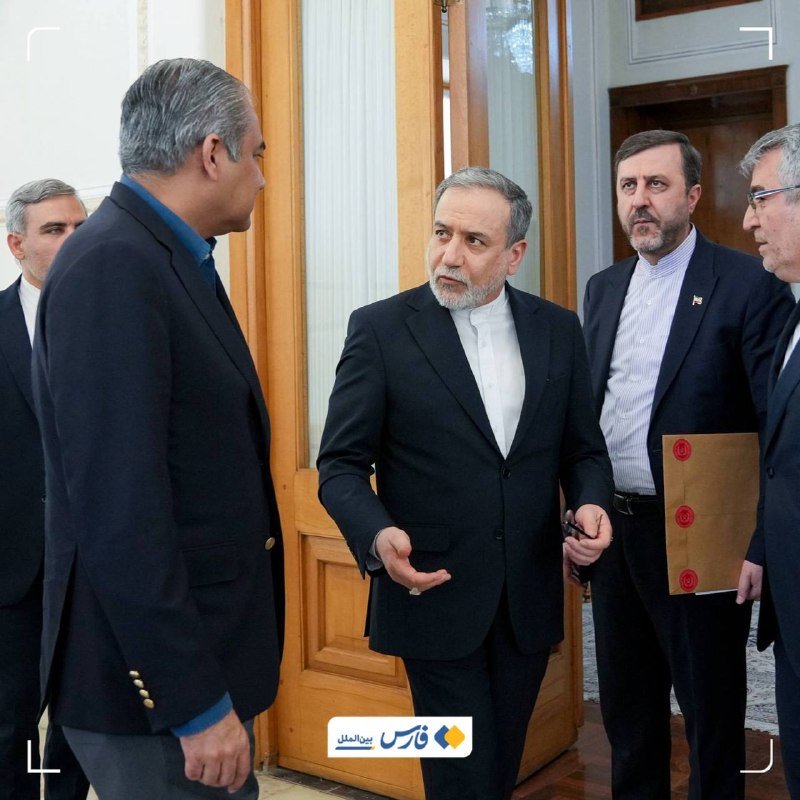
Iran's deputy foreign minister for legal and international affairs, Kazem Gharibabadi, said on the evening of 14 June 2026 (UTC) that the text of a memorandum of understanding negotiated in Islamabad has been finalised and will be signed in Geneva on Friday, with the formal ceremony to involve the main parties to the document. The announcement, carried by Iranian state-linked outlets, comes hours after Qatar's prime minister, Sheikh Mohammed bin Abdulrahman Al Thani, publicly welcomed the framework, naming Pakistan among the regional and international partners that helped create the conditions for the deal.
What is now being signed, on the evidence available so far, is a memorandum rather than a final agreement. The distinction matters: a memorandum commits the parties to a shared text and a path forward, but the underlying disputes that brought Washington and Tehran to the table — the future of Iran's enrichment programme, the fate of sanctions, the question of verification — are not declared closed by the act of signing. Friday's ceremony is, in effect, a checkpoint. The hard work, if it happens at all, follows.
Who has said what, and when
Gharibabadi's remarks, aired on the channel Al-Alam and relayed by Iranian outlets, framed the past several weeks of shuttle diplomacy as having produced a single, agreed text. He said the official signing of the "Islamabad Memorandum of Understanding" would take place on Friday in Geneva between the main parties, with the deputy ministers of foreign affairs present. The phrasing is precise: it is a deputy-ministerial signing, not a foreign-ministerial one, and the venue is Geneva, not the Pakistani capital where the document is named after.
Qatar's endorsement arrived within minutes of the Iranian confirmation. Sheikh Mohammed bin Abdulrahman, in remarks reported by both Iranian state-linked wire Tasnim and the open-source channel Open Source Intel, said Doha "welcomes the agreement reached on the Memorandum of Understanding between the United States and Iran," and thanked Pakistan, alongside other regional and international parties, for enabling the agreement. He called on all sides to engage constructively. The near-simultaneous timing of the Iranian readout and the Qatari endorsement, around 22:20–22:23 UTC on 14 June 2026, suggests the public framing was coordinated in advance — a familiar pattern when a Gulf state is acting as a channel of communication and wishes to claim credit without inserting itself into the substance.
The Pakistan factor
The repeated naming of Islamabad in the document's title and the gratitude extended to Pakistani diplomacy mark a notable shift in the regional architecture of this file. Pakistan is not a formal party to the long-running standoff over Iran's nuclear programme, nor a signatory of the Joint Comprehensive Plan of Action. But its foreign ministry has, over the past several months according to regional reporting, hosted multiple rounds of indirect talks; the choice to brand the document the "Islamabad Memorandum" is, in diplomatic language, an attribution of authorship.
For Islamabad, the upside is real. A nuclear-armed state of more than 240 million people, sitting on Iran's eastern border and on the fault line between South Asia and the Gulf, gains a recognised role in a file usually monopolised by European intermediaries. For Tehran, the move offers a venue less freighted with the political legacies of the 2015 deal, which was negotiated in Lausanne and Vienna under the E3+3 framework. For Washington, the arrangement holds the line that any return to a binding arrangement requires text it can defend domestically — a bar the memorandum's text, by virtue of being non-binding, is easier to clear.
What the substance is — and is not
None of the wires circulated on the evening of 14 June 2026 disclose the content of the memorandum. The Iranian deputy minister characterised the past weeks of negotiation as having produced a finalised text, but did not summarise its provisions. The Qatari statement confined itself to a welcome and an expression of thanks. The absence of detail is not, in itself, unusual: a memorandum of understanding is, by definition, a statement of intent rather than a legally binding instrument, and the parties often prefer to keep the language private until a fuller agreement is in sight.
What can be inferred, cautiously, is that the framework addresses a subset of the issues that have separated the two sides — likely the sequencing of sanctions relief against verifiable Iranian steps on enrichment, the role of the IAEA, and the architecture of any follow-on talks. What cannot be inferred is the durability of the arrangement. Memoranda in this file have, in the past, served as bridges to more substantive agreements, and they have also served as the last formal contact before a return to escalation. Friday's ceremony will not, on its own, tell observers which path the parties are on.
The structural frame
This episode fits a familiar pattern in the region: a Gulf state with standing relations to both the United States and Iran acts as a transmitter of messages and a host of venues, while a major non-Gulf Muslim state — here, Pakistan — supplies the political cover for the talks' location and branding. The arrangement reduces the prominence of the European intermediaries whose institutional memory of the 2015 file is, for some of the parties, an asset and for others a liability. It also repositions the Gulf's role from convener of last resort to active broker. Whether that repositioning is durable depends on whether the memorandum produces a measurable change in Iran's enrichment posture over the months that follow, and on whether the U.S. Congress treats Friday's text as a step toward a deal it can endorse or as a step away from one it is prepared to enforce.
There is also a counter-reading worth naming. The choice of the word "memorandum" rather than "agreement" or "accord" may reflect an internal U.S. debate about the legal status of any document signed — a debate in which the executive branch is keen to avoid language that pre-commits a successor administration. From Tehran's perspective, the same wording may be presented domestically as a vindication of its insistence on negotiations conducted on equal terms, even if the substantive concessions remain modest. Both readings can be true at once, and the public statements of 14 June 2026 do not resolve the tension between them.
Stakes, in plain terms
If the memorandum holds and a fuller arrangement follows, the principal beneficiaries are the Gulf states adjacent to the Strait of Hormuz, whose energy-export calculations are most exposed to any escalation involving Iran; the Iraqi and Turkish economies, which sit on Iran's borders and absorb the spillover of any sanctions regime; and Pakistan, whose diplomatic profile is materially enhanced by the brand attached to the document. The principal losers in a scenario of failure are those same neighbours, plus the European parties whose economic ties to Iran have been throttled by the secondary-sanctions architecture since 2018.
The verification question, as ever, sits in the middle. The IAEA's ability to inspect declared and undeclared sites is the variable that, in past cycles, has determined whether a framework became a settlement or a prelude to a crisis. The wires of 14 June 2026 do not address that variable directly. Until they do, the framework should be read as a procedural step, not a substantive one.
This article was filed from the Monexus desk on 14 June 2026. The wire picture is built from Iranian and Qatari official readouts circulated on the day; the substance of the memorandum text, and the reaction of the U.S. State Department and the IAEA, had not been published in the channels we monitor at the time of writing.
Wire provenance
This editorial synthesis draws on the following public wire/social posts:
- https://t.me/osintlive
- https://t.me/wfwitness
- https://t.me/JahanTasnim
- https://t.me/tasnimnews_en
- https://t.me/alalamfa
- https://t.me/alalamfa
Follow the event.
These dated source records provide context. They do not retrospectively verify this archive article.
Separate what the nuclear watchdog reported from what it could not determine after the June 2025 strikes.