Trump rebukes Beirut strike as peace talks with Iran teeter
A US president publicly distancing himself from an Israeli strike on a Beirut suburb — on the same day a long-sought Iran deal appeared within reach — is rarer than the cable news frame suggests. The substance, and the silence, matter more.
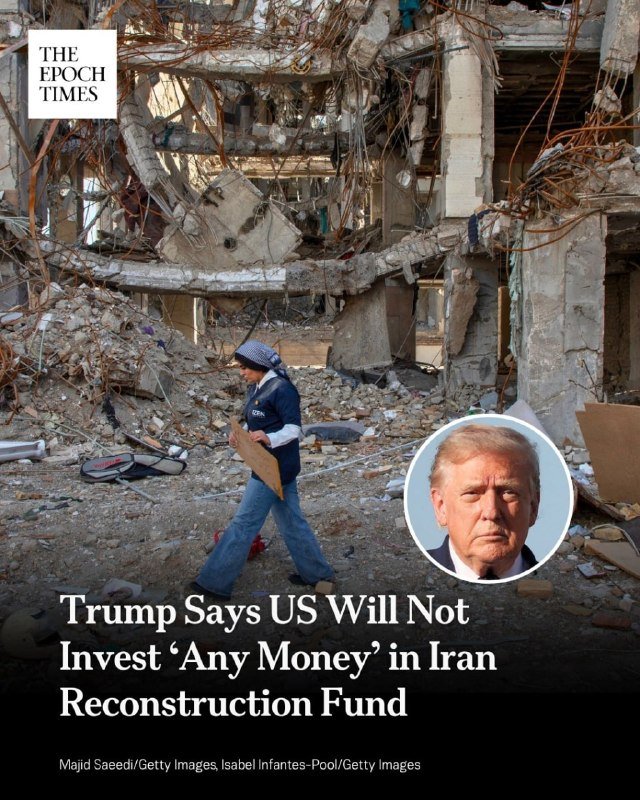
The US president broke with the Israeli government in unusually public terms on 14 June 2026, telling reporters that a morning strike on Beirut's southern suburbs — the densely populated district long treated as a Hezbollah stronghold — "should not have happened, especially on a special day like today, when so much" remains possible. The remarks, relayed by Iranian state outlets and amplified by Iran-aligned media within minutes, are the sharpest public distance a sitting US president has placed between himself and an Israeli operation in Lebanon in recent memory. The rebuke lands at a moment when the choreography of Middle East diplomacy was supposed to be approaching a finale: a US–Iran framework, months in the drafting, that officials on both sides had described as close to closure.
The subtext is the story. A president who routinely shields Israel from criticism, in a White House that has built its Middle East portfolio on the proposition that quiet alignment produces quiet results, chose daylight. He chose it on a Saturday afternoon in Washington. He chose it while Fox News, citing a senior US official, was reporting that the strikes had "created difficulties" in the attempt to finalise the agreement with Tehran. The calculation is not hard to reconstruct. The deal, if it lands, would be the second major piece of the administration's regional architecture after the Gaza arrangements earlier in the year. Letting an air operation knock it off course, with midterms on the horizon and energy markets twitchy, is a cost the White House appears to have decided it will not absorb.
What was struck, and by whom
The southern suburbs of Beirut — known to Lebanese Arabic speakers as Dahiyeh — have been struck repeatedly since the start of the current hostilities. Iranian state outlet Tasnim and the Beirut-based Al Alam, both outlets that reflect the Iranian and Hezbollah-aligned information space, framed the 14 June attack as "barbaric" and led their coverage with the US president's own distancing language. The framing matters: these are not neutral wires. They are the channels through which the Iranian foreign-policy establishment tells its domestic audience what the world thinks of Israeli operations, and they chose to lead with an American voice criticising the strike rather than with their own commentary. That editorial choice is itself a signal — of how badly Tehran wants the diplomatic channel kept open.
Reporting from the region did not specify which sub-district of Dahiyeh was hit, the scale of the strike, or the casualty figures. The sources do not specify whether the strike was conducted by the Israeli Air Force alone or with reported coordination through US channels; Israeli military briefings referenced in the Iranian-aligned wire did not, in the items available, contain a confirmation of the operation in the form a Western wire would carry. The evidentiary floor is therefore lower than the headline volume suggests.
The Iran deal, and what "finalise" now means
Behind the president's rebuke sits a negotiation that has been a year in the public phase and considerably longer in private. The framework under discussion — as reconstructed from periodic US and Iranian readouts and from Axios's reporting on the channel earlier in the year — concerns the scope of Iran's enrichment capacity, the disposition of stockpiled material, the sequencing of sanctions relief, and restraints on Iran's missile and proxy networks. The Fox News account referenced in Ukrainian military-adjacent channel reporting on 14 June suggested a senior US official had concluded that the strikes complicated the finalisation push. "This is a dir[ective moment]," the channel paraphrased, "a difficult moment," a reading consistent with the broader picture of a deal in its last, most fragile stretch.
It is worth saying plainly what the public record does and does not show. It shows a US president publicly displeased. It shows Iranian state media using that displeasure as ammunition. It shows American officials, anonymously, conceding the strike has set the diplomacy back. It does not show the deal collapsing. Past iterations of the US–Iran channel — the 2015 framework, the 2023 deconfliction track — have absorbed shocks that observers at the time read as fatal. Whether this one is more brittle is the question the next 72 hours will answer.
The Israeli calculation, in plain terms
Israel's security concerns are real and have been real across decades of Hezbollah armament, rocket deployment, and the 8 October 2023 northern front that displaced tens of thousands of Israeli civilians from the Galilee. Israeli decision-makers have long argued that a US–Iran accommodation, by releasing sanctions pressure and freeing Iranian capital, would deepen the threat rather than attenuate it. From that vantage, an air operation timed to demonstrate reach into Dahiyeh in the hours before a US–Iran announcement is not an accident; it is a deliberate insertion of cost into a process Jerusalem believes is being concluded at its expense.
The structural tension is older than this White House. Successive US administrations have wanted an Iran channel for the same reason — to lower the temperature, to reduce the salience of the Iran file in the broader Middle East portfolio, to free bandwidth for other priorities. Successive Israeli governments have wanted the channel closed or constrained for the opposite reason. A president who publicly rebukes an Israeli strike while the channel is still open is, in effect, telling Jerusalem that the channel will not be sacrificed to an air operations calendar. The statement is uncommonly explicit by the standards of the relationship. Whether it lasts longer than the news cycle is the test that follows.
What the framing gets wrong, and right
The English-language wire coverage of US–Israel friction has long defaulted to a vocabulary of "tensions," "disagreements," and "frank exchanges" — language calibrated to reassure markets and allied audiences that the underlying alignment is intact. The 14 June rebuke, unusually, does not fit that vocabulary. It is a substantive distancing, delivered on the record, from an Israeli tactical decision, in the middle of a specific negotiation. The mainstream frame will likely reabsorb it within a week into the familiar "complex relationship" shorthand. That reabsorption would obscure what is, on the public record, a structural moment: a US president putting a price tag on Israeli action and stating it.
The counter-reading is also available. The rebuke could be read as cover for a deal that, in its final form, is more favourable to Israel than the public text suggests — closer quiet alignment dressed as daylight disagreement. Both readings are consistent with what is verifiable. The honest editorial position is that the public sources do not resolve the question, and that the next datable move — an Israeli official statement, a senior US readout, an Iranian response to a specific clause — will narrow the field.
Stakes, in concrete terms
If the deal holds, the architecture of the Middle East file for the remainder of the administration's term looks more like the Gaza arrangement — a series of regional understandings stacked into a running settlement. Iran receives sanctions relief calibrated to its export of refined petroleum and petrochemicals, with monitoring arrangements on enrichment. Hezbollah's financial sustainment from Tehran tightens. The northern Israeli communities that evacuated in late 2023 and 2024 begin, slowly, to return. The US moves the Iran file out of the front of the binder.
If the deal breaks, the immediate consequences are kinetic. Israeli operations in Lebanon intensify, as they did in 2024. Iranian proxies in Iraq, Syria, and Yemen re-activate. The price of Brent crude moves. The diplomatic calendar that had been pencilled around a June announcement stretches into autumn, with the US election year closing in. The president's rebuke of 14 June, on this reading, is not the moment the channel broke; it is the last legible attempt to hold it open before it does.
This article was written from Telegram-channel reporting on Iranian, Iranian-aligned, and Ukrainian military-adjacent feeds, in the absence of on-the-record confirmation from Israeli, US, Iranian official, or wire-service sources. Monexus's editorial posture treats a US presidential rebuke of an Israeli operation as substantively significant, and treats the US–Iran diplomatic channel as the structural backdrop against which the strike must be read. The framing differs from the standard wire vocabulary — which would render the disagreement as "tension" — because the public record, on 14 June, warrants the more specific language.
Wire provenance
This editorial synthesis draws on the following public wire/social posts:
- https://t.me/alalamfa/
- https://t.me/tasnimnews_en/
- https://t.me/operativnoZSU/
- https://t.me/JahanTasnim/
- https://t.me/alalamfa/2
Follow the event.
These dated source records provide context. They do not retrospectively verify this archive article.
Separate what the nuclear watchdog reported from what it could not determine after the June 2025 strikes.