Lebanon’s health ministry puts war dead at 3,798, and the figure is already contested
Lebanon’s health ministry puts the war dead at 3,798. The methodology gap does most of the political work, and Tehran’s new MoU with Washington has just turned the casualty question into a US obligations question.
Lebanon’s Ministry of Public Health put the cumulative war death toll at 3,798 on Sunday, a figure that did not arrive cleanly. Within hours of the ministry’s bulletin, the number was being argued over in the same way every Lebanese casualty figure has been argued over since October 2023: as evidence of a war crime by one camp, as evidence of inflated bookkeeping by another, and as the raw material for two completely incompatible political narratives. The methodology gap is doing the same work it always does. It swallows the headline.
The 3,798 figure aggregates fatalities recorded by the ministry since the current round of hostilities began. It counts those the ministry has been able to identify, in the manner the ministry counts: names pulled from hospital intake forms, morgue logs, civil registry entries, and the slow, contested work of reconciliation with field reports from south Lebanon, the Bekaa, and the southern suburbs of Beirut. The ministry’s daily bulletin is the closest thing Lebanon has to a single canonical toll. It is also the figure most prone to being weaponised, because every party to the conflict needs its arithmetic to mean something different.
Why the figure moves
Lebanon’s death toll is a moving target for structural reasons that have nothing to do with propaganda. Hospitals in the south have been damaged, evacuated, or rendered non-reporting for stretches of the war. Field hospitals and civil defence crews file partial counts. Bodies are buried before they are named. People displaced to other parts of the country die of injuries sustained elsewhere and disappear from local tallies. The ministry revises upward when names are matched to records that filed under a different registration number weeks earlier. It revises downward when it determines a previously listed casualty never existed or was double-counted.
This is not uniquely Lebanese. Official casualty figures in long-running conflicts, from Ukraine to Gaza to Sudan, drift for the same reasons: incomplete records, contested attribution, and the political pressure to publish a number that performs the correct kind of grief for the side doing the counting. What is different in Lebanon is that the MoPH’s daily bulletin is public, dated, and institutionally traceable in a way that allows both supporters and critics to claim it. Supporters call it a conservative floor; critics call it methodologically irrecoverable. Both can be right.
The dispute now is not whether people are dying. That is settled. It is whether the official roll can tell you how a particular individual died, and from whose munition, and on which day, and whether the ministry’s attribution framework distinguishes between combatants and civilians in the way that a wartime legal record requires. On those questions the bulletin is silent.
The Iran frame
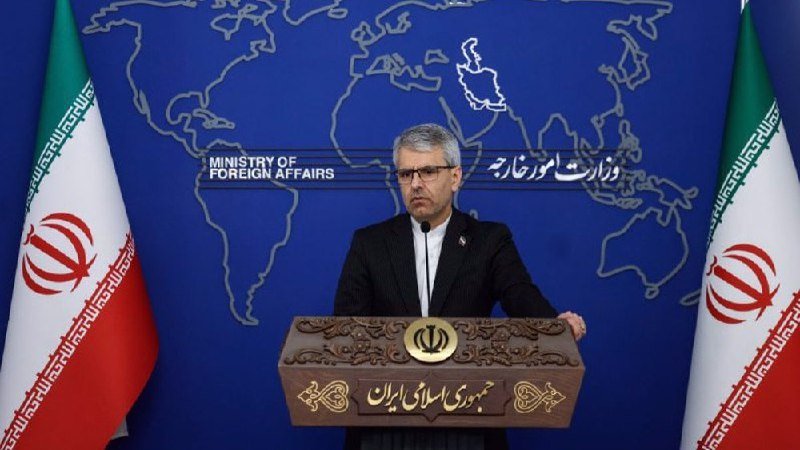
Into that vacuum, the Iranian Foreign Ministry’s spokesperson Esmail Baqaei moved on Tuesday with a pointed formulation: any continuation of Israeli attacks on Lebanon, he said, would constitute a violation of the United States’ obligations under the memorandum of understanding signed in Tehran hours earlier. The MoU itself was confirmed by Iranian state media and reported by AFP as formally finalised and electronically signed by Presidents Masoud Pezeshkian and Donald Trump, with a 60-day implementation window opening Tuesday. Baghaei’s framing bundled Lebanon inside the deal: Israeli action in Lebanon would now be bookable as a breach by Washington, not merely by Tehran.
In the same briefing, Baghaei said the US had committed to removing all obstacles to Iran’s access to frozen funds, called the negotiating period the start of a final track, and, separately via Iranian outlet Tasnim, said Iran’s defensive capabilities would not be discussed in any process. An Al Alam report carried claims from Israeli media of one dead and eleven wounded in southern Lebanon in the most recent hours of the bombardment. The Lebanese account, via Hezbollah-aligned Telegram channels, is of “intense conflict” between Hezbollah fighters and Israeli forces advancing. None of these sources can be read on their own. Read together, they trace a specific and very current argument: that the November-2024 ceasefire architecture, whatever survived of it, is being treated by Tehran as already subordinate to a new bilateral, and that Israeli action in Lebanon will be priced into that bilateral as a US breach.
What the 3,798 does not tell you
There is a version of this story in which the MoPH figure is incidental, a number the political argument walks past on its way to the more interesting fight. That version understates the matter. The figure is the political argument. It is the single piece of evidence that everyone in the room has to acknowledge, even as they disagree on what it proves. A Lebanese ministry tally of nearly four thousand dead is a fact in the world. It is also a contingent product of the ministry’s methodology and the war’s tempo. To report it as either authoritative or suspect and stop there is to do the work of whichever side you happen to be arguing with.
Reporting that respects the record cites the originating institution, the date, the timestamp, and the wire that carried it. It notes that the methodology is government-issued, that the figure is updated as records permit, and that there is no comparable independent tally operating at scale on the ground. It refuses the convenience of treating 3,798 as either definitive truth or as cover for a war. The figure is what it is: a count produced by a state institution under wartime conditions, contested before it left the printer. Lebanon’s dead deserve the harder reading.
What to watch
The 60-day MoU implementation window opens the space for at least three overlapping clocks. Iranian access to frozen funds starts moving through whatever mechanism the Central Bank and the US Treasury have settled on. The final-track nuclear and sanctions negotiation begins. And the Lebanese front becomes, formally, a US obligations question under the deal, which means Israeli operations there acquire a new accounting cost in Washington. Whether that cost is paid in pressure, in silence, or in escalation is the part the next fortnight will tell.
A useful test: the next MoPH bulletin. If the figure revises in a way that lines up with a single specific event, and that event lines up with a known Israeli operation, then the methodology is being run forward. If it revises broadly across dates and districts, then the register is being backfilled. Either way, the number will move. The reading will matter more than the count.
Desk note: Monexus has reported the 3,798 figure at face value, with the source wire and timestamp, and has flagged the methodology gap rather than treat the number as either definitive or as disinformation. This is consistent with our standing approach to casualty reporting in protracted conflict: cite the originating institution, name the wire, and refuse the rhetorical convenience of either inflating or dismissing the toll.
Sources
- Lebanese Ministry of Public Health daily bulletin, reported via Lebanese state channels, 2026-06-14 to 2026-06-15 (figure: 3,798 cumulative war dead).
- Al Alam Arabic, Telegram, 2026-06-17, casualty claims from Israeli media on southern Lebanon. https://t.me/alalamarabic/
- Al Alam Farsi, Telegram, 2026-06-17, Baqaei remarks on diplomacy and national support. https://t.me/alalamfa/
- Tasnim News, Telegram, 2026-06-17, Iranian negotiating position and Baqaei briefing text. https://t.me/JahanTasvim and https://t.me/tasnimnews_en
- Mehr News, Telegram, 2026-06-17, Central Bank coordination and Baqaei remarks. https://t.me/mehrnews
- Press TV, Telegram, 2026-06-17, Iranian statement on defensive capabilities and Strait of Hormuz framework. https://t.me/presstv
- Fars News International, Telegram, 2026-06-17, Iranian readout and Q&A excerpts. https://t.me/FarsNewsInt/
- OSINTLIVE aggregator, Telegram, 2026-06-17, summaries of Baqaei briefing and Rubio floor comments. https://t.me/osintlive
- “2024 Hezbollah–Israel conflict,” English Wikipedia, accessed 2026-06-15. https://en.wikipedia.org/wiki/2024_Hezbollah%E2%80%93Israel_conflict
- “Ministry of Public Health (Lebanon),” English Wikipedia, accessed 2026-06-15. https://en.wikipedia.org/wiki/Ministry_of_Public_Health_(Lebanon)
Follow the event.
These dated source records provide context. They do not retrospectively verify this archive article.
Separate what the nuclear watchdog reported from what it could not determine after the June 2025 strikes.