Netanyahu vows permanent Israeli hold in south Lebanon, defying Trump's reported deal with Tehran
Hours after Iran and the US signed a memorandum of understanding to end the war, Netanyahu dug in at the Litani and Israel pushed troops into Syrian Quneitra, exposing a widening gap between Trump's diplomacy and the battlefield.
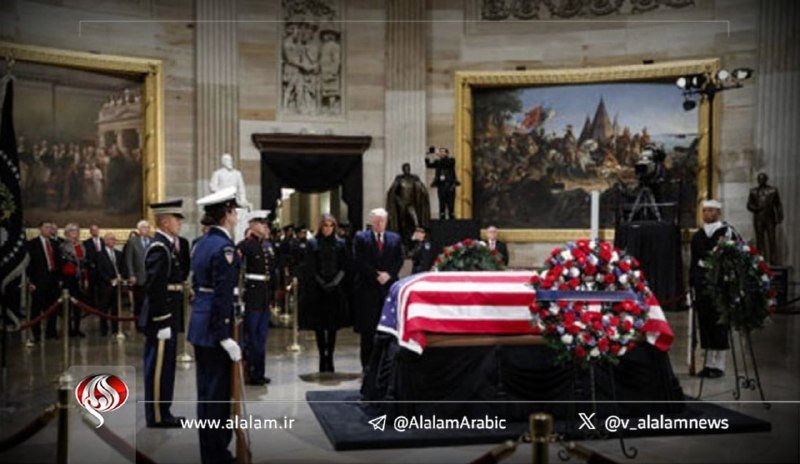
At 22:07 UTC on 17 June 2026, Iran's Foreign Ministry spokesperson Esmail Baghaei confirmed that a memorandum of understanding between Tehran and Washington had been electronically signed by President Masoud Pezeshkian and President Donald Trump, and was now in force. Within minutes, two Israeli sources carried by OSINT channels rejected the deal's territorial implications, and by midnight Al Jazeera reported that Trump had urged Prime Minister Benjamin Netanyahu to use a "softer touch" in Lebanon. By 23:55 UTC, a Syrian source cited by Al Alam said an Israeli military convoy had pushed into the southern countryside of Quneitra. The diplomatic claim and the military facts on the ground are diverging in real time, and the gap between them now defines Netanyahu's position.
The Netanyahu government's position is unambiguous: the Israel Defense Forces will remain in southern Lebanon indefinitely, holding territory up to the Litani River. Israeli media carried by Sprinterpress reported on 17 June that the IDF had no plans to withdraw, with the Litani line described as the only tangible gain from the war. That posture directly contradicts the understanding announced by Baghaei, who warned that any continuation of Israeli attacks on Lebanon would constitute a violation of Washington's obligations under the memorandum. Tehran's framing makes Israeli military operations inside Lebanese territory an American problem, not an Israeli one. Israel is treating the same operations as a sovereign security necessity, and the US administration, at least as relayed by Al Jazeera, has counselled restraint without withdrawing backing.
The MOU itself, as described by France 24 and Deutsche Welle on 17 June, is an interim arrangement: Tehran agreed to dilute its enriched uranium stockpile in return for large-scale economic relief, and the Strait of Hormuz is to be fully reopened. PressTV reported Trump acknowledging that global oil reserves had roughly four weeks of supply remaining before the deal was struck, a detail that goes some way to explaining the urgency. The White House unveiling of the agreement reportedly confirmed every detail that Vice President JD Vance had dismissed as fake and "IRGC propaganda" earlier in the week, a reversal the Republican critics have been quick to weaponise. Senator Bill Cassidy called it the worst foreign policy blunder in decades, according to World News, and other Senate Republicans have blamed Vance directly, per NewsNation reporting relayed by OSINTdefender.
A war Netanyahu cannot finish
Netanyahu is now boxed in from three directions simultaneously. From outside, the MOU his American patron just signed obliges Washington to restrain Israeli operations in Lebanon or absorb the diplomatic cost. From the field, Hezbollah has not paused its activity. Hebrew-language media cited by Fars and Al Alam reported two separate operations on 17 June in which one Israeli soldier was killed and ten others wounded, some in very serious condition. Tasnim added that Israeli sources acknowledged two unspecified "security incidents" in the south without initial casualty detail. The Lebanese front is bleeding Israeli personnel at a rate that makes any withdrawal announcement politically toxic, but staying means openly contesting a sitting American president.
Inside the coalition, the pressure is sharper still. Middle East Eye argued on 17 June that the MOU's terms underline how Netanyahu now faces pressure not only from Tehran but from within his own political and security establishment. The Litani line is the one battlefield artefact his government can point to after an inconclusive campaign against Iran and a grinding ground war in Gaza. Handing it back under American pressure, with Israeli casualties still being announced nightly, would be an act of political surrender in the middle of an election cycle that has already destabilised his governing coalition. That calculation, more than any doctrinal commitment to the Litani as a permanent border, is what keeps Israeli forces dug in.
Reading the Iranian warning correctly
Baghaei's language on 17 June is the most consequential single line to emerge from the day. If Israeli attacks in Lebanon continue, he said, it will be considered a violation of the United States' obligations. We do not distinguish between the two, he added. Tehran has effectively converted the IDF's southern Lebanon operations into a test case for the MOU itself, and has put Washington on notice that each Israeli strike will be measured against an American signature rather than an Israeli sovereign decision. The framing is designed to force Trump to lean on Netanyahu directly, in private, rather than rely on Israeli self-restraint.
For Israel, the strategic content of that warning is hostile even if the diplomatic packaging is neutral. Any US-Israel disagreement over Lebanon is now Iranian leverage, and any Israeli restraint is now a concession Tehran can claim credit for. The MOU has not ended the war so much as relocated it from the airspace over Tehran and the streets of south Beirut into the room where Netanyahu and Trump next speak.
What the Quneitra movement signals
The convoy reported by Syrian sources via Al Alam moving into the southern Quneitra countryside at 23:55 UTC on 17 June sits outside the MOU framework entirely. Quneitra is Syrian, not Lebanese, and the demilitarised arrangements there predate the current war. An Israeli ground manoeuvre in the area, if confirmed, would represent a separate theatre of operation being opened precisely as Tehran and Washington are formally closing another. It is also the kind of move that gives Baghaei's warning immediate operational substance: Israel cannot ask for restraint in one file while expanding activity in another without collapsing the MOU's basic logic.
At this stage the convoy is a Syrian-source report carried by a single outlet and not yet corroborated by Israeli, Western-wire, or independent OSINT. It is recorded here as a first-order claim with a single-source caveat, not as an established fact. But its appearance on the same night as the MOU signing is the kind of detail that turns a diplomatic communiqué into a contested military picture.
The next seventy-two hours
Three filings are now in motion. Iran's Foreign Ministry has published the MOU and is publicly measuring Israeli conduct against it. The White House has signed and is selling the deal politically, including to a sceptical Republican caucus. Netanyahu is holding the Litani line, taking casualties, and pushing ground forces into a new sector, while publicly receiving a "softer touch" recommendation from Trump. The MOU does not technically compel an Israeli withdrawal from Lebanon, but it does create an American interest in one that did not exist a week ago.
The collision will not be resolved by communiqués. It will be resolved either by a quiet American demand that Israel stand down on the Litani, by an Israeli cabinet decision to hold regardless, or by a Hezbollah operation large enough to force the question publicly. Watch the IDF's daily southern Lebanon readout on 18 June, and watch for any joint US-Israel statement on the MOU's security annex. One of those two documents will tell you which side blinked first.
Sources: France 24, Deutsche Welle, Al Jazeera, World News, PressTV, Fars, Tasnim, Al Alam, OSINTdefender, Middle East Eye, Sprinterpress, Intelslava (telegram channels: mideastspectator, ClashReport, tasnimnews_en, JahanTasnim, presstv, alalamfa, farsna, osintlive, intelslava, alalamarabic, rnintel).
Desk note: Monexus has led with the Israeli and Iranian statements in the order they were issued on 17 June 2026, and has resisted the temptation to declare either side's framing definitive while the US position remains partial. The wire services are carrying Tehran's claims on the basis of a foreign-ministry statement and Israeli operations on the basis of Hebrew-language media via Iranian-aligned channels. Both are first-order facts; the underlying agreement's full text, and the Quneitra convoy report, are not.
Follow the event.
These dated source records provide context. They do not retrospectively verify this archive article.
Separate what the nuclear watchdog reported from what it could not determine after the June 2025 strikes.