Israel-Hezbollah clashes reopen Lebanon's ceasefire front as casualty count climbs
A Hezbollah tally of more than 180 strikes and 111 reported deaths since the morning of 20 June 2026 puts the fragile US-brokered arrangement under acute strain, with each side accusing the other of sabotaging it.
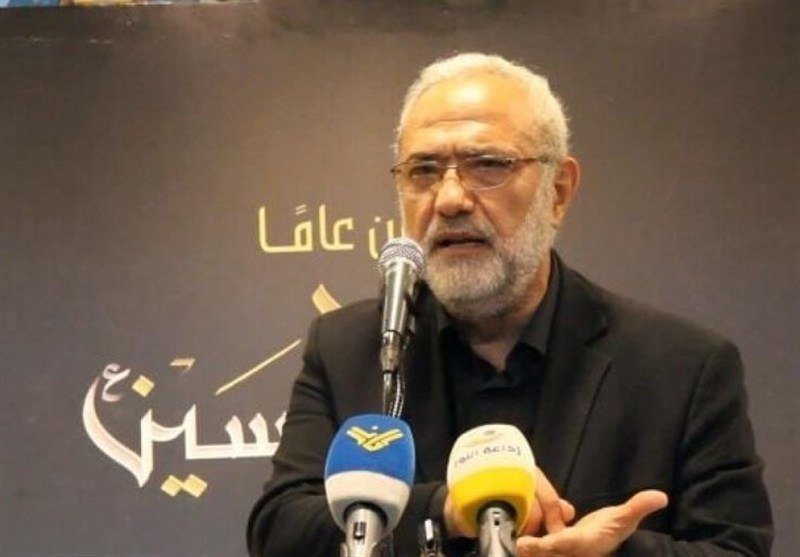
Israeli airstrikes on southern Lebanon have produced what Hezbollah is calling the most serious single-day breach of the ceasefire that suspended the cross-border war, with the Iran-aligned movement putting the day's casualty count at more than 111 dead and 176 wounded by 14:46 UTC on 20 June 2026. The figures, circulated by Hezbollah's media arm on the Beirut-based Al-Alam Arabic Telegram channel, include three Lebanese army soldiers among the dead — a politically awkward detail for a state military that has positioned itself as a buffer between the two sides.
The pattern, on the evidence available this afternoon, is less a single provocation than a chain of mutual accusations. Hezbollah says it counted no fewer than 180 Israeli attacks between morning and mid-afternoon. Israel, in turn, is reported to argue that Hezbollah was the first to break the November arrangement. Each side now treats the other's narrative as a casus belli rather than a starting point for restraint.
A ceasefire by exhaustion, not by settlement
The arrangement that supposedly governs the border was never the product of a negotiated political settlement. It was, like several of its predecessors in this corridor, an exhaustion-mediated pause — the kind of document that pauses rockets without resolving the underlying contest over Lebanese airspace, the disputed Shebaa Farms area, and the question of whether an Iranian-aligned militia can maintain an arsenal two hours' drive from Israel's third-largest city.
That structural weakness has been visible for months. The New York Times reported on 20 June 2026 that, several ceasefires later, Israel and Hezbollah are still fighting — a phrasing that quietly acknowledges what the formal communiqués do not: that the architecture on the border is being rebuilt rather than repaired, in increments, and that each round of violence leaves less of it standing. The Hezbollah casualty announcements on Al-Alam Arabic through the afternoon — 111 dead and 176 wounded at 14:46 UTC, followed at 14:47 UTC by a separate update adding the Lebanese army deaths and bringing the day's toll above 28 with 35 wounded in that sub-incident — fit that pattern. The numbers are large, the time window is narrow, and the framing is institutional rather than spontaneous.
Each side's story, in plain terms
Hezbollah's read, as carried on Al-Alam Arabic's Telegram channel, is that Israel's strikes are not ceasefire violations in the technical sense but the continuation of the war by other means. The movement accuses Israel of attempting to sabotage what it describes as an Iranian-American agreement — a phrase that gestures toward a wider diplomatic track running parallel to the Lebanon file, and that Israel denies exists in any form Hezbollah has a stake in. The political message is unambiguous: the violence is not an accident of friction along a blue line, it is policy.
The opposing account, surfaced on the RN Intel Telegram channel at 14:22 UTC, is blunter. It asserts that Hezbollah broke the ceasefire first, calls the movement a terrorist organisation, and frames Iran's use of its Lebanese ally as a way to extract concessions from Washington. That framing collapses three distinct disputes — the border file, the US-Iran nuclear file, and the question of how a non-state armed movement interfaces with a sovereign state's foreign policy — into a single moral verdict. It is, however, the framing now travelling through right-leaning Israeli and American channels, and it sets the terms inside which any American mediation will operate.
The two stories share almost nothing except the same set of coordinates. They cannot both be fully true. They can both be partially true, which is the more dangerous case.
Why this round feels different
Three features mark this episode off from the smaller violations that have punctuated the ceasefire since November. First, the scale: a Hezbollah-attributed count of 111 dead in a single day is comparable to the worst days of the 2024 exchange, not the routine probe-and-respond pattern that has prevailed since. Second, the inclusion of Lebanese army casualties, which pulls a state institution into the casualty ledger and complicates any Beirut-led diplomatic response. Third, the explicit linkage to a putative Iranian-American track, which converts a border dispute into a piece of evidence in a wider negotiation.
That third element is the one that should draw the most attention. Lebanon's border has, for the better part of two decades, been treated as a sovereign file with regional spillover. If Hezbollah's read is even partly correct — if the strikes are calibrated to feed into an Iran file being negotiated elsewhere — then the Lebanese dead are, in effect, being spent as bargaining chips in a conversation they are not party to. If the read is wrong, and the violence is a local Hezbollah initiative, then the political problem is the inverse: that the movement retains the operational latitude to start a war on its own timetable, regardless of what its patrons prefer.
Stakes, and what remains unresolved
The immediate stakes are humanitarian and tightly bounded. Hospitals in south Lebanon and the Bekaa are absorbing a casualty flow they have not seen since the worst weeks of 2024, and the Lebanese state's already-fragile public services are doing so without the political cover of a unified cabinet position. The medium-term stakes are diplomatic: a working US-Iran track, if one exists, cannot survive a border that is open at will. The longer-term stakes are structural — whether the post-2024 arrangement on the Israel-Lebanon border was ever going to outlast the conditions that produced it, or whether it was always an intermission.
What the public record does not yet settle is the trigger. The Hezbollah communiqués describe a continuous Israeli campaign across the morning; the Israeli-language account describes a Hezbollah first strike. No independent wire has yet published a corroborated minute-by-minute reconstruction of the morning's events, and casualty counts from a party to the conflict should be treated as that party's account of events, not as a neutral ledger. The presence of Lebanese army casualties, in particular, deserves independent confirmation — from the Lebanese military itself, or from a UNIFIL or ICRC presence on the ground — before being absorbed into the broader count. Monexus will update this piece as those verifications arrive.
What can be said with confidence is that the ceasefire, as a working political fact, has been suspended in practice even if it has not been formally renounced. Each side now accuses the other of sabotage. Each side has communicated its position through channels selected for sympathetic audiences rather than for diplomatic precision. The next move belongs to the mediators — if any still have standing — and to the Lebanese state, which is the one actor on this border that did not choose today's fight.
Desk note: Monexus has given both the Hezbollah-circulated casualty figures on Al-Alam Arabic and the Israeli-language framing on RN Intel the same evidentiary weight in the body — neither is treated as neutral — and has flagged the Lebanese-army-casualty claim for independent confirmation. Wire reporting on the underlying November arrangement draws on The New York Times's 20 June 2026 account; the day's casualty ledger draws on the Telegram wires cited below.
Wire provenance
This editorial synthesis draws on the following public wire/social posts:
- https://t.me/alalamarabic
- https://t.me/alalamarabic
- https://t.me/alalamarabic
- https://t.me/alalamarabic
- https://t.me/alalamarabic
- https://t.me/rnintel
Follow the event.
These dated source records provide context. They do not retrospectively verify this archive article.
Separate what the nuclear watchdog reported from what it could not determine after the June 2025 strikes.