Iran keeper Biranvand emerges as defining figure in tight Group-stage finish
Iran's Alireza Biranvand produced a string of late-game stops on 21 June 2026 to keep his side in the contest, with Iranian state media framing the performance as decisive inside the final third of the group phase.
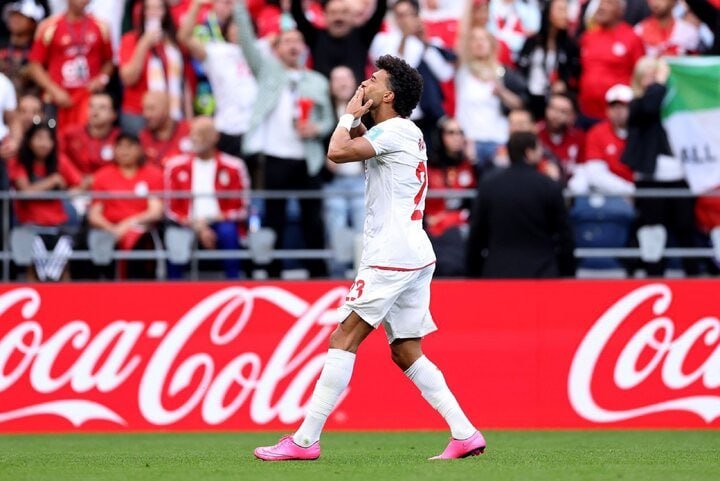
Alireza Biranvand walked off the pitch on the evening of 21 June 2026 as the player the Iranian press, public, and his own bench could not stop talking about. Four separate bulletins from two of Iran's largest state-linked newsrooms — Tasnim and Fars — flagged the Iran national team's first-choice goalkeeper as the decisive figure inside a match that, by the late stages tracked in the thread, appeared to be slipping away from his side.
The pattern across the four items is unusually consistent for match-day social output. At 20:26 UTC, Tasnim's English wire put out a single declarative line: "Biranvand's exceptional save was the savior of Iran's goal." Twenty-seven minutes later, at 20:53 UTC, the same wire's English account said he had "became the savior of Iran's goal once again." A minute after that, Fars's sport desk said "Biranvand's good exit saved Iran's goal once again." By 20:56 UTC, Tasnim's Persian-language channel Tasnimplus had upgraded the framing to a value judgment: "So far, Biranvand is the best player on the field."
What is notable is not the saves themselves — those are not described in detail in the items available — but the speed and convergence of the framing. Within half an hour, the two largest outlets in the Iranian state-aligned press ecosystem, plus the Persian-language Tasnim mirror, had all settled on the same line: the result is alive because of the goalkeeper. For a national team whose World Cup campaigns have historically been defined by attacking moments and defensive collapses in roughly equal measure, the inversion is itself the story.
A team carried by its last line
Iran's footballing identity at major tournaments has long been a study in the trade-off between disciplined defending and the scarcity of goals at the other end. Biranvand, the 33-year-old shot-stopper who has been a fixture of the side since the 2018 World Cup in Russia, has occupied the most scrutinised seat in the team for the better part of a decade. The 21 June bulletins, taken together, describe a match in which the opposition was creating the higher-quality chances and the Iranian defence was being asked to absorb sustained pressure — exactly the conditions in which a goalkeeper's reputation is made or broken.
The Tasnimplus line — "best player on the field" — is the kind of verdict normally reserved for a captain who has scored, or a young forward who has just announced himself. That a state-aligned Persian-language channel has attached it to a goalkeeper in a group-stage fixture signals how thin the margin in this match appeared to be from the Iranian vantage point. The English-language Tasnim account, in its second post, used the phrase "once again," implying that the saves the items describe were not isolated incidents but a sequence. Fars's wording — "good exit" — points to command of the penalty area on crosses and through-balls, a different skill set from reflex shot-stopping.
What the wire did not show
The bulletins are short, declarative, and conspicuously thin on opposition detail. There is no name of the opposing team in any of the four items, no minute-markers for the saves, no scoreline, no shot counts, no xG figures. That is the standard texture of state-aligned wire content during live matches: a national-team goal-getter or a goalkeeper is foregrounded, and the structural context of the game — who they are playing, what the score is, how the match is being officiated — is left to post-match reporting and independent outlets.
A second, more substantive limitation: the four items all originate from outlets that are part of, or adjacent to, the Iranian state media ecosystem. Tasnim is a news agency founded in 2003 and associated with the Islamic Ideology Dissemination Organization, a body linked to Iran's clerical establishment. Fars is a news agency that has been sanctioned by the United States and the European Union in the past for ties to the Islamic Revolutionary Guard Corps. The framing of Biranvand as a national saviour is, in other words, not coming from a neutral vantage point. It is a particular kind of in-house amplification, in which a domestic goalkeeper's performance is being elevated into a moment of collective pride at exactly the moment a national team needs its public to stay invested.
The structural picture
For a global reader, the more interesting frame is not the saves themselves but what their handling tells us about how a state-aligned press treats its team's biggest stages. When Team Melli plays at a World Cup, Iranian state media converge on a small number of approved narratives: the team as a stand-in for the nation, individual players as carriers of that symbolic weight, and the result as a referendum on national resilience. The Biranvand sequence on 21 June fits that template precisely. A goalkeeper, by the nature of his position, is a defensive actor; when the wire treats him as the offensive actor of the half — the "best player on the field" — the effect is to convert a structural disadvantage (sustained pressure on Iran's goal) into a story of national pride (the keeper as a one-man rampart).
That dynamic is not unique to Iran. State-aligned and nationalist sports media the world over tend to convert tactical weakness into characterological strength, and goalkeepers are the natural vehicle for that move: their job is to absorb pressure without conceding, and the more pressure the opposition generates, the more heroic the keeper's resistance appears in the telling. The Iranian case on 21 June is a clean instance of that mechanism, in real time, in four short posts.
What remains uncertain
The items do not say who Iran is playing, what the score is, or whether the result — at the time of the final bulletin — was a draw, a lead, or a deficit that Biranvand was preventing from widening. They do not say whether any of the saves were from open play, set pieces, or penalties. The "once again" construction in the second Tasnim English post suggests a sequence, but the underlying events remain unspecified. A reader who relied only on the thread context would know that Biranvand played well, that the Iranian state-aligned press believed it mattered, and that the goalkeeper's performance was the through-line of the evening's coverage — and not much else.
Whether the result, when it came, will retroactively confirm the bulletins' framing, or whether the same outlets will quietly drop the "saviour" line and reset the narrative, is a question that can only be answered once the full post-match record is in. For now, the four posts stand as a small, dense example of how a particular press ecosystem builds a national-team moment out of a goalkeeper's gloves.
This article treats Tasnim and Fars coverage as primary sources for the Iranian domestic framing of the match, in line with Monexus's practice of weighing state-aligned outlets on their own terms when they are the available record of an event.
Wire provenance
This editorial synthesis draws on the following public wire/social posts:
- https://t.me/tasnimnews_en
- https://t.me/tasnimnews_en
- https://t.me/farsna
- https://t.me/tasnimplus
- https://en.wikipedia.org/wiki/Alireza_Biranvand