Iran's chief negotiator lands in Muscat as Oman positions itself as a back channel for Hormuz diplomacy
Mohammad Bagher Ghalibaf, the parliament speaker leading Tehran's negotiating team, flew to Muscat on 22 June 2026 to brief Sultan Haitham on the Switzerland track and coordinate Strait of Hormuz management with Oman.
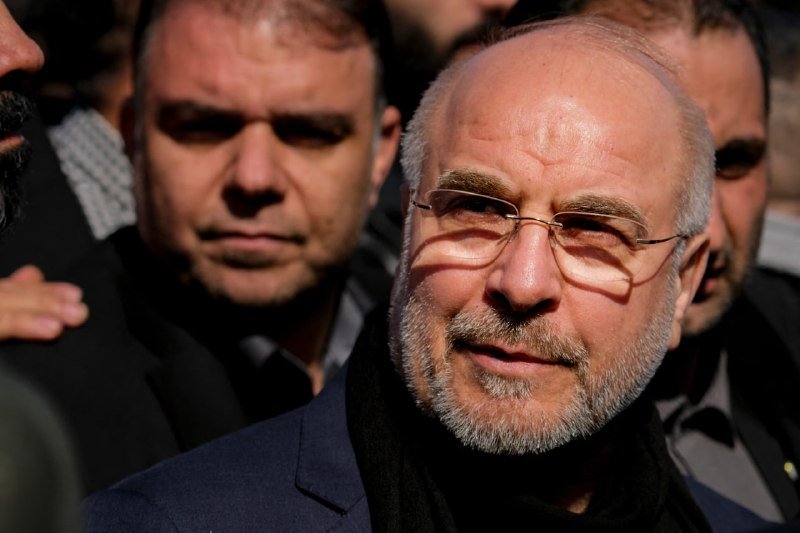
Iranian Parliament Speaker Mohammad Bagher Ghalibaf, who is heading Tehran's negotiating delegation, flew into Muscat on the afternoon of 22 June 2026 to meet Oman's Sultan Haitham bin Tariq, according to multiple Iranian state-aligned channels. Iranian state broadcaster IRIB said the talks would cover bilateral ties and coordination on Iran's management of the Strait of Hormuz; the Tasnim news agency added that Oman's role as an interlocutor between Tehran and Western capitals is back at the centre of regional diplomacy. The two governments have not yet published a joint readout.
The visit lands at a moment when Oman is once again being asked to do what Gulf intermediaries have quietly done for two decades: translate between Iranian and Western negotiating positions, host discreet meetings, and keep the lines of communication open when the official channels are frozen. Sultan Haitham has met senior Iranian figures repeatedly since 2024, and Muscat has continued to receive both American and Iranian envoys while other tracks have stalled. Ghalibaf's arrival, hours after the conclusion of the Switzerland round, is the clearest signal yet that Tehran wants Muscat briefed in real time.
The Switzerland track and why Muscat matters
The parliamentary speaker is leading the Iranian side of negotiations held in Switzerland, the Telegram channels DDGeopolitics and Clash Report reported on 22 June 2026, citing Iranian state media. According to IRIB, as relayed by the Telegram channel wf witness, the talks are framed as "boosting bilateral ties and coordinating" with the Sultan of Oman. The Tasnim feed, picked up by Clash Report, identified the specific substantive item: "Iran's management of the Strait of Hormuz" — the narrow chokepoint through which roughly a fifth of seaborne oil normally transits. Foreign Minister Abbas Araghchi accompanied Ghalibaf on the flight from Tehran, the Tasnim-affiliated channel JahanTasnim reported.
The Oman stop is best read as a coordination visit, not a fresh round of negotiations. Switzerland is the negotiating theatre; Muscat is the relay point. Iranian negotiators are using the Omani monarchy — long tolerated by Washington as a quiet interlocutor — to keep Gulf partners and, by extension, Western capitals apprised of what Tehran is and is not prepared to trade.
The counter-narrative: what the visit does not mean
Two readings of the trip should be set against the official one. The first is that the Muscat stop is a piece of Iranian stagecraft — a publicised visit designed to project normalcy and diplomatic momentum while the underlying Switzerland track produces little. The second is that Oman is doing what smaller Gulf states have historically done: extracting relevance from great-power friction by being the host everyone can agree on, rather than the mediator who settles anything.
A third, more cautious reading is that the visit is exactly what the Iranian framing says it is — a working session on Hormuz coordination that does not require Western buy-in. The strait is Iranian territorial water on one shore and Omani on the other. The mechanics of transit, naval protocols and tanker insurance are not, strictly, a US–Iran file at all; they are a bilateral question between Tehran and Muscat, with third-party shipping as the client. Read that way, the visit is not a confidence-building measure for Washington. It is the routine governance of a shared waterway that just happens to coincide with a sensitive moment in the wider negotiation.
The dominant frame, supported by the volume and consistency of the Iranian messaging across at least five separate Telegram channels relaying IRIB and Tasnim, is that the trip is principally about coordination with Muscat and only secondarily a signal to the West.
Structural frame: small-state diplomacy and the Gulf's relay function
Gulf monarchies have spent fifteen years building a particular diplomatic asset: the ability to be trusted by both Washington and Tehran at the same time. Qatar hosted the indirect US–Iran talks that produced the 2015 framework; Oman hosted the secret 2012–2013 channel that became the Joint Plan of Action; the UAE, after a colder period, is back in the conversation through trade and energy ties. What is being constructed, slowly, is a small-state relay architecture that the bigger powers route around when direct contact is impossible.
For Oman, the asset is political — the legitimacy that comes from being a useful neutral. For Iran, the asset is access — a sovereign line into Gulf and Western conversations that bypasses institutions Iran has been cut off from. For the United States and its European partners, the asset is optionality — a channel that can be turned on and off without the diplomatic cost of reopening the official one. The Hormuz file is the current reason the relay is being used, but the relay itself is older and more durable than any one negotiation.
The corollary is that small-state mediation only works when the bigger powers do not object to it. If Washington decides that the Switzerland track has to produce a deal — or to fail publicly — Muscat's role narrows. If Tehran decides that the cost of engagement outweighs the benefit, the relay goes cold. The current visit is best understood as the relay being warmed up, not as a signal that either side is ready to settle.
Stakes and what to watch next
The immediate stakes are operational. Roughly twenty per cent of seaborne crude transits the Strait of Hormuz, and any disruption moves global benchmarks within hours. Insurance premiums, tanker rerouting decisions and naval posture in the Gulf all price in the perceived probability of a Hormuz incident. A working Omani–Iranian channel lowers the probability of miscalculation even if it does nothing else.
The medium-term stakes are political. If the Switzerland track produces a partial deal — sanctions relief tied to nuclear constraints, with Hormuz governance handled bilaterally — Oman will claim credit and consolidate its position. If the track collapses, Muscat becomes a refuge for talks that have nowhere else to go, and the Omani role expands. Either outcome rewards the Sultanate for staying in the conversation.
Three things to watch in the next seventy-two hours. First, whether the Iranian foreign ministry publishes a joint statement with Muscat, and whether it references the Switzerland round by name. Second, whether the Omani state news agency carries a readout of the meeting, and at what length. Third, whether any Western capital — Washington, London, Paris or Berlin — publicly acknowledges the Muscat stop, or whether it is absorbed into the Switzerland track as a logistics footnote.
The honest reading is that the source material is consistent on what the meeting is about and remarkably thin on what it will produce. Five Iranian-aligned Telegram channels, all drawing on IRIB and Tasnim, are reporting the same visit with the same framing. There is no Omani government readout in the thread material, no Western comment, and no indication of which specific Hormuz questions are on the table. The trip is real; the diplomacy is still being assembled.
Desk note: Monexus is sourcing this piece from the Iranian state media cluster (IRIB, Tasnim) and the Telegram channels that relay them. Western and Omani readouts are not yet in the public record; the article flags the gap rather than filling it with inference.
Wire provenance
This editorial synthesis draws on the following public wire/social posts:
- https://t.me/DDGeopolitics
- https://t.me/ClashReport
- https://t.me/GeoPWatch
- https://t.me/wfwitness
- https://t.me/JahanTasnim