Geneva talks stall: Iran demands frozen-asset release before any return to nuclear negotiating table
Quadrilateral talks in Geneva broke open on 21 June 2026 as the Iranian delegation told state media it would not re-enter nuclear negotiations while Donald Trump's threats continued, and would only return if Washington moved first on releasing frozen Iranian funds.
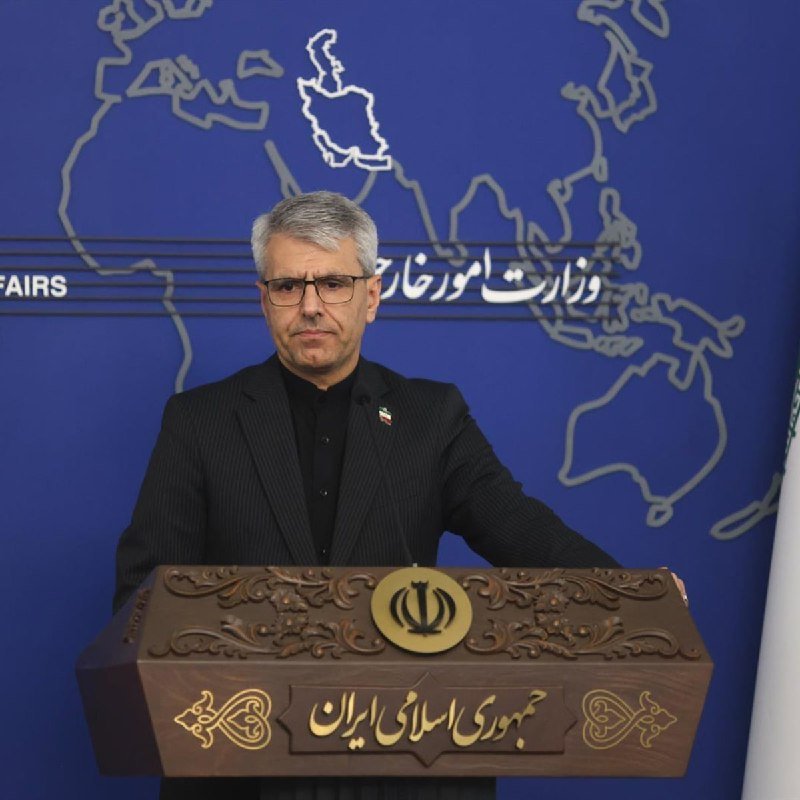
The quadrilateral meeting convened in Geneva on the afternoon of 21 June 2026 to revive the US–Iran nuclear track ran aground within hours. Iran's delegation, sitting across from American negotiators, refused to return to the nuclear negotiating framework while President Donald Trump's rhetoric remained, in their telling, threatening and offensive, and conditioned any fresh round of talks on Washington moving first to release Iranian assets frozen abroad.
The standoff exposes the hollowness of the procedural choreography that the White House has staged as diplomacy. A meeting can be called a negotiation only after both sides agree to negotiate. Iran's reading, delivered to state outlet Tasnim, is that the United States has not earned that agreement. The question now is whether mediators can rebuild a sequence of confidence-building steps before the impasse calcifies into a closed channel.
The Iranian condition
According to reporting relayed by Tasnim on the evening of 21 June 2026 UTC, the Iranian delegation framed the next steps in two specific demands. The first is procedural: the start of nuclear negotiations is conditional on Washington ending the posture that Tehran's delegation characterised as threatening and offensive, language that pointed directly at statements attributed to President Trump. The second is substantive: the acceleration of US obligations related to the release of frozen Iranian assets, an account Tasnim carried under the heading of US commitments that have, in Iran's view, gone unimplemented.
Both demands collapse a familiar distinction in arms-control diplomacy. Concessions on enrichment and monitoring are typically exchanged for sanctions relief in a single package. Iran is now attempting to sequence the exchange, putting financial movement up front and asking whether technical talks occur at all. The delegation is treating the frozen-asset question not as a sweetener at the end of a deal but as a precondition for the table to exist.
The mediator position
Mediators present in Geneva acknowledged, via the same Tasnim sourcing on 21 June 2026, that the quadrilateral talks were still suspended rather than adjourned or collapsed. Iran's delegation objected during the session to a US framing it considered incompatible with the framework. That distinction matters: suspended talks leave a back channel alive. They signal that both sides have agreed to keep talking about talking, even as the substance remains locked.
The mediators' role, in this phase, is to convert Iranian preconditions into language the American side can carry back to Washington without appearing to have conceded. The asset-release demand, in particular, is the kind of item that becomes negotiable only when repackaged as compliance with prior understandings, not as a new Iranian ask.
Why the assets question is the real one
Frozen Iranian funds are not a peripheral irritant. They are the most legible proof an Iranian audience can be shown that talks produce outcomes. Successive Iranian governments have staked credibility on unlocking those accounts, and the failure to move them has, in the past, hardened the position of the most hardline factions in Tehran who argue that diplomacy is theatre. The current delegation's decision to lead with the asset file is therefore a domestic-political signal as much as a bargaining move.
The structural reality is that the assets sit in jurisdictions whose cooperation the United States must coordinate. Releasing them requires a sequence of licensing, compliance, and political cover steps that the Trump administration has been reluctant to authorise, in part because such a move would be framed domestically as a concession made under Iranian pressure. The Iranian condition is, in effect, a demand that the US absorb the political cost of moving first.
What the dominant framing misses
The Western wire read on the day's events will likely foreground the Iranian demand for preconditions as a familiar stalling tactic, and on the evidence of Tasnim's own reporting there is a real procedural element to that read. Iran has, historically, used sequencing as a way to extract movement without reciprocating on enrichment.
But that framing underweights a counter-story: the United States has not offered a credible off-ramp either. The Iranian objection, as reported, was to a US posture characterised as threatening and offensive, language that is unusually blunt in a multilateral setting. A negotiating track does not survive when one side's leader is publicly framing the other as an adversary to be coerced, and when the same leader's envoys are asking the other side to accept technical limits. The mediators are now working the gap between presidential rhetoric and negotiating-room instruction. That gap is where deals die or get reborn.
The structural read
What is unfolding in Geneva is not a single negotiation but a layered one. The first layer is technical: inspectors, enrichment limits, breakout timelines. The second is financial: the assets and the sanctions architecture. The third is political: whether the Trump administration is willing to invest political capital in a deal at a moment when domestic incentives reward confrontation. The Iranian condition, on the evidence available, addresses all three at once, demanding movement on the financial layer as proof that movement on the technical layer is possible.
Coverage of these talks routinely defers to the language of official spokespeople, and the Iranian position is being filtered through Tasnim, an outlet with a clear institutional alignment, while the American position is reaching the wire through diplomatic readouts that emphasise the procedural stalemate. Both filters distort in opposite directions. A clear-eyed read notes that no movement on assets is plausible without movement on rhetoric, and no movement on rhetoric is plausible without political cover in Washington that has, so far, not materialised.
Stakes and what to watch next
If the impasse holds into the European summer, the most probable trajectory is a slow drift back toward escalation: snapback provisions, additional designations, and a hardening of the sanctions regime that would, in turn, deepen Iranian domestic incentives to harden in response. That spiral is the default outcome of a track that runs out of momentum.
The narrow path to a deal runs through the mediators relaying a re-sequenced package: a defined US action on assets paired with a defined Iranian return to a technical table, and an end to the public threat-and-demand cycle that has characterised the last several weeks. Whether that package exists, and whether either principal can sell it domestically, is the question the next two weeks of back-channel work will answer or fail to.
The sources available to this publication do not specify the size of the frozen-asset pool, the precise identity of the mediators present in Geneva, or whether the quadrilateral arrangement will reconvene on a defined schedule. Those details, when they emerge, will determine whether this episode is a pause or a rupture.
Desk note: Monexus has leaned on Iranian state-affiliated reporting because the wire sourcing from Geneva on the evening of 21 June 2026 UTC flowed primarily through Tasnim. Where claims rest on that single channel, the body flags them accordingly; readers should treat the Iranian position as Iran presents it, not as a neutral summary.
Wire provenance
This editorial synthesis draws on the following public wire/social posts:
- https://t.me/alalamarabic/
- https://t.me/alalamarabic/
- https://t.me/alalamarabic/
- https://t.me/alalamarabic/
- https://t.me/alalamarabic/
- https://t.me/tasnimnews_en/
Follow the event.
These dated source records provide context. They do not retrospectively verify this archive article.
Separate what the nuclear watchdog reported from what it could not determine after the June 2025 strikes.