Qatar and Pakistan announce end of first US–Iran high-level talks in Switzerland
Doha and Islamabad say a first round of US–Iran negotiations under the Islamabad Memorandum concluded at Burgenstock, with progress reported on the Lebanon track and an oil embargo in view.
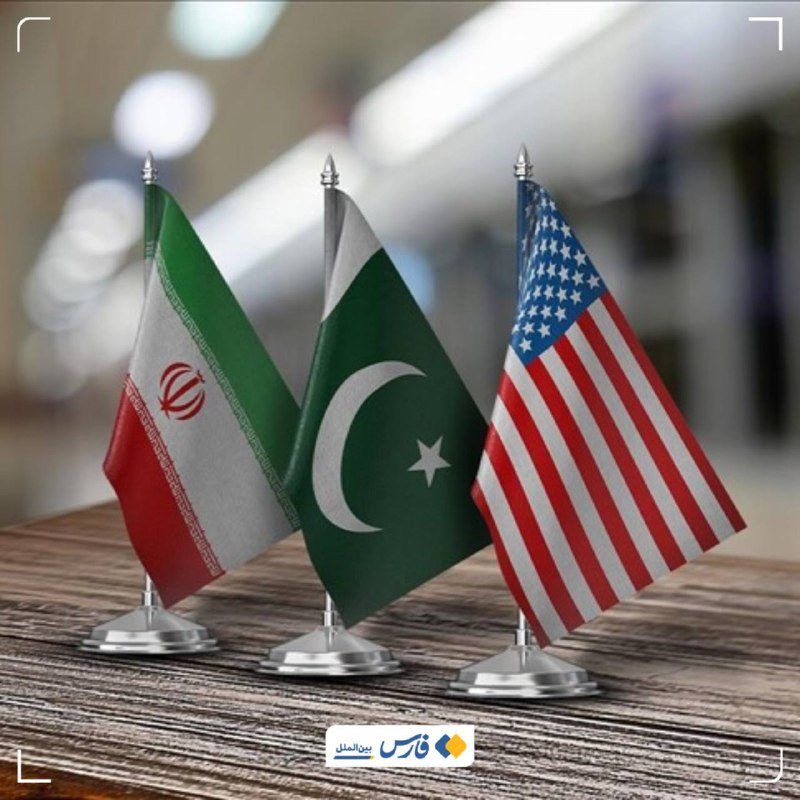
At 01:12 UTC on 22 June 2026, the Qatari and Pakistani governments released a joint statement confirming the conclusion of the first session of high-level negotiations between the United States and Iran, convened under the framework of the "Islamabad Memorandum of Understanding" at Burgenstock, Switzerland, on the shores of Lake Lucerne. The text, carried in parallel by Iranian, Pakistani and Swiss-tied channels, frames the meeting as a procedural breakthrough rather than a substantive settlement, and the two mediators — Doha and Islamabad — are positioning themselves as the durable diplomatic channel between Tehran and Washington for the next phase. Tehran's foreign minister has separately told Iranian state media that the talks made progress on ending the war in Lebanon and on a contested oil embargo, though the joint statement itself does not enumerate those dossiers.
What is on the table, on the record, is a framework. The communiqué describes the Burgenstock session as the first in a planned sequence of high-level engagements under an "Islamabad Memorandum" — a track that Qatar and Pakistan say they will host and shepherd. It does not name a second round, does not list which sanctions, enrichment, hostage or regional files were tabled, and does not attach signatures from Washington or Tehran. For now, the document is a road map announcement, signed by the two mediators, about a road map.
What the mediators actually said
The joint statement, published in identical form by Qatari state-aligned channels and republished in English by Iran's Tasnim News Agency at 01:34 UTC on 22 June, sets out three operative claims. First, that a "first session of high-level negotiations" between the US and Iran took place under the Islamabad Memorandum. Second, that Doha and Islamabad will continue to chair and host the next steps. Third, that the framework is intended to be sequential, with the Lake Lucerne venue used for the opening meeting only. A separate note from Iran's Fars News Agency at 01:38 UTC, attributed to the foreign minister, layers two further claims on top of that scaffolding: that "tireless mediation of Pakistan and Qatar made great progress to end the war in Lebanon," and that progress was also made on the oil embargo question. Mehr News, writing in Persian at 01:17 UTC, used the venue name "Burgenstock" for the same meeting — the two spellings (Burgenstock, Lake Lucerne) refer to the same Swiss lakeside location above the town of Stansstad in the canton of Nidwalden.
The Western wire has not, in the materials available to this publication, run a confirmation of the meeting on the record. That asymmetry is itself the story: the initial framing of the talks is being set by Gulf and South Asian state-aligned outlets rather than by the State Department or the Iranian foreign ministry's English-language desk, and by Iranian outlets that sit closer to the security establishment than to the foreign minister's office.
Why Qatar and Pakistan — and why now
Doha has accumulated a thick portfolio of US–Iran mediation in recent years, including the May 2024 helicopter incident in which the late president Ebrahim Raisi died, and the longer-running effort that produced the undeclared understandings over Hamas-related assets and the regional ceasefire track. Islamabad's role is newer but tracks a long history: Pakistan's Inter-Services Intelligence directorate has historically been one of the few external interlocutors with both the Iranian Revolutionary Guard Corps and the Gulf monarchy intelligence services, and the country's nuclear-armed status gives it standing Tehran cannot dismiss. The choice of Switzerland as a venue is also familiar — Geneva and Lausanne hosted the 2013–15 JCPOA drafting, and the Bürgenstock resort, a five-star conference facility on Lake Lucerne, has previously hosted the 2024 Summit on Peace in Ukraine.
The timing fits a pattern. The US administration's Middle East posture, focused in 2026 on reducing direct exposure to the Lebanon file, is widely understood to be looking for a face-saving arrangement in which Iran- or Iran-aligned assets in the Levant are scaled back in exchange for sanctions relief. Iran's own fiscal position, with oil exports constrained by enforcement of secondary sanctions and a Lebanese-Israeli ceasefire still under strain, makes a sequenced deal structurally attractive for Tehran as well. The mediation pair being non-Western Muslim-majority states is also doing diplomatic work: it lowers the political cost for both Washington and Tehran of being seen to negotiate, and it gives the Islamic Republic a venue in which it can engage without formally recognising Israel or abandoning its stated red lines.
What the sources do not say
Read across the eight items available, the joint statement is the load-bearing document; everything else is gloss. The statement does not identify the head of the US delegation or the head of the Iranian delegation, does not disclose how long the meeting ran, does not name any other participants beyond Qatar and Pakistan, and does not commit either side to a date for the second session. The Fars report attributes two further dossiers — Lebanon and an "oil embargo" — to the foreign minister, but no transcript is provided and no other outlet has corroborated those specific claims. Whether the oil embargo referenced is Iran's own export squeeze, a Lebanese-Israeli maritime arrangement, or a third country's enforcement action on Iranian crude is not specified in the materials. The Western press has not, on the materials available to this publication, run an on-the-record confirmation of the meeting, and the Iranian foreign ministry's English-language output has not, in the same window, posted a parallel read-out.
That last point is consequential. Iranian statements to international audiences are usually parallel-published in English within hours of Persian-language releases; the gap visible here suggests either that the Iranian foreign ministry is being careful not to amplify the Doha-Islamabad framing in English, or that the Fars read-out was a controlled leak rather than an official line. Either reading implies the Burgenstock session is being managed on at least three tracks — the Qatari-Pakistani communiqué, the Iranian security-adjacent leak, and whatever the US side is prepared to say — and they are not, as of 01:38 UTC, aligned.
Stakes and what to watch
If the framework holds, the immediate effect is a procedural cover under which the US and Iran can meet, swap drafts, and stage managed concessions without either side having to declare the diplomatic relationship normalised. The structural beneficiary is the mediation pair: Qatar accumulates a second major regional file, and Pakistan — currently navigating a difficult relationship with the US over its China ties and its Afghan border posture — gains a high-profile diplomatic credit it can convert into economic and security concessions elsewhere. The structural risk is the inverse: if a second session collapses or leaks acrimoniously, Doha and Islamabad will own the failure, and the credibility cost for both mediators is large.
Three indicators over the next 72 hours will tell readers which way this is heading. First, whether the US State Department issues its own read-out, and how closely it tracks the Doha-Islamabad language. Second, whether the Iranian foreign ministry's English desk publishes a parallel statement, and whether it confirms or walks back the Lebanon and oil-embargo claims. Third, whether Israeli, Saudi or Emirati state-aligned outlets frame the meeting as constructive or as a fait accompli imposed on them — the latter would imply that the Gulf counter-leaders were not pre-consulted, and would predict a faster breakdown.
This publication framed the meeting as a mediator-led procedural step rather than a substantive US–Iran agreement, on the grounds that the load-bearing document available is the Qatari-Pakistani joint statement and that the Western wire has not, on the materials available, confirmed the meeting on the record.
Wire provenance
This editorial synthesis draws on the following public wire/social posts:
- https://t.me/DDGeopolitics
- https://t.me/farsna
- https://t.me/tasnimnews_en
- https://t.me/mehrnews
- https://t.me/wfwitness
- https://t.me/farsna
- https://t.me/tasnimnews_en
Follow the event.
These dated source records provide context. They do not retrospectively verify this archive article.
Separate what the nuclear watchdog reported from what it could not determine after the June 2025 strikes.