US-Iran talks in Geneva close with Hormuz progress claimed, framework still undefined
Negotiators in Geneva wrapped a day of meetings on 22 June with both sides claiming movement on the Strait of Hormuz — but no document, no timetable, and no public acknowledgement of what, exactly, has been agreed.
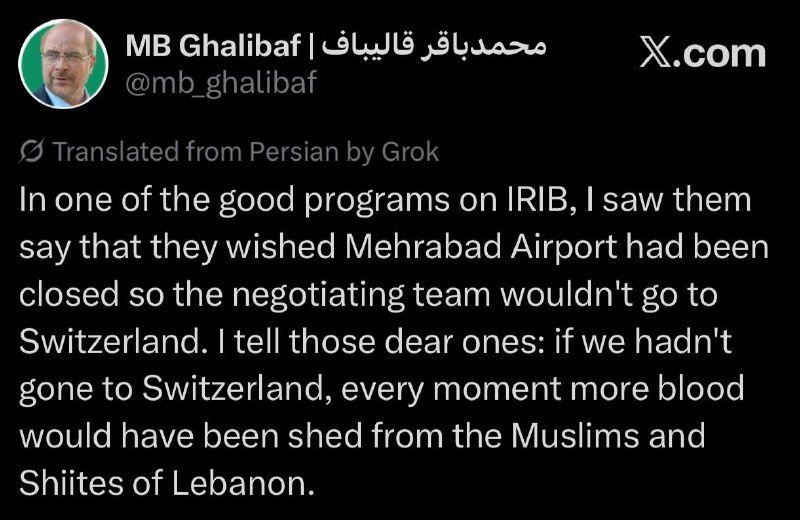
The first round of US-Iran negotiations held on Swiss soil concluded on Monday 22 June 2026 with both delegations claiming substantive progress on shipping through the Strait of Hormuz — and with conspicuously little on the record about anything else. According to a 04:25 UTC update carried by Middle East Eye, Iran's negotiating team in Switzerland declared its work "complete," a phrasing that read, depending on the reader's priors, as either a diplomatic courtesy or a signal that Tehran was prepared to leave the substantive give-and-take to a later, harder round. Reporting from TSN_Ukraine at 03:14 UTC said the two sides had made progress specifically on the Strait of Hormuz. Al Jazeera's breaking-news desk, citing its own correspondents on the ground, characterised the day's session at 01:19 UTC as "tense" but "constructive."
What the three accounts share is a vocabulary of cautious optimism and a near-total absence of detail. There is no draft text, no joint communique, no read-out of which sanctions carve-outs may have been floated, no acknowledgement of whether Iran's nuclear file was even on the table. The Hormuz reference is the single concrete handle the public has been handed. Everything else is atmospherics. That gap between mood music and document is itself the story: in Middle East diplomacy, the moments when both sides sound pleased are usually the moments when the harder bargaining has merely been deferred.
What "progress on Hormuz" actually means
The Strait of Hormuz is the chokepoint through which roughly a fifth of globally traded oil passes. Any arrangement that affects transit there is, by definition, a matter of energy-market architecture rather than a narrow bilateral tweak. Iranian officials have, in the past, used the threat of disruption to Hormuz as leverage in negotiations over sanctions and over the file most Western governments refer to as the nuclear question; Tehran's own framing emphasises what it describes as lawful defensive control of its coastline. To say publicly that "progress" has been made on the strait, even before naming the mechanism, narrows the negotiating space in both directions: Iran's hardliners will read any softening as concession, while US Congressional sceptics — already uneasy about any framework that does not address enrichment — will demand text before declaring the round a success.
The TSN_Ukraine wire framed the development as a US-Iran product that materially shifts the shipping calculus. That framing should be read carefully. Telegram channels aggregating wire copy are not a primary source on the substance of closed-door talks; they are a transmission layer. The verifiable claim from the thread is the existence of an Iranian statement that the delegation's work in Switzerland was complete, plus Al Jazeera's correspondent-level description of the session. The "progress on Hormuz" line travels through a secondary channel and has not, as of the timestamps available, been matched by a US administration read-out in the same window.
The counter-frame: why Tehran may be signalling, not settling
Iranian negotiating practice over the past decade has rewarded ambiguity. A round described as "constructive" allows the Foreign Ministry in Tehran to argue, at home, that sanctions pressure is being managed rather than merely absorbed; it allows the Supreme National Security Council to keep military planners on the table; and it allows shipping insurers and oil traders to read a slight de-escalation into the price of cover and the price of forward crude. None of those outcomes require a signed instrument. The Iranian phrase repeated through the Middle East Eye feed — that the team's work is "complete" — is unusually declarative for Iranian diplomacy and may reflect an effort to draw a line under a phase of talks rather than a willingness to commit to a deal on the US timetable.
The structural reading is straightforward. Washington is operating inside an electoral calendar in which any framework that can be described as keeping the Strait open without a war is, on its own terms, a deliverable. Tehran is operating inside a domestic political economy in which relief from sanctions is the deliverable, and in which any deal that does not move on the sanctions architecture — including the banking, oil-export, and metals-export instruments — will be rejected at home as a surrender for nothing. The two deliverables overlap only at the Strait, which is why the Strait is the one item both sides have publicly confirmed.
What the public record does not yet tell us
Three things are conspicuously absent from the available reporting. First, there is no confirmation that the nuclear file — enrichment levels, stockpile declarations, IAEA access — was discussed at all, and certainly no indication that it was resolved. Second, no sanctions instrument has been suspended, frozen, or waived in public. Third, no third-party guarantor has been named, and the track record of indirect guarantees in this file (the 2015 framework's reliance on a particular interpretation of "snapback," for example) suggests that guarantor architecture matters as much as the headline deal. Until those three gaps are closed by primary documents, the round in Switzerland should be treated as a procedural checkpoint rather than a diplomatic inflection.
The Iranian side's framing — work "complete" — invites a reading that the format, location, and sequence of talks have been settled, leaving substance for later rounds. The US side's framing, to the extent it can be reconstructed from secondary Telegram transmission, suggests something narrower: that movement on a shipping-corridor issue has been identified and that working-level talks should continue. Both readings can be true simultaneously. That is precisely why neither side has produced text.
Stakes and what to watch next
If a Hormuz-side arrangement is in fact taking shape, the immediate beneficiaries are oil-importing economies — India, China, Japan, South Korea, and the European Union — whose headline inflation has been sensitive to even small changes in war-risk premia on tanker cover. Iranian crude exports, already elevated relative to the formal sanctions regime, would gain a measure of insurance against secondary-sanctions enforcement if any arrangement includes quiet licensing for buyers. The US domestic gain is more diffuse: a non-event in Hormuz is, in political-economy terms, a small but real win that does not require a peace dividend to be sold in advance.
The losers from any framework that does not address enrichment, or that defers it indefinitely, are the Gulf states whose tanker traffic depends on the Strait remaining open under rules they did not negotiate, and the IAEA, whose inspectors have spent months without the access Iranian officials have, in past statements, indicated could be forthcoming. A "Hormuz-only" outcome, sustained over months, would also harden the hardest reading in both Washington and Tehran: that the other side is content with transactional management rather than strategic settlement. That reading has, historically, been the precursor to the next breakdown.
The next verifiable marker will be a primary-source US read-out — preferably on the record from the State Department or the White House — confirming or denying the Hormuz line. Until then, the cleanest description of 22 June 2026 in Geneva is the one the three accounts in this thread converge on: a day of tense, constructive talks, with one narrow item publicly named and the harder items left for a later round.
Desk note: Monexus frames this as a procedural checkpoint inside a still-unresolved diplomatic sequence, not as a breakthrough. Where Telegram aggregators and live blogs summarised progress in declarative language, this publication treated the underlying Iranian statement — that the delegation's work is "complete" — as the primary verifiable claim and the "Hormuz progress" line as a secondary transmission awaiting confirmation from the US side.
Wire provenance
This editorial synthesis draws on the following public wire/social posts:
- https://www.middleeasteye.net/live/iran-war-live-israel-says-it-will-control-bridges-and-area-south-lebanons-litani-river
- https://t.me/TSN_ua
- https://en.wikipedia.org/wiki/Strait_of_Hormuz
- https://en.wikipedia.org/wiki/Iran%E2%80%93United_States_relations