Germany breaks with Washington on Hormuz: Pistorius demands Iranian and Omani consent to reopen the strait
Berlin's demand for Iranian and Omani consent before the strait reopens reframes the Geneva negotiation. The wire has been reporting on two-thirds of it.
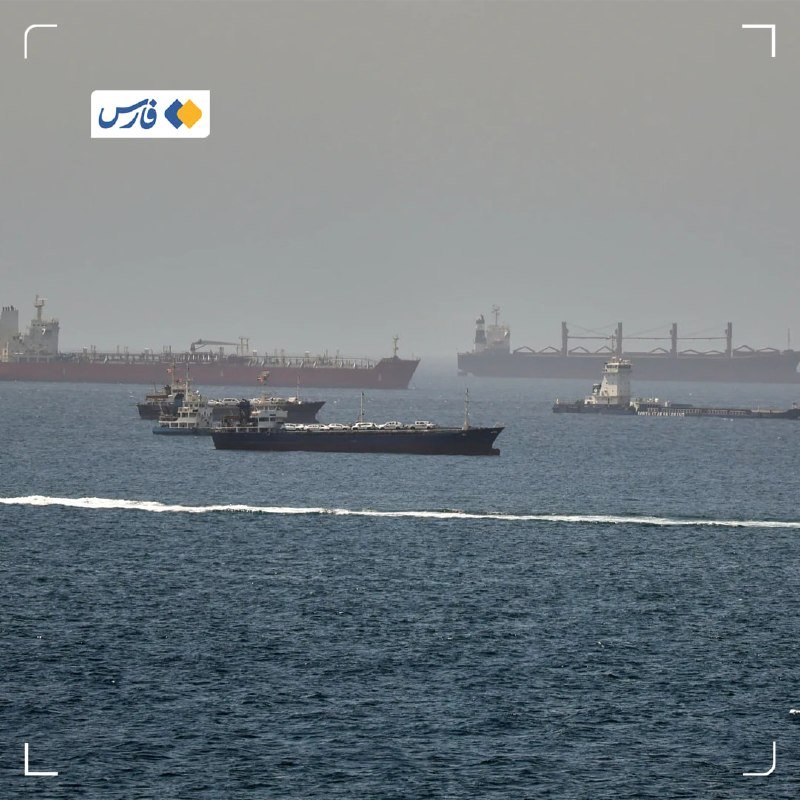
On Thursday, June 25, the United Nations International Maritime Organization paused the evacuation of ships through the Strait of Hormuz after a cargo vessel was struck by an unidentified projectile.
Shortly before the suspension, Bloomberg's ship-tracking data had recorded at least three vessels, including two oil tankers, turning back while attempting parallel-to-coast passages through the strait, with a fourth vessel changing course mid-transit. The pause came as US Secretary of State Marco Rubio, speaking to reporters on Thursday, ruled out any agreement with Tehran that would allow Iran to levy transit fees on shipping through the chokepoint, warning that such an arrangement would produce "total chaos." Hours earlier, the Islamic Revolutionary Guard Corps had begun warning commercial vessels to use only Iran-approved routes through the waterway. The convergence of those events, inside a single 36-hour window, marks the most concrete shift yet in the operating rules of the world's most consequential energy corridor.
The German caveat, and the framing gap
The Berlin position is the part of this story the wire services have barely told. German Defence Minister Boris Pistorius, briefing the Bundestag on the redeployment of Bundeswehr naval assets to the eastern Mediterranean and the Red Sea this week, made clear that any reopening of the strait to guaranteed commercial transit must be agreed not only with Washington but with Tehran and with Muscat. Oman controls the southern approach and runs the conversation with both Iranian and Western negotiators; Iran controls the northern shore and the IRGC naval assets that determine, in practice, who can be boarded where. Pistorius's framing, which treats Iranian and Omani consent as a precondition rather than a courtesy, sits uneasily with Rubio's "not at any price" line.
The substance of the German position is not sympathy with Tehran. It is closer to a logistics ledger. A reopened strait on which Iranian and Omani authorities withhold consent is not, by any operational definition, a reopened strait. Yet the German premise has not travelled well into the English-language wire. Coverage of the Hormuz crisis has run overwhelmingly through US Gulf Command briefings and through Gulf-state framing, with Iranian and Iraqi outlets added in the past 72 hours as counterweight. The German caveat, with its insistence on the sovereignty of both adjacent coasts, has been treated as a sideshow. It is not. It reframes the entire negotiating geometry.
The IRGC route order, and what it tells you
The IRGC's warning to commercial shipping on Thursday, distributed through Iranian state media, instructs vessels to use Iran-approved routes through the strait. That phrasing matters. Iran does not currently claim a legal right to charge transit fees under the United Nations Convention on the Law of the Sea, which guarantees unimpeded passage through internationally recognised straits used for international navigation between one part of the high seas and another, and which the United States and its European partners, including Germany, treat as binding customary international law. But the IRGC route order does not depend on the legal status of the strait. It depends on what the IRGC's fast boats and cruise-missile batteries can do to a ship that ignores the routing.
That distinction is exactly what Rubio's "total chaos" line is designed to close off. Tehran, in the Rubio formulation, would extract a rent from international shipping by threatening the use of force; Washington will not legitimise it. Berlin's formulation accepts the same threat but draws a different line: you do not get a stable transit regime without the party that can credibly obstruct transit. The two positions can be reconciled, but only if someone other than Rubio is doing the reconciling.
Houthi warning, and the second front no one has matched
On the same Thursday, Ansarallah leader Abdul-Malik al-Houthi used a speech marking the Islamic New Year to deliver a "final warning" to Saudi Arabia and Somaliland, framed around the safety of maritime traffic in the southern Red Sea and the Bab el-Mandeb. Houthi forces have, since late 2023, demonstrated a steady capability to target commercial shipping in that corridor with anti-ship missiles and unmanned surface vessels, a record that pulled most Western container traffic onto the Cape of Good Hope route and added weeks of voyage time per round trip. A second-strait disruption, with the Bab el-Mandeb and Hormuz closed in coordination, would not double the freight penalty. It would multiply it. Roughly a fifth of seaborne oil already detours around Africa; another fifth is the share that moves through Hormuz at peak.
The Houthi warning sits adjacent to the German-Iranian-American triangle but is not inside it. That is the diplomatic problem the wire coverage has understated. Three separate choke points, two of which are now under credible threat from non-state actors and the third under negotiated contestation, are being managed as if they were one question. They are three questions, and the German position is the first Western government position that openly treats them as three.
The Geneva timeline and the cost of a Friday
US and Iranian negotiators are scheduled to sign a peace accord in Geneva on Friday, June 26. The framing in Washington and in Gulf capitals is that an accord would restore free transit through Hormuz and that the IRGC route order is bargaining leverage rather than a new operating rule. The German reading is closer to the inverse. Treat the IRGC routing as a current fact; treat the peace accord as the document that codifies it, or as the document that fails to. Pistorius's demand for Iranian and Omani consent is, read cold, a precondition for the German government accepting any Geneva output as legitimate. If Berlin withholds that acceptance, the Bundeswehr's naval contribution to whatever multinational force assembles in the Gulf is on a different political footing, and so is any European Central Bank commentary on the energy-price pass-through.
That is where the cost lives. Not in the freight rates, which the market has already begun to price. In the political recognition of who now sets the operating rules of the strait. The German caveat concedes that the answer is, on current evidence, all three: Washington, Tehran, and Muscat. The wire coverage, by treating Hormuz as a US-Iranian bilateral with an Omani venue, has been reporting on roughly two-thirds of the negotiation.
Stakes for the autumn
The Geneva accord will land, or will not, within 36 hours of this article. Whatever the signed text says, three operational tests follow immediately: whether the IRGC stands down the route order; whether the UN agency that paused evacuations on Thursday resumes them under the same safety guarantees; and whether Pistorius's Bundestag briefing translates into German signature on any regional naval mandate the European Union may propose. The Houthi southern corridor adds a fourth, with a longer fuse.
The honest read of the week is that the Old World order of free transit through Hormuz, the order in which the United States Navy presumed to police a chokepoint that everyone else merely used, is now being renegotiated in three venues at once. Berlin has noticed. The wire has not.
Sources
- France 24, "US seeks Iran deal, but 'not at any price,' Rubio says," June 25, 2026
- WORLD NEWS wire summary, "UN pauses ship evacuations through strait of Hormuz after vessel attack," June 25, 2026
- Bloomberg via X, ship-tracking data on vessels turning back in the Strait of Hormuz, June 25, 2026
- Middle East Eye live updates, "IRGC warns ships to use Iran-approved routes through Strait of Hormuz," June 25, 2026
- Middle East Eye live updates, "Cargo ship hit by unidentified projectile in Strait of Hormuz," June 25, 2026
- Telegram / DDGeopolitics summary, "Ansarallah leader marks escalation point with 'final warning' to Saudi Arabia and Somaliland," June 25, 2026
- Wikipedia, "Strait of Hormuz"
- Wikipedia, "Transit passage"
- PressTV Telegram channel, https://t.me/presstv/
- Tasnim Telegram channel, https://t.me/tasnimplus/
- Mehr News Telegram channel, https://t.me/mehrnews/
Desk note: This article foregrounds the German position because the wire coverage of the week has effectively omitted it; Iranian and Houthi framings are sourced and caveated rather than centred, and Gulf-state framing is carried through the Rubio material.