Trump keeps IAEA inspectors on hold in Iran, telling reporters there is 'no rush'
Asked three times in one day when inspectors would reach Iranian sites, the US president offered no timeline — a silence that reads less as brinkmanship than as the deliberate management of a slow-moving inspection regime.
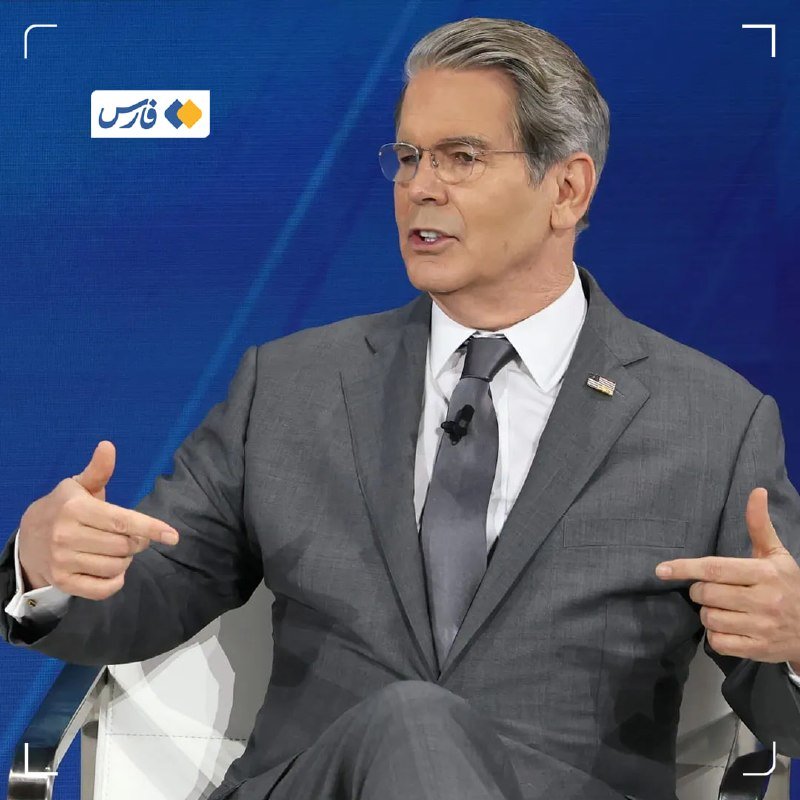
At three separate pool moments on 23 June 2026, the US president was asked when inspectors from the International Atomic Energy Agency would physically reach Iranian nuclear sites. Three times he declined to commit: "at the appropriate time," "when the time comes," and, in the most explicit of the exchanges, "at the appropriate time. There is no rush."
The lines — captured by the Telegram channels Clash Report, Abuali Express, and the English-language Abuali feed within a span of roughly twenty-six minutes between 17:22 and 17:48 UTC — were not the boilerplate "we'll see" of a president evading a question. They were a repeated, almost scripted formulation, deployed identically across three different reporters' questions about the same underlying file. Read together, they suggest a White House that has decided, at least for now, that the timeline for inspectors is itself a diplomatic instrument.
What was actually said
The substantive content of the three exchanges is identical, and that is the point. The first, posted by Clash Report at 17:22 UTC, has the president adding the clarifying line "There is no rush" — the most expansive of the three answers and the one that does the most work. The Abuali Express feed at 17:24 UTC recorded the more compressed "when the time comes." The English-language Abuali account at 17:48 UTC returned to the "appropriate time" formulation that the same pool had used in the morning.
None of the three reporters — and none of the three channel operators — offered a follow-up, an on-camera rebuttal from Tehran, or a date for any IAEA board meeting. The exchanges are, in effect, a single statement made three times in slightly different registers. The president was not cornered. He was repeating himself.
Why the formulation matters
"At the appropriate time" is the kind of answer that usually signals one of two things: a negotiating position that cannot be made public, or an internal process that is not yet complete. In a normal inspection regime, the IAEA publishes a calendar; access follows a routine; the question "when" has a factual answer measured in days or weeks. That is how the agency has operated in Iraq, in Libya after 2003, and in Iran itself between 2015 and 2018 under the Joint Comprehensive Plan of Action.
The fact that the US president is now personally holding the timeline — rather than the agency speaking through its secretariat, or the State Department reading out a bilateral understanding — is itself the story. The IAEA is, on paper, an independent technical body reporting to its Board of Governors. In practice, on this file, access to Iranian sites appears to be a question the United States is handling as a political channel between Washington and Tehran, with the agency's blue-helmeted technical mission as the eventual delivery mechanism.
The "no rush" formulation is the more telling half of the sentence. It signals that Washington does not believe the situation on the ground is deteriorating on a clock that requires an emergency inspection cycle — or, alternatively, that any inspection cycle that does take place will be sequenced behind political steps that have not yet been completed. Either reading points away from an imminent technical flashpoint and toward a managed, drawn-out process.
The counter-reading
The alternative interpretation is straightforward, and it is the one that several Western outlets have favoured in past inspection disputes: that "no rush" is itself a concession to Tehran, and that the absence of an IAEA presence at declared sites is functionally equivalent to the agency being locked out. Under that reading, the US is trading short-term visibility for the appearance of a diplomatic process that Tehran can show domestically as evidence that it has not capitulated.
That reading is not implausible. The IAEA's statute gives it a right of access to declared facilities; the practical question is always whether the host state grants the access in days or in weeks, and whether undeclared sites are part of the same access regime. If Washington has, in effect, accepted a slower cadence in exchange for the political cover of an eventual visit, the cost of "no rush" is paid in lost intelligence — the kind of baseline radiological and centrifuge-counting data the agency uses to verify declarations.
The reason that reading probably does not fully hold is that it treats the three exchanges as if they were leakage rather than performance. The repetition across three reporters, in three near-identical formulations, within twenty-six minutes, reads less like a White House caught flat-footed and more like one that wanted the line on the record in three places at once.
What is not in the public record
The thread items do not say when the IAEA last had inspectors on the ground in Iran, what facilities are under discussion, or whether the agency has issued any public statement on the matter. They do not name the reporters, the venue, or the underlying diplomatic exchange that produced the question in the first place. They do not record any Iranian response, from the foreign ministry, the Atomic Energy Organization of Iran, or the country's mission to the IAEA in Vienna. The framing rests entirely on three short video clips of the same US president, speaking to no visible interlocutor, on the same day.
That thinness is itself a feature of the file. The substantive answer to "when will inspectors be on the ground" is, in this configuration, a question Washington is choosing to keep vague — and the choice to keep it vague is, for now, the answer.
This piece draws on three Telegram pool feeds recorded between 17:22 and 17:48 UTC on 23 June 2026. The underlying diplomatic context — last IAEA access, the status of any technical understanding, and Tehran's public position — is not addressed in the source material and is flagged here as an open file rather than as a finding.
Wire provenance
This editorial synthesis draws on the following public wire/social posts:
- https://t.me/ClashReport
- https://t.me/abualiexpress
- https://t.me/englishabuali
Follow the event.
These dated source records provide context. They do not retrospectively verify this archive article.
Separate what the nuclear watchdog reported from what it could not determine after the June 2025 strikes.