Rubio courts Gulf monarchies as Washington tries to lock in an Iran deal before it slips
On a single Wednesday in late June, the Secretary of State told three different audiences the same thing: Washington will not let its Gulf partners down. Whether they believe him is the open question.
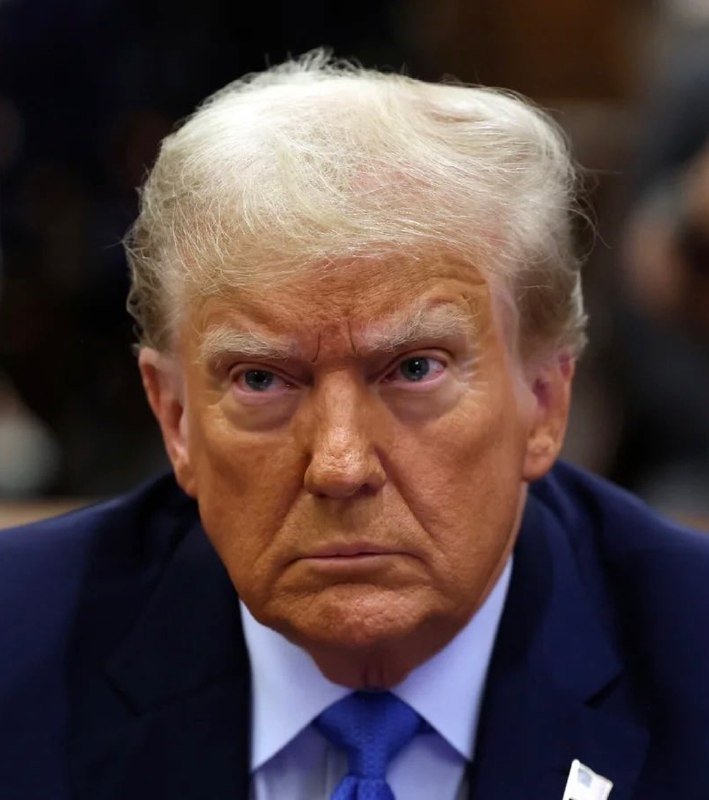
On the afternoon of 24 June 2026, US Secretary of State Marco Rubio told Gulf partners the same thing, in three different settings, that he has spent the spring promising them in private: Washington will not do anything that undermines their security, and a permanent settlement with Iran is within reach. The repetition, on a single day, was the message. Gulf monarchies have heard American assurances before. What they have not always seen is the follow-through.
The pitch is now formal. Rubio told allies in the region that the United States would be "completely aligned" with them as negotiations with Tehran enter what the Trump administration describes as a final phase. The same assurance was delivered in the more operative framing that Gulf defence planners actually parse: that no US move on the Iran file would come at the expense of their own threat picture. Whether the two readings of "aligned" survive contact with the substance of a deal is the question that will define the next quarter of Middle East diplomacy.
The reassurance tour, compressed into one Wednesday
The sequence moved fast. By mid-afternoon UTC, France 24 was carrying Rubio's line that Washington would protect Gulf interests in any final Iran settlement; by 22:14 UTC, Middle East Eye was reporting the "completely aligned" formulation directly; by 22:36 UTC, the same assurance had cycled back into France 24's lede. The Telegram channel Our Wars Today captured the operative clause — that the US "will not do anything that would undermine" Gulf security — in the language diplomats actually use when they are being asked, in private, whether American guarantees still mean what they used to.
The compression matters. Securing Gulf buy-in is the precondition for any Iran deal that the White House wants to be able to call durable. Tehran's threat picture is not a one-country question for Riyadh, Abu Dhabi or Doha; it runs through proxies, missile programmes and the Strait of Hormuz corridor that carries a meaningful share of the world's seaborne energy. A US-Iran settlement that produces an Iranian nuclear constraint but a looser regional leash on Tehran is not, from the Gulf view, a settlement. Rubio's job this week was to convince the Gulf states that the two come together.
The structural worry underneath the rhetoric
A second France 24 line on the same day — carrying the commentariat framing of the trip — put the deeper anxiety in plain words: that the United States itself is in "panic" at the prospect of Gulf states going it alone. That is overcooked as a description of policy in Washington, but it correctly identifies the direction of travel in the Gulf. Diversification of security partnerships is no longer theoretical. The UAE hosts a growing French defence relationship, Saudi Arabia has spent two years hedging its procurement across multiple Western suppliers, and the smaller monarchies have spent the post-2011 decade building bilateral channels with non-American security establishments.
The question is whether a US-Iran settlement, if it lands, slows that drift or accelerates it. The Rubio reassurance is built on the assumption that the Gulf states still see the US as the indispensable security partner and that the Iran file is the variable that can be closed to lock that in. The alternative read — visible in the "panic" framing and in the hedging behaviour of the Gulf monarchies themselves — is that a deal actually ratifies the perception that Washington is one transactional administration away from reordering its commitments, and that the only rational hedge is to keep building alternatives. Both readings can be defended from the same set of facts. Which one ages better depends on what Rubio's Gulf interlocutors think they have actually been promised.
What is in the deal, and what is not, for the Gulf
The reporting does not specify the substantive content of a US-Iran framework. The references to a "final settlement" and to "permanent" arrangements are ambitions, not paragraphs. The Gulf states will be reading for three concrete things. First, the fate of Iran's missile programme and the proxy network — the file that Gulf defence ministries actually care about, and that has historically been under-treated in nuclear-focused negotiations. Second, the security architecture that would govern the Strait of Hormuz in any post-deal environment, and the rules of engagement for incidents at sea. Third, the trajectory of US force posture in the Gulf, including the presence, basing rights and over-flight arrangements that translate "alliance" from rhetoric into steel on the ground.
Rubio's "completely aligned" line is an answer to the second and third questions. It is not, on the public record, an answer to the first. That is a meaningful gap. The Gulf states have lived through previous moments when American secretaries of state stood beside Gulf foreign ministers and assured them that missile and proxy files were on the table, only to find those files treated as adjacent to the nuclear question rather than as central to it. The pattern is well enough known that it is now treated in Gulf policy literature as a default assumption rather than as a worst case.
Stakes over the next two quarters
If Rubio's line holds, the trajectory is a deal by early autumn, the Gulf states opting in rather than hedging harder, and a measurable slowing of the diversification away from US security supply. That is the upside Washington is buying with this week's airlift of senior officials into the region. If the line does not hold — if the substantive deal emerges in a form that leaves missile and proxy files under-treated, or if a future US administration is perceived in the Gulf as transactional enough to walk the agreement back — the same reassurance tour will be remembered in Riyadh and Abu Dhabi as the moment Washington asked the Gulf to take its commitments seriously, and as the moment the Gulf quietly decided it would rather not have to.
The sources do not yet disclose whether Tehran has agreed to the architecture Rubio is selling in the Gulf, nor whether the Gulf states have bought it. What is on the public record is the choreography, and the choreography says that the administration has decided this is a moment to over-reassure rather than under-reassure. That is itself a signal about the price Washington fears the Gulf may otherwise extract, with its hedging, from an arrangement that needs them more than it needs Washington.
This publication treats the Middle East file as one in which the Iranian and Gulf state positions are reported with the same structural seriousness as the American one, and in which the trajectory of US commitments is read as a question of evidence rather than of intent.
Wire provenance
This editorial synthesis draws on the following public wire/social posts:
- https://t.me/ourwarstoday/