IMF projects Lebanese economy will contract in 2026 as war reshapes fiscal math
The IMF's 27 June 2026 projection of a Lebanese contraction is being read by Monexus as a marker of where the Fund itself is heading, with its largest shareholder simultaneously striking the country it is being asked to underwrite.
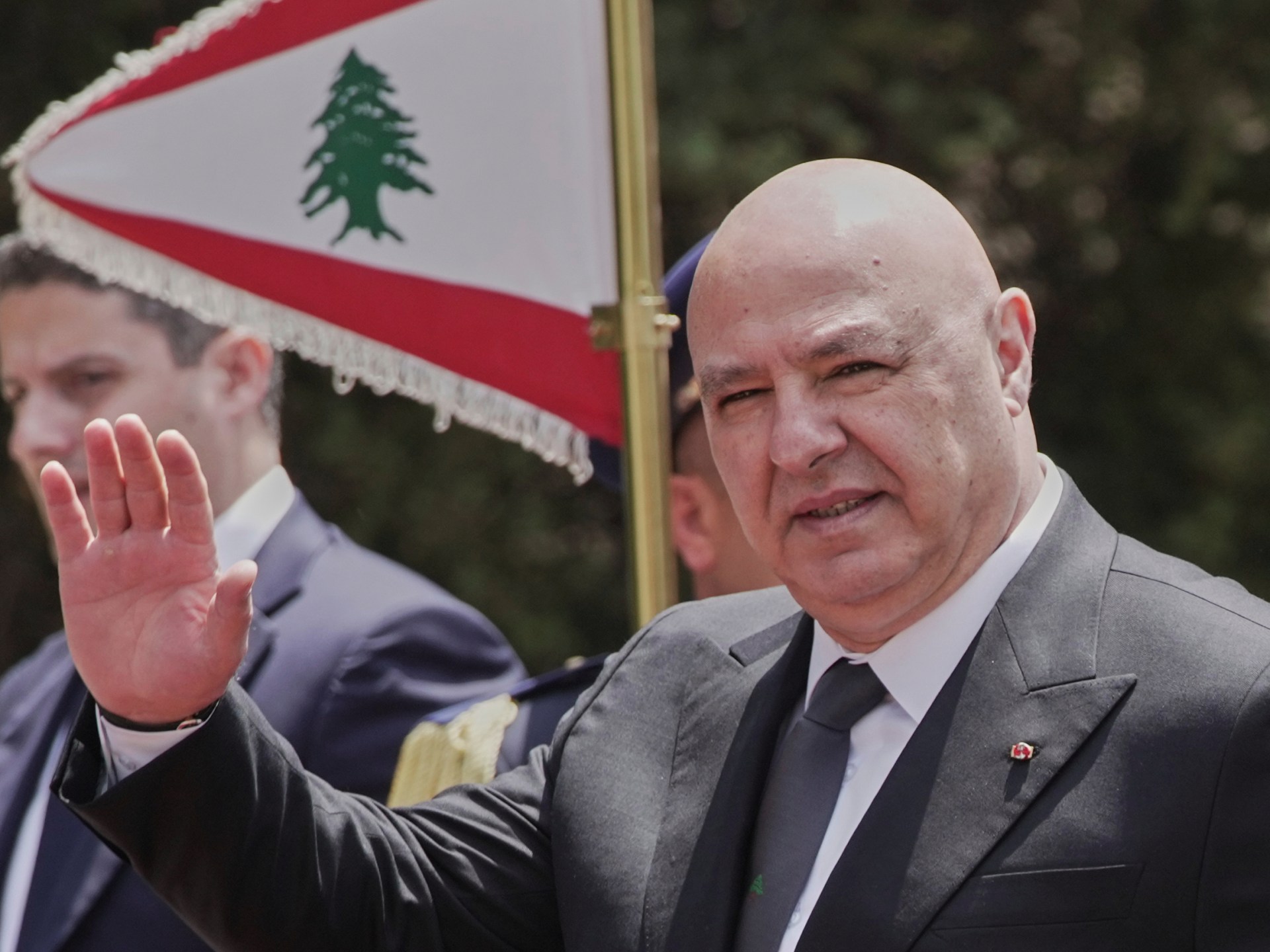
On 27 June 2026 the IMF published a country report on Lebanon that, on the usual read, should have been a financial story. The bank projected a contraction in real GDP for 2026, with reconstruction costs, debt service, and a collapsing banking sector compounding the damage of a year-long Israeli campaign against Hezbollah and the political paralysis that has followed. Read another way, the document is something stranger: a multilaterally-blessed acknowledgement that the Fund's traditional toolkit is being asked to absorb the consequences of a kinetic event, not a policy failure, and that the math is no longer closing the way it did when the institution was built.
The most recent escalation ended, at least on paper, with a framework agreement signed in late June between Beirut and Tel Aviv, brokered by the US State Department. The Lebanese presidency confirmed that President Joseph Aoun received a phone call from Donald Trump during which the US president was assured of implementation, according to a statement carried by Iranian outlets and regional wire desks. The agreement, which the Telegram channel Tsaplienko described as marking the moment "Lebanon and Israel are no longer enemies as of today," is the political backdrop against which the IMF's fiscal numbers are now being negotiated. Whatever the deal's durability, its first economic consequence is to freeze the conflict long enough for the cost of repairing it to be priced.
The numbers that won't add up
The IMF's projection tracks a pattern that has hardened across the Fund's Middle East country reports since late 2024. Real output contracts. The current account deficit widens as import demand for fuel, wheat, and reconstruction inputs outruns a depleted export base. Public debt, already above 150% of GDP in pre-war estimates, climbs further as the state absorbs emergency spending without an operating budget. The lira, pegged in name only for the better part of a decade, drifts. The banking sector, whose balance sheet has been a slow-motion casualty of the 2019 collapse, is asked to lend into a recovery it cannot underwrite.
What the projection does not say, and what the wire coverage has tended to underplay, is that none of these levers are available to the Lebanese state on their own terms. The central bank's reserves, such as they are, are committed. The political class is fractured between a presidency still finding its footing, a parliament that has not passed a budget in years, and a Hezbollah political wing that is at once diminished by the war and unreconciled to the ceasefire framework. The IMF's standard remedy, a programme of conditionality tied to reform benchmarks, presupposes a contracting government that can be pressured. Lebanon in mid-2026 is not that.
What the war broke that the Fund cannot rebuild
The Israeli campaign against Hezbollah, which ran in parallel with the broader US-Iran confrontation that flared again on the same weekend, destroyed the southern suburbs of Beirut, the southern Litani corridor, and the bulk of the Bekaa's industrial and agricultural base. Reconstruction estimates, even conservative ones carried by regional outlets, run into the tens of billions. The donor conference architecture that has historically underwritten Lebanese recovery, the CEDRE process of 2018, the French-led follow-ups, the Gulf-funded tranches, has not convened. There is no agreement in the public record, as of the date of the IMF report, on who pays.
This is where the projection stops being a Lebanese story and starts being a story about the institution issuing it. The IMF was built to manage balance-of-payments crises in countries whose solvency problems were the product of domestic policy: a peg held too long, a deficit monetised, a banking sector captured. Lebanon meets some of those criteria. It also meets a newer one: a country whose productive capacity was destroyed by a foreign military campaign, with the destruction politically endorsed by the same external power that holds the largest voting share at the Fund. The report is being asked to underwrite, with concessional lending and signalling, an economic order whose principal creditor is the same government that, four weeks ago, was striking the territory in question.
The Iran variable, the ceasefire that isn't
The political timing of the IMF report is difficult to disentangle from the trajectory of the wider confrontation. On the same weekend the Fund's numbers were in circulation, US Central Command announced a new wave of strikes against multiple targets inside Iran, an operation the Lebanese and regional channels carried in real time. President Trump confirmed on Truth Social that US forces had attacked targets inside Iran, writing, according to the Iranian state-linked Fars news agency, that "Just a few moments ago" the operation had been carried out. In a separate message reported by regional outlets, Trump warned that "the Islamic Republic of Iran will no longer exist" if the United States were "forced to complete the job."
The contradiction is the story. The Trump administration is simultaneously brokering a Lebanon-Israel framework, conducting strikes inside Iran, and managing, through the IMF, the fiscal reconstruction of a Lebanese state whose principal Iranian-backed armed faction has been the explicit target of the campaign. Democratic Congressman Ro Khanna, in a statement carried by Al Alam, called on the president to "stop this war immediately, otherwise we will sue him to force him to do so." Whether or not the suit materialises, the political signal is clear: a sitting US legislator is on the record that the war and the reconstruction are incompatible policy goals.
What the Fund is becoming
For most of its history the IMF has operated on a premise of policy symmetry. Loans come with conditions. Conditions presuppose a government that can comply. Compliance presupposes a sovereign whose troubles are, at some level, self-administered. The Lebanon file is testing every one of those premises. The state is a contracting party to a ceasefire it did not negotiate. The damage was inflicted by a foreign military the Fund's largest shareholder effectively controls. The reconstruction bill will be partly underwritten by the same institution, in a country where the banking sector is functionally insolvent and the political class cannot agree on a budget.
The more durable read of the IMF projection is therefore not as a verdict on Lebanese policy, but as a marker of where the Fund is heading as an institution. When a member state collapses under kinetic pressure, the traditional tools of conditionality and reform benchmarking run out of road. What replaces them, whether a more openly political lending regime tied to ceasefire implementation, a special reconstruction window, or a quiet acquiescence to the larger geopolitical settlement, will define the next decade of IMF statecraft. The Lebanon report is the first public accounting of that transition. It will not be the last.
Sources
- IMF Lebanon country report, published 27 June 2026 (referenced via Lebanese and regional wire desks; full text via imf.org country pages).
- Telegram, Tsaplienko channel, 27 June 2026: https://t.me/Tsaplienko
- Telegram, Tasnim News English, 27 June 2026, on the Aoun-Trump call: https://t.me/tasnimnews_en
- Telegram, Fars News, 27 June 2026, on Trump's Truth Social confirmation of strikes inside Iran: https://t.me/farsna
- Telegram, DDGeopolitics, 27 June 2026, on CENTCOM strike announcement: https://t.me/DDGeopolitics
- Telegram, Insider Paper, 27 June 2026, on Trump's Iran warning: https://insiderpaper.com/trump-warns-iran-will-no-longer-exist-if-us-decides-to-escalate/
- Telegram, Al Alam Arabic, 27 June 2026, on Ro Khanna statement: https://t.me/alalamarabic
- Telegram, The Cradle Media coverage thread: https://t.me/thecradlemedia/
- Telegram, Witness feed: https://t.me/wfwitness/
Desk note: Monexus is framing the IMF Lebanon report as a crisis-management story with structural implications for what the Fund is becoming, not as a Lebanon-domestic story. Wire coverage has tended to read the projections as commentary on the war. The more durable read is as commentary on an institution whose traditional toolkit is being asked to absorb a kinetic event it was not designed for, while the same external shareholder conducts the campaign whose reconstruction it is being asked to finance.
Follow the event.
These dated source records provide context. They do not retrospectively verify this archive article.
Separate what the nuclear watchdog reported from what it could not determine after the June 2025 strikes.