A July 4th flyover, a Rubio summit on political violence, and the architecture of a managed presidency
Three announcements in 48 hours — a record Washington flyover on July 4th, a Rubio-led summit on political violence, and the debut flight of the new Air Force One — sketch a presidency that governs partly by spectacle.
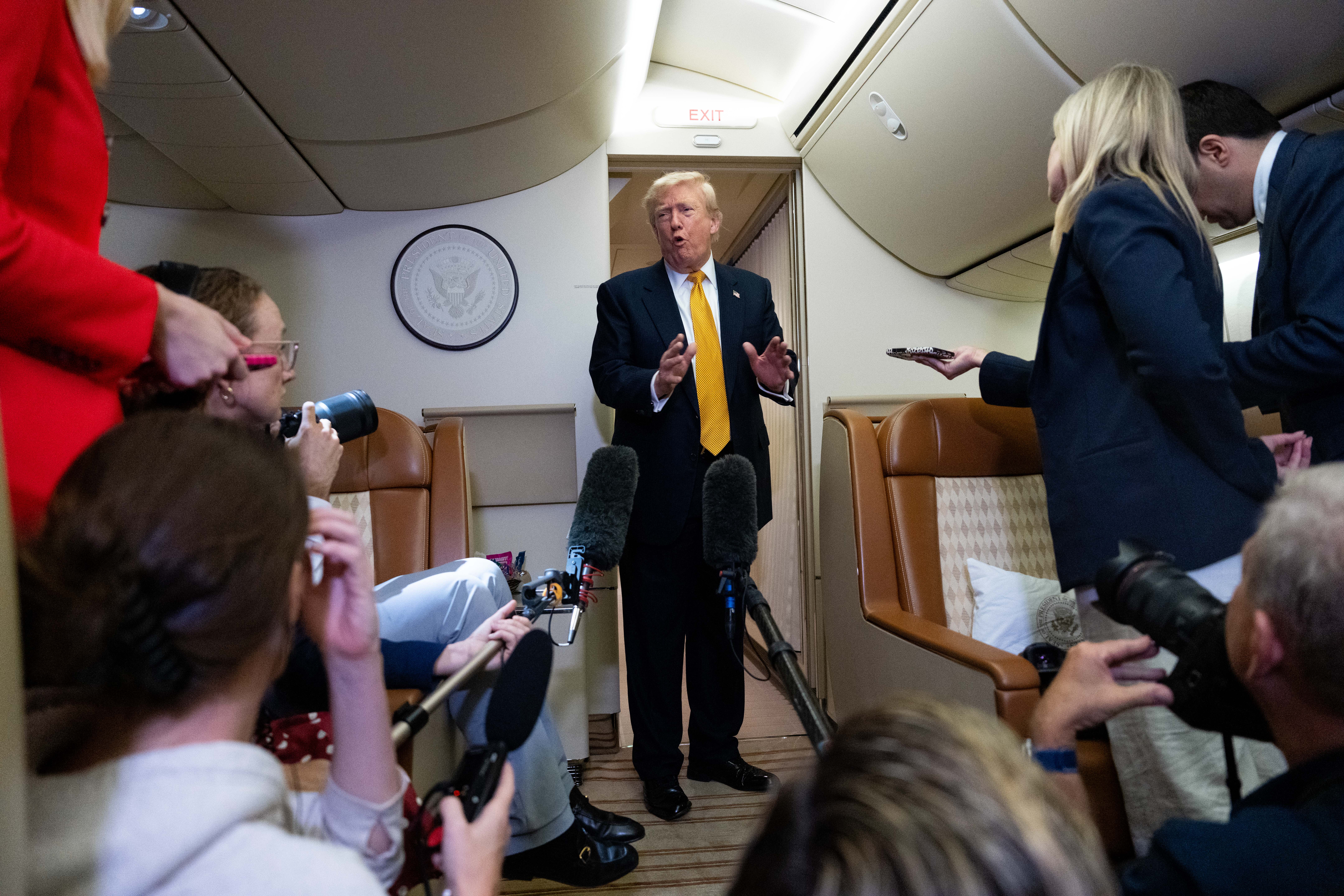
Between Wednesday evening and Friday afternoon Washington time, three announcements landed close enough together to read as one document. On 25 June 2026 at 23:07 UTC, Donald Trump warned that "the communists are finally making their move." By the next morning, 26 June 2026 at 12:49 UTC, Secretary of State Marco Rubio had been confirmed as host of a 15 July summit in Washington gathering more than sixty countries to discuss political violence. Hours later, at 16:40 UTC, the president announced what his team billed as the largest airshow ever staged over the United States capital, set for the Fourth of July. And threaded through the same window, at 00:58 UTC on 26 June, came word that Trump intends to make his first trip next week aboard the new Air Force One.
Taken individually each item is small. Taken together, they describe a White House that has chosen, in this stretch of the calendar, to govern as visibly as possible — and to ask the rest of the country, and a good portion of the world, to watch.
The pageantry line
The July 4th flyover is the easiest of the three to dismiss as theatre, which is precisely why it deserves a closer look. "Biggest airshow ever over Washington DC" is a category, not a metric, and the announcement as carried did not specify participating aircraft, budget, or airspace coordination with the Federal Aviation Administration. The political logic, however, is plain: Independence Day in a second-term Republican White House is a domestic-audience production, and the sky over the National Mall is the largest available stage.
What an airshow over the capital does, beyond pleasing aviation enthusiasts, is graft the presidency back onto a piece of shared physical space at a moment when most Americans encounter their government as a screen. The same logic runs through the new Air Force One debut. The aircraft is a Boeing 747-8 delivered against a long and contested procurement; the trip next week, on 26 June reporting, will be its first presidential mission. The fuselage is famously two-tone, the livery is famously polarising, and the symbolism is built in. A president who flies on the new jet is not simply travelling — he is performing the office on a moving platform that the world's press is obliged to photograph.
The diplomacy line
The Rubio summit is a different instrument entirely, and a more consequential one. A gathering of more than sixty foreign delegations in Washington on 15 July to address political violence is, on its face, an exercise in agenda-setting: the United States choosing the topic, the venue, and the guest list. "Political violence" is a capacious phrase. It can encompass assassination attempts on heads of government, attacks on legislators, the murders of public officials, mass-casualty events, and the slower, ambient violence of street crime — each of which has a different policy machinery attached and a different set of countries that feel addressed.
The state department did not, in the available reporting, publish a draft communique, a list of invited governments, or a definition of the term. That vacuum is itself a story. A summit of this size succeeds or fails on the prior coordination that nobody sees; the public version is the photograph. If Rubio intends the meeting to produce a shared framework — definitions, information-sharing protocols, something resembling an international convention — the work has to be done before delegates land. If it is intended instead as a platform for a particular American diagnosis of the problem, then the sixty countries are an audience rather than a co-author.
The warning line
Trump's warning that "the communists are finally making their move" sits awkwardly next to the other two items. It is undated in its specifics, without a target country, an organisation, or an incident attached. Read against the other announcements of the week it looks less like a stand-alone foreign-policy declaration than like a tonal frame: an atmosphere of imminent threat into which the flyover and the summit can be inserted as a response.
That is not, on the evidence, a paranoid reading. American presidents have repeatedly used ambient warnings of internal or external danger to expand the discretionary reach of the executive, and the public record contains many examples of security justifications that outran the underlying events. None of this means the warning is wrong; the available reporting simply does not establish what, specifically, it refers to. A reader trying to evaluate it honestly has to hold two thoughts at once: that political violence is a measurable and increasing problem in several democracies, and that a presidential warning of communist movement, without particulars, is also a political instrument.
What is actually being built
Step back and the three announcements share an architect. A flyover over the capital converts a holiday into a state ceremony. A new Air Force One, flown for the first time on a presidential trip, converts travel into branding. A sixty-country summit on political violence converts a contested policy field into a venue for American leadership. And a warning of communist movement, deliberately vague, converts the news cycle into a permission slip.
Each piece is deniable on its own. The flyover is a celebration. The summit is a meeting. The aircraft is a plane. The warning is a sentence. The pattern is what the White House is constructing — and the pattern is a presidency that does a meaningful share of its governing through arranged moments, on stages of its own choosing, in front of cameras it controls. That is not unprecedented in American history, but it is being done at a tempo and a scale that deserve to be named rather than normalised.
What remains genuinely uncertain is the payoff. Spectacle can substitute for action; it can also prepare the ground for action that the same cameras will record. The 15 July summit will produce a clearer answer than the 4 July flyover, because summits produce documents and documents can be read. Until then, the fairest summary is the one the week itself offers: a White House that is very busy being seen, and that has not yet shown its readers what, beyond the seeing, it intends to do.
Desk note: this piece works from four wire-level announcements circulated on 25–26 June 2026 and deliberately refuses to fill in the gaps — participant lists, aircraft inventories, draft communiques — that the sources do not supply. Where the official line is the only line available, that limitation is named in the text rather than disguised.
Wire provenance
This editorial synthesis draws on the following public wire/social posts:
- https://t.me/s/insiderpaper