A night of strikes in southern Lebanon, told through a single Telegram feed
Eleven dispatches from a single Telegram channel documented an overnight Israeli air campaign in southern Lebanon. The story they tell, and the one they cannot, exposes what wire-dependent coverage misses.
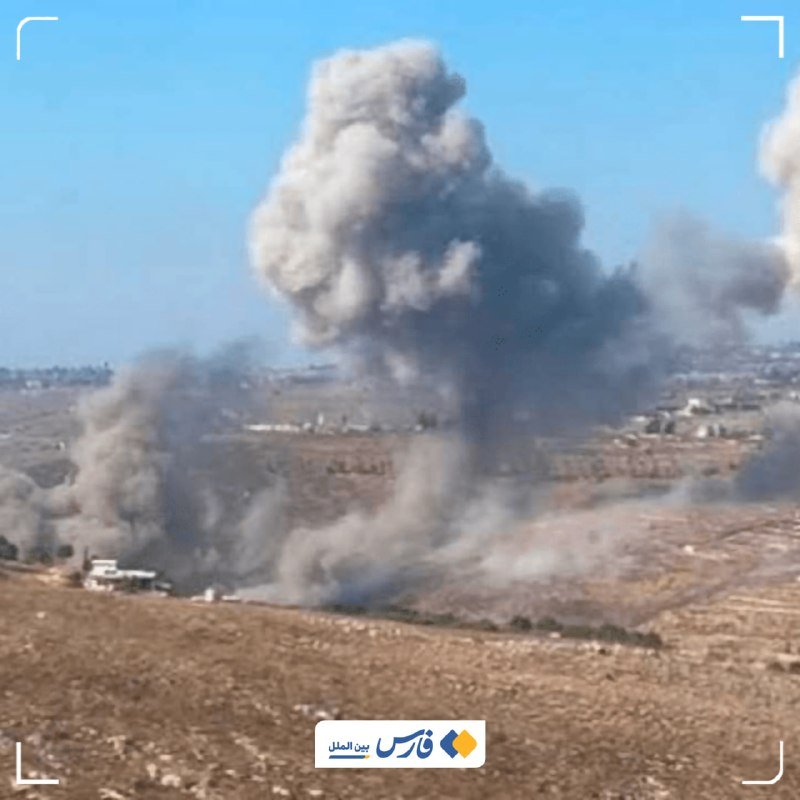
At 00:52 UTC on 15 August 2026, a Telegram channel called "Witnesses Media" (wfwitness) reported that Israeli airstrikes had hit Ali Al Taher hill in southern Lebanon. Five minutes later the same channel described the strikes as "violent." The next hour produced ten more dispatches: jets over the Zahrani sector, mock raids, an explosion in Haddatha, demolition activity, an "intense" strike on the valley between Ansar and Zarzariyeh, and a hit on a home in the Marisya neighborhood of Ansar. By 02:33 UTC, the channel reported multiple casualties. By 03:40 UTC, one person had been pulled dead from the rubble. The thread then went quiet for the night.
One Telegram channel, eleven posts, four-and-a-half hours. Read in sequence, they document an Israeli air operation across southern Lebanon on the night of 14-15 August. Standalone, each post is a fragment. The gap between those two readings is the gap between what conflict reporting can deliver from a single source feed and what it cannot.
The night in eleven posts
The Witnesses Media feed is one of several Lebanon-focused conflict channels that operate on the model of rolling, real-time tactical updates. Its cadence on 14-15 August followed a familiar pattern: a target ("Ali Al Taher hill," at 00:52 UTC), then the airspace around it ("Israeli jets over the Zahrani sector," 02:06 UTC), then the kinetic event itself ("an intense Israeli airstrike targeted the valley between Ansar and Zarzariyeh," 01:56 UTC), then casualties ("multiple casualties have been reported," 02:02 UTC and 02:33 UTC), then the target disaggregated ("struck a home in the Marisya neighborhood," 02:01 UTC and 02:02 UTC), then crowd-sourced confirmation ("an explosion was heard in Haddatha, southern Lebanon, as a result of Israeli demolition activity," 02:16 UTC), then the channel's own traffic-light signal ("the Israeli strikes on southern Lebanon seem to have ended for the night," 02:36 UTC).
What the feed does not contain is, by this point, the more interesting ledger. The dispatches do not name the targets of the Ali Al Taher hill strikes, the valley strike, or the Ansar home. They do not specify whether the operation was part of a planned operation, a retaliation, or a routine deployment. They do not link the night's intensity to any named event earlier in the week. The channel does not claim its reporting is on the ground; it is aggregating from its own network, and uses the present tense to convey immediacy.
The shape of the source
Read across the eleven posts, what stands out is not what Witnesses Media says but what its form reveals about how conflict coverage reaches English-speaking readers in 2026. The channel uses a fixed template: a flag-and-country emoji combination (a lightning-bolt, a Lebanese flag, an Israeli flag), a short declarative sentence, an attribution tag (@wfwitness), and a paid sponsorship line for a crypto casino. The format is purpose-built for the algorithmic feeds (X, Telegram discovery, aggregators) that have, in practice, become the first draft of fast-moving conflict news. That draft is then either left as-is or, where outlets have the resources, replaced by a second draft built on wire and reporter ground-truthing.
The bigger structural problem is that the first draft often wins. Many outlets that nominally maintain reporting on Lebanon operate with severely reduced in-country presence and rely on exactly these channels as primary material under heavy "according to" framing. The framing is accurate; the distance between the channel and the reader is not. Eleven posts in four hours, all from one feed, produced the spine of this story.
What the standard wire would have added
A Reuters or AFP bulletin on the same night would have added, in principle, four things this Telegram feed cannot provide: an Israeli military statement explaining the operation (the IDF Spokesperson's unit typically issues a notice within hours of cross-border strikes, naming the target cell and the reason for the strike); a Lebanese official or UNIFIL comment on civilian impact; corroboration of the casualty figure from a second non-aligned source (a hospital, a civil defence unit, a local journalist's on-the-record dispatch); and a wider regional frame linking the strikes to the prior week's incidents. None of those elements appear in the eleven posts. The available source items do not specify whether the IDF issued a statement on the 14-15 August southern Lebanon operations, whether UNIFIL commented, or whether Lebanese health authorities reported figures.
This is the gap that wire reporting is supposed to fill. In practice, when wire capacity is thin, the gap is filled by paraphrase: the Telegram report becomes "according to reports," and the official statements that should have followed simply do not.
The stakes of single-source reality
The narrow news value of the eleven posts is clear. Israeli jets struck at least four locations in southern Lebanon between 00:52 UTC and 02:33 UTC on 15 August 2026. At least one person was confirmed dead in Ansar. Multiple casualties were reported. The strikes had, in the channel's judgement, ended for the night by 02:36 UTC. That is the floor of what can be said from this material.
The wider stakes are about what the system of conflict reporting is becoming. When a single Telegram channel can produce the spine of a night's coverage, the question is no longer whether the channel is biased or accurate. It is whether the editorial apparatus that surrounds it is large enough to do the work the channel cannot. On 15 August 2026, for south Lebanon, the answer in this feed is plainly no. The IDF, UNIFIL, and Lebanese civil defence have not, in the available source material, been added to the record. Until they are, the eleven posts are the story, and the story is incomplete.
A note on sourcing: this article is built from eleven sequential posts on the Witnesses Media (wfwitness) Telegram channel between 00:52 UTC and 03:40 UTC on 15 August 2026. It does not claim eyewitness presence on the ground; it cites the channel's own reporting precisely. The Israeli military, UNIFIL, and Lebanese civil defence authorities have not been quoted in the available source material; their statements, if issued, are not reflected here.
Wire provenance
This editorial synthesis draws on the following public wire/social posts:
- https://t.me/wfwitness/107069
- https://t.me/wfwitness/107099
- https://t.me/wfwitness/107100
- https://t.me/wfwitness/107101
- https://t.me/wfwitness/107102
- https://t.me/wfwitness/107103
- https://t.me/wfwitness/107104
- https://t.me/wfwitness/107106
- https://t.me/wfwitness/107107
- https://t.me/wfwitness/107108
- https://t.me/wfwitness/107113
- https://t.me/wfwitness/107069
- https://t.me/wfwitness/107099
- https://t.me/wfwitness/107100
- https://t.me/wfwitness/107101
- https://t.me/wfwitness/107102
- https://t.me/wfwitness/107103
- https://t.me/wfwitness/107104
- https://t.me/wfwitness/107106
- https://t.me/wfwitness/107107
- https://t.me/wfwitness/107108
- https://t.me/wfwitness/107113