Hezbollah rejects Israel-Lebanon framework as protests erupt in Beirut
A day-old framework agreement between Israel and Lebanon faces an immediate domestic test, as Hezbollah's parliamentary bloc denounces it as surrender and demonstrators fill Beirut streets.
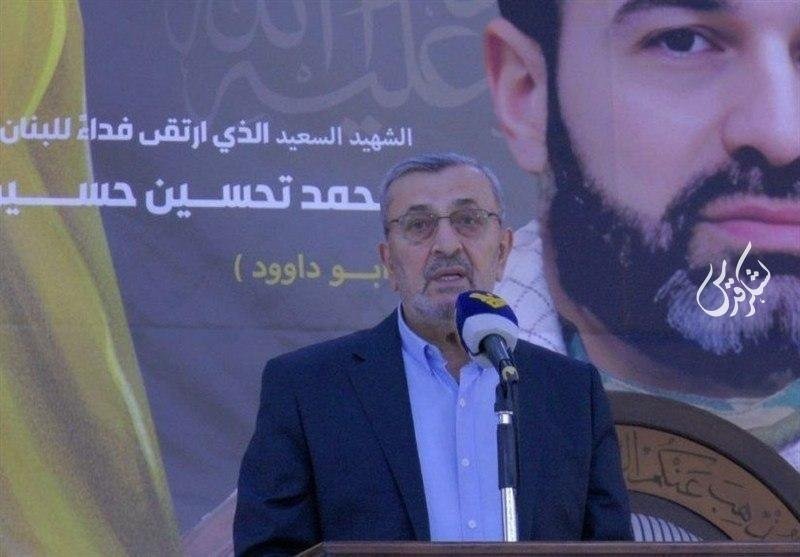
Less than twenty-four hours after Israel and Lebanon announced a new framework agreement, the deal is facing its sharpest political test at home. On 27 June 2026, the Hezbollah-aligned parliamentarian Hussein al-Hajj Hassan publicly rejected the text as a "surrender," telling followers that his faction does not recognise the arrangement. By early morning, demonstrators had filled several Beirut neighbourhoods, and Lebanese army units deployed force in places to disperse crowds that had blocked roads and burned tyres, according to footage circulated by The Cradle Media.
The episode crystallises a recurring pattern in the Mediterranean: a diplomatic document signed in one room is disputed in another, and the gap between announcement and consent often determines whether the agreement survives. Israel has not publicly disclosed the full text, and Lebanese Prime Minister Nawaf Salam's office has described the framework in general terms. What is clear, on the morning of 27 June 2026, is that the agreement is contested before it has been implemented.
What was actually announced
Reporting on the framework has, so far, focused on two intersecting questions: what Israel has secured, and what Lebanon has conceded. Coverage circulated through the English-language account of Abu Ali and through X posts citing the agreement describes Israeli forces remaining in positions inside southern Lebanon, with the Lebanese army deployed as the visible sovereign presence in those areas. One widely shared clip shows Lebanese troops watching Israeli vehicles without apparent engagement, a contrast that critics inside Lebanon have seized on. According to a post by the account @sprinterpress on X at 10:33 UTC on 27 June 2026, "Israel occupied Lebanese territory, and the Lebanese army, which you see in the video, did not even throw a slipper at the Israel occupiers of their land" — a formulation that captures the framing now dominant in protest messaging.
Israel's security concerns along the northern border are a documented fact: rocket and drone fire from Lebanese territory, including by Hezbollah and affiliated factions, has been a recurring feature of the past two years. The framework, as described in Lebanese official statements, formalises a ceasefire mechanism that places the Lebanese armed forces as the principal guarantor of quiet along the frontier. The Israeli government has framed the arrangement as a calibrated withdrawal contingent on verification — language designed for a domestic Israeli audience that remains deeply sceptical of any deal with a state where armed non-state actors still operate.
The Hezbollah reading
Hezbollah's rejection is not new in form, but the language is unusually blunt. Hassan, a sitting member of the Lebanese parliament who represents the party, called the agreement "not an agreement" and "a surrender," according to a post published on the English-language Abu Ali Telegram channel at 10:47 UTC on 27 June 2026. The phrasing matters: Hezbollah is not merely declining to endorse the text, it is delegitimising it in advance. That posture leaves open the question of whether the movement will treat the framework as binding on its own military posture, or whether it will preserve the option of independent action.
The street protests underline the political cost. Footage published by The Cradle Media on its Telegram channel at 09:15 UTC on 27 June 2026 shows demonstrations in multiple Beirut districts, with crowds chanting against the framework. In several areas, demonstrators pushed past initial crowd-control lines; Lebanese army units responded with force to disperse them, according to the same footage. The Cradle's framing — sympathetic to the axis-of-resistance reading and hostile to the Lebanese government's diplomatic path — is itself part of the story. The outlet has consistently portrayed any normalisation track between Beirut and Jerusalem as a form of capitulation, and its footage should be read with that editorial line in mind.
Why this deal is structurally different
What sets this framework apart from the inherited diplomatic architecture of the conflict is the asymmetry of the signatory coalition. On the Israeli side, the agreement is being carried by a government that faces an electorate still traumatised by the October 2023 Hamas attack and by repeated northern-front exchanges since. On the Lebanese side, the signatory is a caretaker government in Beirut whose political mandate does not extend to the most powerful armed actor on its own territory. The United States, France, and the European Union have all reportedly backed the framework as a path to de-escalation, but external endorsement does not dissolve the internal veto.
That gap — between external sponsor and internal legitimacy — has been the consistent failure mode of Lebanon-Israel diplomacy for four decades. The 1983 May 17 agreement between Lebanon and Israel was signed by a government that did not control its own territory and was annulled within a year under Syrian pressure. The 2020 maritime boundary deal, by contrast, was carried by a Lebanese government with broader political buy-in and has held. The current framework sits closer to the earlier precedent than to the later one.
The stakes over the next sixty days
Three trajectories are plausible. In the first, the Lebanese government ratifies the framework in parliament over Hezbollah's objections, the Lebanese armed forces gradually consolidate positions in the south, and the deal holds in its initial form — bruised but functional. In the second, Hezbollah treats the framework as void and resumes calibrated strikes across the border, prompting an Israeli response and an early collapse. In the third — the most ambiguous — the framework persists on paper while armed non-state actors on both sides probe its limits, producing a slow-bleed cycle of incidents that erodes the text without producing an open rupture.
For Beirut, the immediate question is whether the army can keep order at home while it expands its footprint in the south. For Israel, the question is whether the verification mechanism is robust enough to detect a Hezbollah reconstitution before it becomes irreversible. For Washington and Paris, the question is whether external guarantees can substitute, even partially, for the absent domestic consent of Lebanon's most powerful armed faction.
What remains genuinely uncertain, on the morning of 27 June 2026, is the precise text of the framework itself: Israeli, Lebanese, and US officials have so far released only summaries, and the channel through which the deal was negotiated has not been fully disclosed. The political reactions are legible. The legal and operational substance on which those reactions will turn is not yet.
How Monexus framed this: where most wires led with the announcement, this desk waited for the reaction — the agreement's durability will be decided in Beirut's streets and parliament, not in the foreign ministries that drafted it.
Wire provenance
This editorial synthesis draws on the following public wire/social posts:
- https://t.me/englishabuali/
- https://t.me/TheCradleMedia/
- https://t.me/thecradlemedia/
- https://en.wikipedia.org/wiki/May_17_Agreement
- https://en.wikipedia.org/wiki/Lebanon%E2%80%93Israel_maritime_border_agreement