Putin rejects negotiation terms from Kyiv as Russian forces close on Stary Oskol
Hours after Russian Telegram channels reported an encirclement nearing completion at Stary Oskol, Vladimir Putin told reporters Kyiv will not be permitted to dictate conditions — a hardening of tone as Ukrainian strikes continue to bite Russian energy supply.
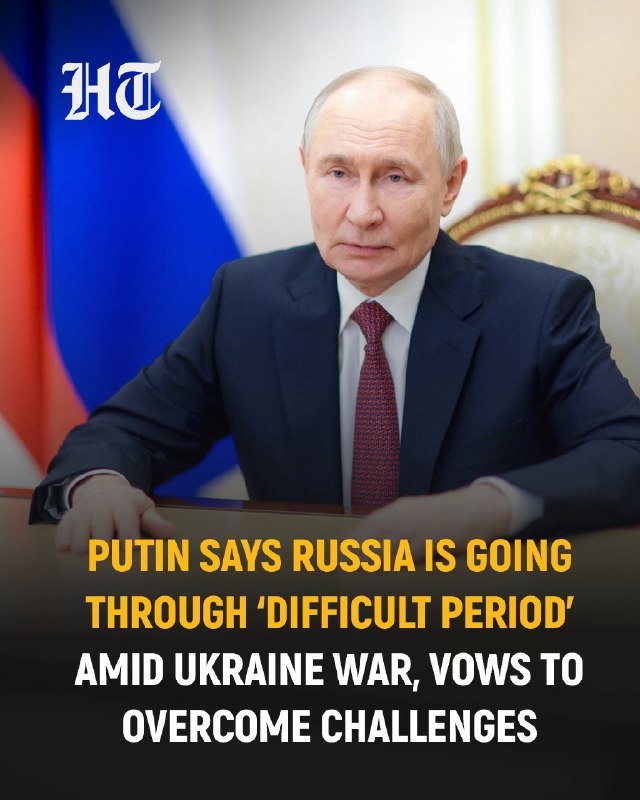
On 28 June 2026, as Russian Telegram channels circulated claims that Russian forces were within roughly two kilometres of fully encircling a Ukrainian grouping near Stary Oskol, Vladimir Putin framed the moment in unusually direct terms: the Ukrainian Armed Forces would not be permitted to "impose their conditions" on Moscow. The remarks, carried in near-identical wording by Russian-aligned channel Intelslava, Zvezdanews and Euronews's Telegram wire at 19:11–19:15 UTC, hardened a long-running rhetorical posture at precisely the moment field developments appeared to be shifting.
The signal matters less for what it adds to the negotiating record than for what it forecloses. By tying any future settlement explicitly to Moscow's own battlefield tempo, Putin closed the door — at least for now — on the kind of pre-talks choreography that Ukrainian and Western interlocutors have spent two years trying to engineer. The framing is consistent with the Kremlin's preferred settlement architecture: a deal whose geometry is drawn on the ground, not at the table.
A city at the hinge
Stary Oskol sits in Belgorod Oblast, just inside the Russian border roughly 150 kilometres north of the regional capital and within striking distance of the Kharkiv axis. A major centre of Russian iron-ore mining and the home of the OEMK steel complex, the city has spent most of the war as a logistics hub for Russian formations operating in northern Kharkiv and southern Belgorod. According to the Euronews Telegram post at 19:13 UTC on 28 June 2026, Russian Telegram reporting claimed only "about 2 km" remained before a "final encirclement" of Ukrainian forces in the area. The claim was carried without independent corroboration from Ukrainian General Staff briefings in the available reporting, and the Russian-aligned channel Intelslava framed it in terms of the Kremlin's negotiating posture rather than as a tactical update.
That pattern — battlefield claims routed through channels that are simultaneously amplifiers of the political line — is itself part of the story. Russian milblogger reporting on encirclements near Stary Oskol has fluctuated across June 2026, and the territory around the city has changed hands in fragments rather than in clean operational strokes. A reader using the Telegram feeds alone is seeing a curated picture; the operational reality is more porous.
What Putin actually said
Putin's remarks, distributed across three Russian-aligned Telegram feeds between 19:06 and 19:15 UTC on 28 June 2026, carried three interlocking claims. First, that Russia "will not give the Ukrainian Armed Forces a chance to impose their conditions" — a phrase repeated verbatim across Intelslava, Zvezdanews and Euronews's Telegram post, suggesting a single set of remarks circulated through the Kremlin's media circuit. Second, per Zvezdanews, that Ukrainian strikes on Russian infrastructure "do not affect the situation" in any decisive sense. Third, per Clash Report's Telegram feed at 19:06 UTC, that strikes on Russian energy infrastructure are "causing problems" — "obvious" problems — but framed as manageable rather than systemic.
The two claims sit in tension, and that tension is the substance of the day. Russian state messaging is now publicly conceding that Ukrainian long-range strikes on energy infrastructure are producing shortages, while simultaneously arguing that those shortages will not bend the political trajectory. The first part is the admission; the second is the bluff — and the durability of that bluff is one of the more consequential open questions of the summer campaign.
The counter-narrative from Kyiv
Ukrainian reporting on the Stary Oskol axis has been thinner and more cautious. The available Telegram feeds do not include a Ukrainian General Staff briefing for the relevant period, and the claims of imminent encirclement are not echoed in the wire material provided. That asymmetry is not unusual — Russian Telegram channels routinely run several operational hours ahead of Ukrainian disclosures — but it does mean the encirclement framing is, for now, single-sourced through Russian-aligned channels. A Russian milblogger claim of a closing pocket, repeated by a state-adjacent outlet and then echoed by Euronews's Telegram desk, is not the same evidentiary object as a confirmed operational encirclement verified by independent geolocated footage or by a third-party OSINT assessment.
On the diplomatic track, Ukrainian messaging has consistently held that any settlement must begin from the principle of full sovereignty over internationally recognised borders, including territories currently occupied. Putin's 28 June remarks are best read as a direct answer to that position: Moscow is signalling that, in its view, the lines of control being established on the battlefield in late June 2026 are the substantive negotiating baseline, not a temporary state to be unwound at the table.
What remains contested
Three things remain genuinely uncertain at the time of writing. First, the operational state around Stary Oskol: the available sources describe a closing pocket, not a closed one, and Russian milblogger optimisms on this front have been overtaken by Ukrainian counter-movements more than once in the past eighteen months. Second, the depth and durability of the energy-infrastructure damage that Putin himself acknowledged on 28 June — the "shortage" language is a Kremlin admission of friction, but the sources do not specify which facilities, what magnitude of disruption, or which regions. Third, the relationship between battlefield tempo and negotiation track. The Kremlin's preferred reading is that the two are linked in one direction only: pressure at the front produces movement at the table. The available material neither confirms nor refutes that reading, and a fair reading has to note that the linkage could cut either way if Russian energy exposure deepens.
The bigger pattern is straightforward, even if the sources do not name it. A state that believes its position is improving does not soften its public negotiating language at the moment its forces are reportedly closing on a tactical encirclement. A state whose energy grid is under sustained strain has at least one reason to seek an off-ramp. The Kremlin is choosing to project the first posture and absorb the second. Whether that posture can hold through the rest of the summer is the question that 28 June 2026 has put back at the centre of the file.
Monexus framed this as a political signal weighted against a tactical claim, and weighted both against the asymmetry of sourcing — Russian-aligned channels led the day, with no corroborating Ukrainian General Staff material in the available feed.
Wire provenance
This editorial synthesis draws on the following public wire/social posts:
- https://t.me/intelslava/
- https://t.me/euronews/
- https://t.me/zvezdanews/
- https://t.me/clashreport/
Follow the event.
These dated source records provide context. They do not retrospectively verify this archive article.
A dated voting record is evidence of one decision. Use the original UN record before turning it into an alignment label.
Visual explainer · historical vote of 2022-03-02 →