Putin rejects Kyiv's four-region freeze, signalling Moscow's maximalist end-state
President Vladimir Putin has publicly dismissed Ukraine's reported proposal to limit fighting to four partially-occupied regions, restating Moscow's aim of full territorial capture. The exchange resets the diplomatic floor and complicates Western pressure for a near-term ceasefire.
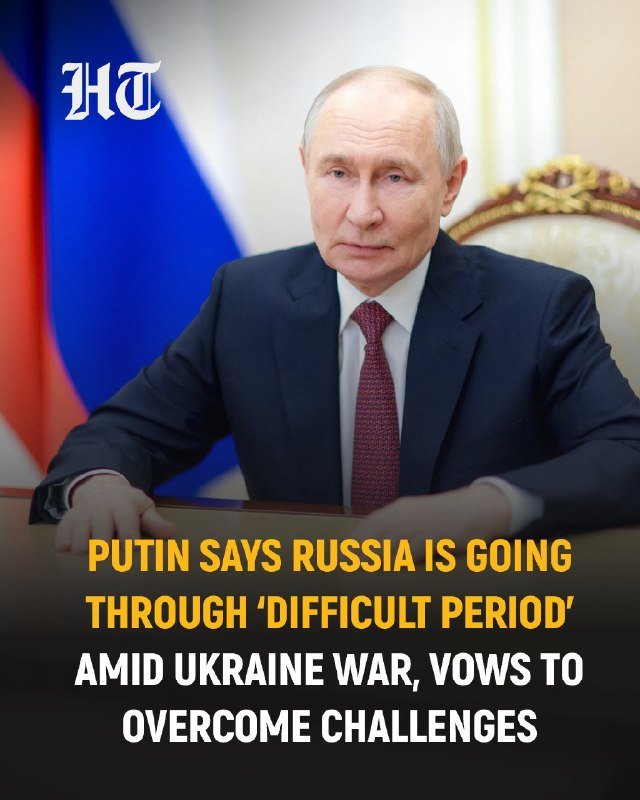
At a televised meeting on 29 June 2026, President Vladimir Putin rejected what he described as a new Ukrainian proposal to confine hostilities to four partially Russian-occupied regions, restating Moscow's battlefield objective of seizing each of those territories in full. The exchange, reported by Reuters at 02:25 UTC, sharpens the diplomatic picture: Kyiv, by the Russian leader's account, has floated a geographic cap on the fighting; Moscow has answered that the cap is unacceptable because it would leave a hostile, rearmed neighbour on its border.
The proposal Putin dismissed is not the same as a ceasefire. It would, on the terms he outlined, freeze front lines inside Donetsk, Luhansk, Kherson and Zaporizhzhia — four regions Moscow has formally claimed as Russian territory since 2022 but does not fully control — while leaving the wider war unresolved. Putin's argument, as carried by Reuters, is that any arrangement short of full capture would simply give Ukraine the breathing room to strike Russia from elsewhere later. The phrasing matters: it treats the territorial question as existential rather than negotiable, and it forecloses the kind of land-for-security trade that Western mediators have spent months trying to assemble.
A maximalist end-state, restated
Russia's stated war aim has not changed since the annexation decrees of September 2022. What is new is the venue. Putin chose to relitigate the four-region question in front of cameras on the morning the diplomatic calendar was already crowded with ceasefire speculation, including a separate Russian-channel report — circulated by TSN at 01:14 UTC — that Moscow is recruiting fighters from an unnamed foreign country, offering payments and the prospect of Russian citizenship in exchange for service in Ukraine. Read together, the two items sketch the same political logic: Moscow is not preparing to trade land; it is preparing to keep generating manpower.
The Reuters dispatch frames Putin's objection as strategic — that a partial freeze would leave a hostile regime with intact strike capacity — but the same logic applies in reverse to any deal Moscow might accept. A Russia that stops at the current line of contact would be conceding, permanently, that its 2022 annexation decrees were aspirational. That is a concession no Russian leader has been willing to make in public, and the domestic political cost of doing so is the unspoken ceiling over the negotiating table.
The proposal Putin says he rejected
Kyiv has not officially published the proposal Putin described, and Ukrainian officials had not confirmed its substance in the immediate aftermath of the Russian readout. The summary circulating in Western coverage — that Ukraine would limit active operations to the four claimed regions in exchange for a mutual stand-down — tracks with reporting earlier in June that Kyiv was open to discussing the territorial question sequentially, region by region, rather than as a single package. It also tracks with the public position of President Volodymyr Zelenskyy's office that any deal must restore internationally recognised borders, a stance the four-region formulation appears designed to test.
The interpretive divide is therefore narrow but load-bearing. To Moscow, the proposal is a ploy to lock in partial gains and rearm; to Kyiv and its Western backers, anything short of full de-occupation is a surrender in slow motion. Putin's public rejection of the proposal — delivered before any formal Ukrainian confirmation — is itself a diplomatic move: it forces Kyiv either to disown the framing publicly, which weakens the negotiating position, or to defend it, which feeds Moscow's claim that Ukraine is the intransigent party.
The counter-narrative: pressure, real and manufactured
Optimism about a near-term deal has been driven in part by reporting — much of it sourced to anonymous US and European officials — that Moscow is under mounting economic strain and that the battlefield arithmetic is shifting against it. That case has been most loudly contested in independent commentary, including a 28 June post from analyst Marcy Bowen circulated at 23:11 UTC, which argued that Western media coverage has been overstating Russian collapse in a coordinated fashion and urged readers to be sceptical of any framing that Russia is "on the verge of breakdown." The argument is structural rather than empirical: when official outlets converge on a single upbeat narrative, the burden of proof shifts.
The counter to that counter is straightforward. The Reuters dispatch on Putin's remarks is itself a primary source — the Russian president's own words, on camera, restating a maximalist objective. That is not a media narrative; it is an artefact of policy. A sceptic can reasonably argue that the Russian public line is detached from what Moscow would accept privately, but the public line is the line the diplomatic calendar has to work with until someone credible says otherwise. Western over-optimism and Russian over-claiming can both be true at once, and on the evidence currently in circulation, both are.
What this changes for the mediators
The immediate effect of Putin's restatement is to lower the ceiling of any near-term deal. Western capitals that had been signalling openness to sequencing — territories first, security architecture later — now have to either continue pressing that line against an explicit Russian rejection, or accept that the next phase of the war will be fought, not negotiated. The financial arithmetic compounds the difficulty: European aid packages, US supplemental appropriations, and the political sustainability of continued support are all calibrated against a forecast that includes some credible path to a settlement. Putin has just made that forecast harder to defend in the relevant committee rooms.
The structural frame is plain. A hegemonic transition is underway in which the incumbent Western-led order is being asked, simultaneously, to underwrite Ukraine's defence, absorb the cost of sanctions on Russia, manage a parallel confrontation with China over industrial and technology policy, and keep the Gulf energy market stable. Each of those burdens is tractable on its own. Together they are testing whether the political coalitions that built the post-1991 settlement can hold their domestic majorities long enough to sustain a long war whose declared endpoint — the full restoration of Ukraine's 1991 borders — is one the party now rejecting compromise says it will never accept.
What remains uncertain
Three things are not settled by the day's reporting. First, the substance of the Ukrainian proposal Putin claims to have rejected: until Kyiv publishes text, both sides are arguing about a phantom. Second, the scale and origin of the foreign recruitment referenced by TSN: the channel did not name the country, and Russian-aligned recruitment drives have previously targeted Central Asian, South Asian and African labour migrants with offers of citizenship, so the signal value of the report is real but the operational picture is thin. Third, whether Putin's restatement is the opening bid of a renewed escalation cycle — a wave of intensified ground operations timed to harden facts on the ground before any autumn negotiating window — or a negotiating posture designed to extract concessions on sanctions relief and security guarantees without a further major offensive. The Reuters dispatch does not resolve that question; it only sharpens it.
What can be said with confidence is that the diplomatic floor has moved. The four-region framing is now on the public record as a Russian red line, not a starting offer. That is a more honest basis for the next round of talks than the ambiguity that preceded it, even if it is a worse one for anyone hoping for a deal before winter.
— Desk note: Monexus led on the Russian readout first, then contextualised against the independent-skeptic line; we did not adopt either the Western-wire optimism or the Kremlin framing, and we flagged the foreign-recruitment report for what it currently is — an unverified channel-level claim.
Wire provenance
This editorial synthesis draws on the following public wire/social posts:
- https://x.com/reuters/status/2071382390576930816
- https://t.me/TSN_ua
- https://x.com/boweschay/status/2071370000000000000
- https://x.com/boweschay/status/2071350000000000000
- https://en.wikipedia.org/wiki/Russian-occupied_territories_of_Ukraine
Follow the event.
These dated source records provide context. They do not retrospectively verify this archive article.
A dated voting record is evidence of one decision. Use the original UN record before turning it into an alignment label.
Visual explainer · historical vote of 2022-03-02 →