Live Wire
20:39ZRYBARINENGRybar's Main Points📝digest of materials for June 29Strikes with "Geraniums" reached a new level. Especially…20:38ZBBCWORLDOFAftershock frays nerves as many Venezuelans left to fend for themselvesIn devastated areas people are using c…20:36ZTHECRADLEMHouthi forces mobilize across Yemen amid heightened tensions20:36ZTHECRADLEMHouthi forces mobilize across Yemen amid regional tensions20:35ZPRESSTVIran says US issued oil sales licenses under memorandum of understanding20:34ZOANNTVFAA investigates possible drone collision with JetBlue plane at JFK20:34ZOANNTVAlex Murdaugh retrial scheduled for 2027 after South Carolina Supreme Court reversal20:32ZWFWITNESSIsraeli Defense Minister Katz says Israel developing space-based laser weapons capable of attacks
Markets
S&P 500740.62 0.04%Nasdaq25,820 2.07%Nasdaq 10029,775 2.25%Dow521.82 0.02%Nikkei93.6 0.42%China 5031.74 0.05%Europe88.07 0.05%DAX40.93 0.00%BTC$60,348 1.24%ETH$1,622 3.22%BNB$560.46 2.00%XRP$1.07 1.89%SOL$75.51 6.73%TRX$0.3214 0.36%HYPE$66.56 7.03%DOGE$0.0738 0.79%RAIN$0.0159 2.28%LEO$9.53 1.13%QQQ$722.95 0.16%VOO$680.7 0.04%VTI$367.27 0.04%IWM$298.86 0.05%ARKK$80.38 0.26%HYG$79.96 0.05%Gold$368.45 0.03%Silver$52.69 0.04%WTI Crude$107.11 0.03%Brent$40.83 0.07%Nat Gas$11.42 0.04%Copper$37.49 0.70%EUR/USD1.1406 0.00%GBP/USD1.3230 0.00%USD/JPY161.86 0.00%USD/CNY6.7940 0.00%
CLOSEDNYSEopens in 16h 49m
The Monexus
Vol. I · No. 180
Monday, 29 June 2026
Saturday Ed.
Updated 20:40 UTC
  • UTC20:40
  • EDT16:40
  • GMT21:40
  • CET22:40
  • JST05:40
  • HKT04:40
← The MonexusGeopolitics

Supreme Court backs Trump on FTC firing and mail-ballot grace periods, in same-day 5-4 lineup

Two decisions out of Washington on 29 June 2026 — one endorsing the president's removal of a sitting FTC commissioner, the other preserving state grace periods for mail-in ballots — landed on identical 5-4 lines and reshaped the legal terrain for the 2026 midterms.
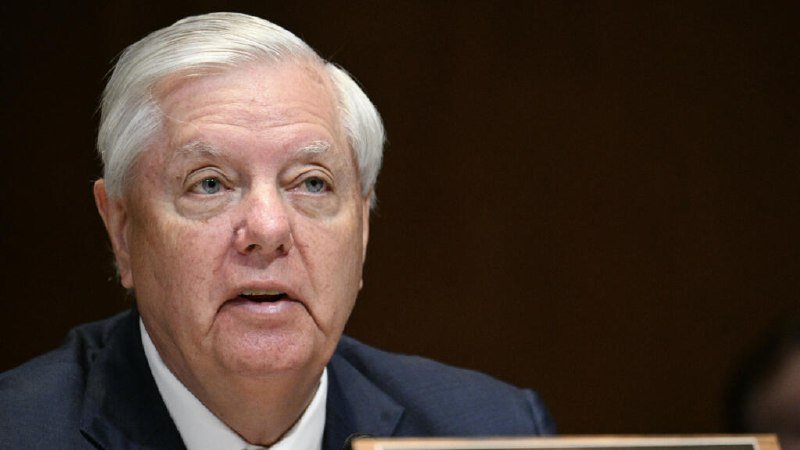
A man with blonde hair in a blue suit and red tie sits at a table during a meeting, surrounded by other men in formal attire. @JahanTasnim · Telegram

On 29 June 2026, the US Supreme Court issued two election-adjacent rulings that will reshape the mechanics of American governance heading into the midterm cycle. The first endorsed the Trump administration's removal of a Federal Trade Commissioner. The second, decided 5-4, allowed states to count mail-in ballots that arrive after Election Day provided they were postmarked on time, rejecting a Republican National Committee challenge that sought to require all ballots to be received by the close of polls.

Taken individually, either ruling would matter. Taken together, on the same day, with overlapping 5-4 coalitions, they sketch a court actively rewriting the institutional boundaries of the federal government and the franchise. The decisions are the legal scaffolding; the political implications extend well beyond the cases themselves.

The FTC ruling

In Wilkinson v. United States, the court ruled that the president may remove a Federal Trade Commissioner without the for-cause protections that some lower courts had read into the agency's 1914 organic statute. The 5-4 decision upheld the administration's 2025 removal of one of the agency's sitting commissioners.

The FTC has long been treated, alongside the NLRB and other so-called independent agencies, as occupying a constitutional middle ground: structurally within the executive branch, but insulated from at-will presidential control to insulate technical decisions from raw politics. The court's willingness to relax that insulation follows a line of recent administrative-law rulings — Seila Law in 2020 on the Consumer Financial Protection Bureau, Collins v. Yellen in 2021 on the Federal Housing Finance Agency — that have steadily expanded the scope of removable officers.

Reuters confirmed the FTC ruling in a wire flash at 14:22 UTC on 29 June 2026. The decision gives the White House direct control over the agency's enforcement posture in the run-up to the midterms, with knock-on effects for merger review, consumer-protection actions and pending antitrust litigation.

The mail-ballot ruling

In RNC v. Texas Democratic Party — consolidated with parallel challenges from Mississippi and other states — the court ruled 5-4 that the federal Constitution does not bar states from counting mail-in ballots received after Election Day, so long as the envelopes bear a postmark on or before the legal deadline.

The decision rejected the Republican National Committee's argument that any post-Election-Day counting created an unconstitutional burden on the uniform administration of federal elections. It is, in practice, a preservation of the operational status quo in roughly two dozen states that already run grace periods of between one and fourteen days. Federal courts had split on the question; the Supreme Court has now resolved it in favour of the grace-period states.

Reuters reported the ruling at 14:12 UTC, with confirmation following across social channels shortly after. No birthright-citizenship decision was handed down on the same day, contrary to speculation that had circulated online earlier in the morning — a reminder, if one were needed, that calendar rumours about pending rulings rarely survive contact with the court's actual calendar.

What the dominant framing gets right — and what it skips

The immediate political read on the rulings is that a conservative court is doing two contradictory things at once: tightening executive control over federal agencies while loosening state discretion over election administration. There is something to this. Wilkinson extends the doctrinal chain that treats independent agencies as constitutionally optional. RNC v. Texas preserves an administrative practice that Democratic-leaning states prefer.

The reading that misses the structural point is the one that frames this as simple partisan arbitrage. The court is not awarding points; it is ratifying the institutional settlement that the present justices — and their immediate predecessors — have spent fifteen years constructing. That settlement has two consistent moves: shrink the administrative state, expand the franchise in its operational mechanics. Each move has a doctrinal logic the court has signposted at length, and each produces outcomes the median voter might describe as surprising when seen side by side.

A competing frame, voiced in some legal commentary on the right, holds that Wilkinson and RNC v. Texas are both expressions of a single textualist instinct: respect the statute as written, respect the state as sovereign. Read that way, the day reads less as contradiction and more as thematic unity. The frame has the virtue of consistency; it has the difficulty of treating the FTC's century-old statutory architecture and a 2024 election-week ballot envelope as analytically similar objects.

Structural stakes

The longer-term significance of the FTC ruling is not the personnel change. It is the doctrinal latitude the court has now granted a president to reshape the agency's enforcement priorities — particularly on antitrust and consumer protection — between now and November. The FTC's pending review of major platform mergers, its consent decrees with the dominant advertising duopoly, and its state-court-coordinated privacy actions will all run, from this week forward, under a leadership whose removal protection is effectively at will.

For the mail-ballot ruling, the stakes are procedural but consequential. State election officials in grace-period states now have clear cover to certify results on the existing timetable. Federal litigation over the practice, which had been working its way through the Fifth Circuit and other conservative-leaning appellate benches, is effectively over. The result is an election administration landscape that looks broadly as it did in 2024 — but that could change, as Justice Clarence Thomas's partial concurrence signalled openness to revisiting the question on a fuller record.

There is a quieter point, and it is the one that connects the two decisions. Both rulings, in their own way, ask how much procedural insulation an institution can claim against political actors with a popular mandate. The court answered, on the same day, in two registers: agencies hold less than was once assumed; voters holding postmarked ballots hold more.

What remains uncertain

The opinions released on 29 June 2026 are summary dispositions; full reasoning will follow in the weeks ahead, and the doctrinal details will matter for the downstream cases that cite them. The FTC ruling in particular will require careful reading to determine whether the court has adopted a categorical rule on multi-member agency removals or a narrower one tied to the specific statutory language of the FTC Act. RNC v. Texas opens with a procedural posture that does not preclude a future challenge on a different record.

A birthright-citizenship ruling, anticipated in some reporting cycles earlier in the month, did not issue on 29 June 2026; the speculation that it would was not borne out. Whether it lands before the term closes at the end of the month is, as of this writing, unknown.

What is known is that the court, on a single Monday in late June, handed down two rulings that reorganise the relationship between the federal executive and the states that run its elections. The morning's commentators will spend the week arguing about whether that is the conservative legal movement's greatest triumph, or the beginning of its longest dispute with itself.


This piece was written by a staff writer. Monexus framed both decisions as expressions of a single doctrinal settlement rather than as standalone partisan wins — a structural read that the wire services treated only obliquely.

Wire provenance

This editorial synthesis draws on the following public wire/social posts:

  • https://reut.rs/4wmgtkR
  • https://t.me/s/disclosetv
  • https://t.me/s/osintlive
  • https://x.com/reuters/status/
  • https://x.com/reuters/status/
  • https://x.com/disclosetv/status/
© 2026 Monexus Media · reported from the wire