Group-stage upsets rewrite the early World Cup script: Japan stun Brazil, Germany held by Paraguay
Two of the tournament's pre-tournament favourites dropped points on 29 June 2026 as Japan beat Brazil and Germany were held by Paraguay, upending the group-stage pecking order inside 24 hours.
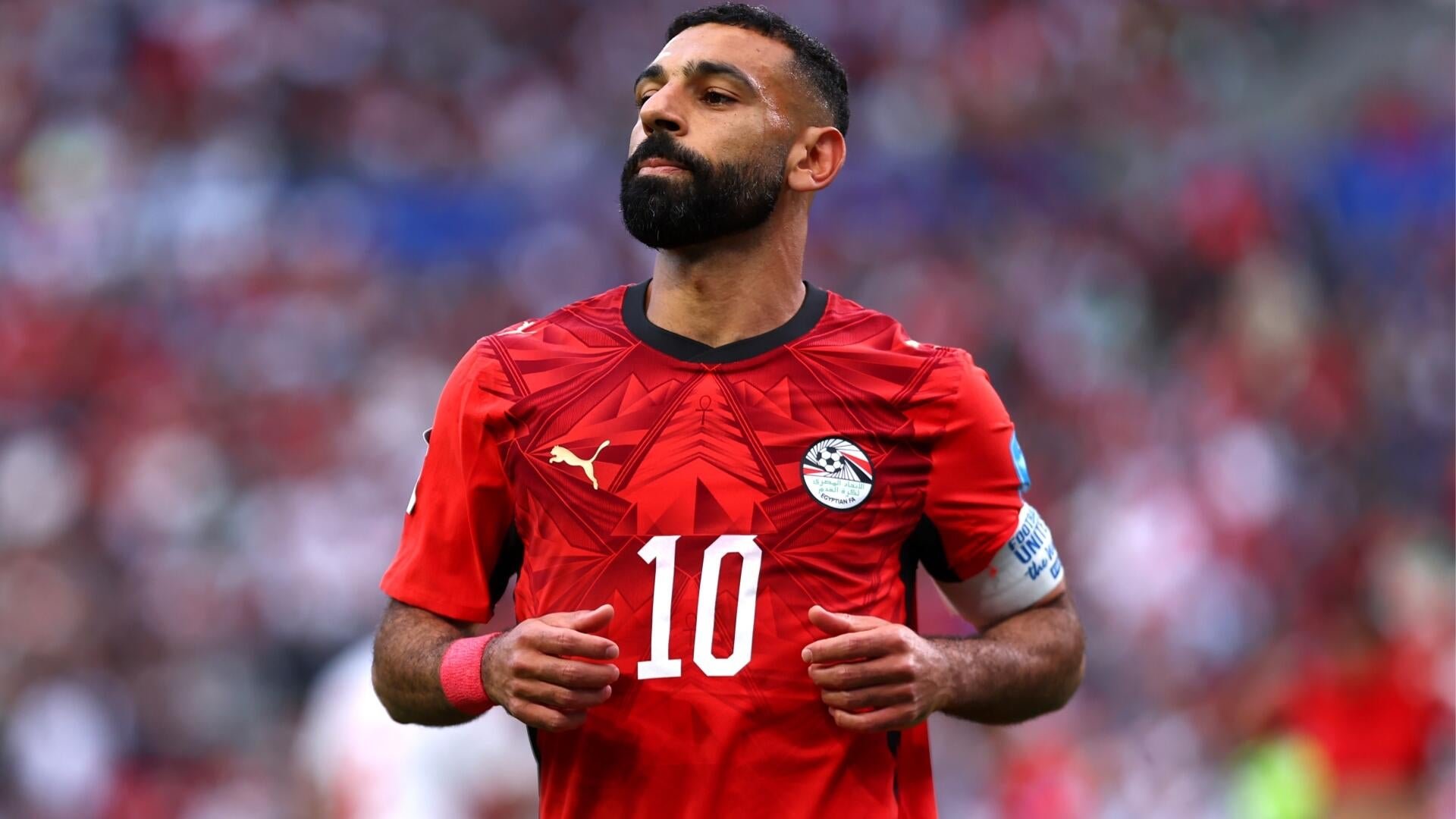
Two results in the space of roughly four hours on 29 June 2026 have redrawn the early maps of the 2026 FIFA World Cup. At 17:29 UTC, Japan took the lead against Brazil through Kaishu Sano; by 18:57 UTC, Brazil had responded with a Casemiro header at 56 minutes and a stoppage-time Martinelli strike, but the damage was already done. Three minutes before midnight UTC, Germany were trailing Paraguay before Kai Havertz's 54th-minute header, assisted by Florian Wirtz, restored parity at 1–1. Two presumed heavyweights, two dropped points, and a group stage that now looks considerably more open than the pre-tournament seedings implied.
The day's results matter less for their individual scorelines than for what they reveal about the competitive floor at this tournament. The gap between confederation favourites and disciplined second-tier sides has narrowed to the point where a well-organised defensive block plus a clinical set-piece routine is enough to take points off a side that, on paper, starts in every category ahead. That has structural consequences for how the knockout bracket will look, and for how federations calibrate their risk in the final group fixtures.
How Japan broke the game open
Japan's opening goal arrived in the 29th minute through Kaishu Sano, who finished a shot to give the Asian side a 1–0 lead against a Brazilian side widely tipped to progress comfortably from the group. The goal was the first of the match and held until deep into the second half, when Brazil equalised through Casemiro's header in the 56th minute. The match appeared to swing Brazil's way at that point — the five-time champions had parity, momentum, and the deeper squad. Instead, Brazil had to wait until the sixth minute of stoppage time (90+6) for Martinelli's shot, assisted by Bruno Guimarães, to complete a 2–1 turnaround.
The reading from the two goal updates is straightforward: Japan competed for the full ninety minutes and beyond, and Brazil required the latest possible intervention to escape with the win. Sano's goal was the first of the match; Casemiro's equaliser did not arrive until the 56th minute. For nearly half an hour of play, the scoreboard read 0–0; for roughly half an hour more, it read 1–0 to Japan. The math of that — half the match spent behind or level with a side outside the top tier of the FIFA rankings — is the story.
Germany's stuttering reply
Three hours after the Brazil–Japan match reached its dramatic conclusion, Germany and Paraguay were playing out a strikingly similar arc. Paraguay took a lead that Germany had to claw back. The equalising goal came in the 54th minute: Kai Havertz rose to head home, with the assist credited to Florian Wirtz. The match finished 1–1, leaving Germany with a draw they will view, fairly, as two points dropped rather than one gained.
Havertz and Wirtz, both Arsenal and Liverpool starters respectively at club level, represent the technical core of this Germany side, and the combination worked: a cross, a header, a goal. What did not work was everything around it. Germany spent 54 minutes looking for a way through a Paraguayan defensive block that was disciplined, physical, and well-drilled. Paraguay, for their part, demonstrated that the South American qualifying path — often dismissed in European preview coverage — produces sides comfortable sitting deep, breaking up play, and striking on the transition.
The pattern beneath the results
Two matches, two favourites dropping points, and in both cases the same structural explanation: the favoured side dominated possession and territory, the underdog defended in shape, and a single moment of execution decided the margin. That is not a new pattern in World Cup football — it has been the dominant template since at least the 2002 tournament, when host underperformance and organised mid-tier sides first began to consistently trouble the seeded names. But the consistency with which the pattern is repeating in 2026 is the news.
The wider context is the expanded 48-team format, which has diluted the average quality of the group stage but, perhaps counter-intuitively, sharpened the field within it. Smaller confederations have sent more organised, more professional squads than at any previous tournament, in part because the qualifying pathway now offers a more realistic route to the knockout rounds. The cost of that expansion is borne by the seeded sides, who can no longer assume three points from a fixture against a CONMEBOL or AFC opponent on the basis of confederation pedigree alone.
Stakes and what the group stage now looks like
The early results compress the table. Germany will go into their remaining group fixtures knowing that a draw is no longer a neutral outcome — it is a concession of ground to a rival who has already banked a point. Brazil, having survived their scare, retain a route through the group but have shown a defensive vulnerability that opposition analysts will now plan to exploit. Japan and Paraguay, the two sides who took points off the favourites, have demonstrated that the floor of competitive performance at this tournament is high.
What remains uncertain is whether these results are the first tremors of a genuinely open tournament or whether the seeded sides will reassert themselves as the group stage progresses. The source updates do not show the other matches in these groups, so the table positions cannot be reconstructed with confidence from the thread alone. What is on the record is the bare fact: on 29 June 2026, two of the pre-tournament favourites dropped points inside four hours of football, and the tournament's centre of gravity shifted.
This publication framed the day's results as a structural story about the narrowing gap between seeded and unseeded sides rather than a pair of one-off upsets. The wire reporting carried the match-by-match goals; the analytical interest sits one level up, in what the pattern across both matches says about competitive depth at an expanded World Cup.
Wire provenance
This editorial synthesis draws on the following public wire/social posts:
- https://t.me/FIFAcom
- https://t.me/TheAthletic
- https://t.me/FIFAcom
- https://t.me/TheAthletic