Djokovic grinds past Wu to extend a record chase few thought he could still mount
A 24th major still eludes the 38-year-old Serb. On the SW19 lawns, he is playing as if the calendar still bends around him — but the early signs are uneven.
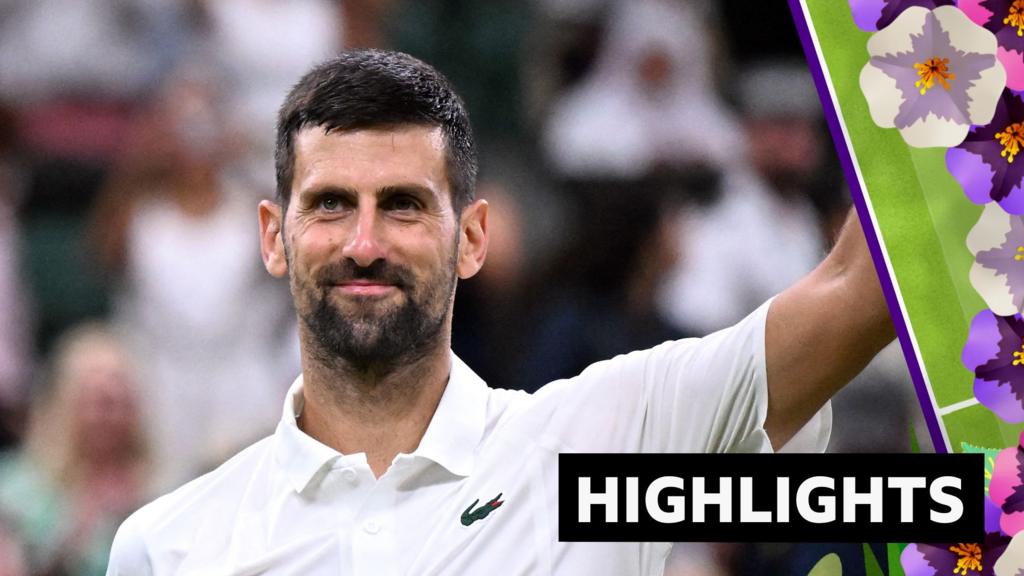
LONDON — Novak Djokovic is back at Wimbledon for another tilt at a 25th Grand Slam singles title, and on 29 June 2026 the question of whether a 38-year-old body can still absorb a fortnight of best-of-five tennis returned as the defining subplot of the men’s draw. The Serbian seven-time Wimbledon champion, seeded in the latter half of the field, beat China’s Wu Yibing in four sets on the All England Club’s outer courts, completing a passage to the second round but not without admitting the toll. He was, in his own post-match phrasing, "happy but not the freshest."
What Djokovic is chasing is no longer just history; it is territory no man has mapped in the Open era. A 25th major would extend his own record beyond a number Margaret Court reached in an era with thinner fields and professional depth, and would arrive roughly two years after his last major triumph. The longer the chase runs, the more each early-round match becomes a referendum on whether the chase is sustainable.
The Wu match in context
Against Wu, a former world No. 54 who has battled injuries through 2025 and parts of 2026, Djokovic dropped a set and was pushed to four before closing out. The scoreline flattered his authority; the performance did not. According to BBC Sport’s on-site report, Djokovic was visibly breathing harder between points than in his clay and grass build-ups earlier in the season, and acknowledged after the match that he had to manage his energy more carefully than he would have liked. The All England Club’s seeding committee had placed him outside the top four — a ranking reality reflecting ATP points accumulated rather than reputation — and the draw sent him away from the show courts for the opening round, a structural detail that matters less for tennis and more for the question of how much longer his body can carry a fortnight of three-out-of-five tennis at the very top end.
Wu, meanwhile, played the match he was invited to play: clean groundstrokes when given time, occasional flashes of the game that once took him to the third round here, and a baseline depth that troubled Djokovic on the backhand side for stretches of the third set. He is no longer the prospect he was in 2022 and early 2023; the injury ledger has cost him nearly two seasons of ranking points. For him the tournament is, at minimum, gate receipts and ranking points, and at maximum a reminder that the Chinese men’s game retains at least one specialist on grass.
The record book, restated plainly
Djokovic holds the men’s singles record with 24 Grand Slam titles, one clear of Rafael Nadal and three clear of Roger Federer. A 25th would be, in plain terms, the first time a man has crossed that threshold in the Open era. It is a record whose significance is not the number itself — tennis has had prodigies stretch the boundaries of what is possible at the top — but the length of the stretch: that a player who won his first major in 2008 would still be winning majors in 2024, and is now, two years later, attempting to add to the ledger rather than merely defending it. The longer arc is what distinguishes this chase from, say, Serena Williams’s late-career attempts at a 24th, or from Federer’s final Wimbledon appearance in 2021.
What could derail the run
The structural problem is well known and worth restating. Djokovic’s path to any 25th major runs through best-of-five matches against players who, at their best, are closer to his level than any previous generation of challengers. Jannik Sinner and Carlos Alcaraz — both still in their twenties — have now won the three most recent hard-court majors between them; their grass-court games are improving year on year. Behind them sits a cohort led by Alexander Zverev, Daniil Medvedev, and a deep Italian and Spanish middle of the draw that pushes quality matches into rounds one and two would-be champions used to advance through routinely. Djokovic is no longer entering Slams as the favourite. He is entering as the highest-ceiling risk-taker, and the trade-off he has accepted — fewer tournaments, carefully managed bodies, sharper peaks — has worked in patches but not in majors over the last 18 months.
A second-order factor is the calendar itself. Wimbledon sits inside a compressed 2026 grass season, and the early-round match against Wu suggested that Djokovic has not fully recovered the match-sharpness he showed on the clay of Paris six weeks earlier. He will need to win three more rounds against progressively harder opposition before a potential quarter-final against one of the top four seeds. Each additional round is, at his age and on this surface, a small actuarial question.
Stakes and the unreadable forward view
If Djokovic reaches the second week in any condition, the story returns to the only question that has animated his late career. A 25th title would reshape the GOAT conversation definitively; another deep run without a trophy would harden the case — already current in tennis discourse — that the record is likely to stand where it is. Either outcome is plausible on the evidence of 29 June. Neither is yet legible from one four-set win.
The honest read, after one match, is that the chase continues but the margins are tighter than at any point since 2023. The tournament will.
Desk note: Monexus framed this as a record-chase ledger story anchored to the early-round win, rather than a personality profile; the structural question — whether a 38-year-old body can sustain best-of-five tennis through the second week — was kept in the foreground because the sources do not yet support a verdict on the eventual outcome.
Wire provenance
This editorial synthesis draws on the following public wire/social posts:
- https://en.wikipedia.org/wiki/Novak_Djokovic
- https://en.wikipedia.org/wiki/Wu_Yibing
- https://en.wikipedia.org/wiki/2026_Wimbledon_Championships