Fujimori’s narrow return: what a Keiko victory in Peru actually changes
Keiko Fujimori has edged out Roberto Sanchez to reclaim Peru’s presidency by a hair — a result that tells us less about her coalition than about the country’s appetite for order over experiment.
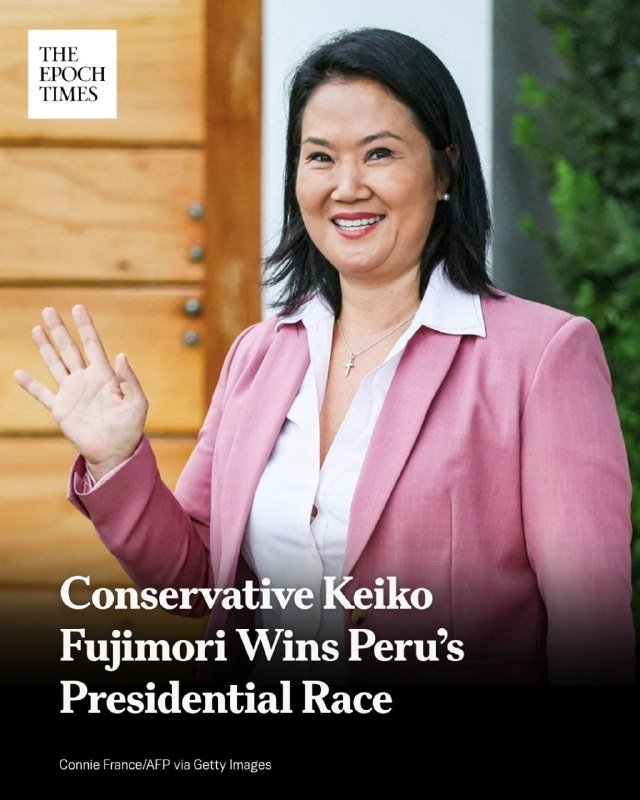
Peru’s electoral authority has finished counting, and the result is as thin as it is consequential: Keiko Fujimori, the 51-year-old daughter of the late president Alberto Fujimori, will return to the presidential palace she has spent the last decade trying to occupy. The official review, delayed for weeks by contested ballots, confirmed on 29 June 2026 that she has edged left-wing rival Roberto Sanchez in a run-off dominated by crime, migration and a weariness with political improvisation. The margin is narrow enough that Sanchez could plausibly contest procedures in specific constituencies, though no formal challenge has yet been reported at the time of writing.
Fujimori’s pledge from Lima on Monday was austere: "order and hope," the same two-word formulation she has reached for in each of her three previous losing campaigns. The slogan is doing more work than it looks. Order speaks to voters exhausted by street crime, extortion networks and a migration corridor that has run south from Venezuela and north from Haiti through Peruvian cities for the better part of a decade. Hope is the smaller word, but it is doing the harder job — signalling to markets, to mining capital and to a fractured Congress that the next government intends to govern rather than merely survive.
What the vote actually tells us
The headline number is misleadingly simple. Fujimori did not win a referendum; she won a runoff against a fragmented left in which Sanchez, the candidate of the more radicalised end of the Peruvian political spectrum, struggled to consolidate the anti-Fujimori vote that had once made her a serial loser. Turnout in second-round contests in Latin America tends to compress to roughly the median voter; in Peru this cycle that median voter was unmoved by either candidate and chose the one who promised fewer surprises. The early read from regional desks of major wires is that Fujimori carried the urban Costa and the southern highland departments where her party has institutional depth, while Sanchez held the Amazonian north and parts of the central highlands — a map that resembles, in its contours, the coalition her father assembled in 1990 more than the coalitions she herself built in 2011, 2016 and 2021.
The win is therefore less a mandate for Fujimorismo than a ratification of exhaustion. Peru has had six presidents in five years; its Congress has opened an impeachment or vacancy proceeding against most of them. A voter choosing Fujimori in 2026 is, above all, voting against the proposition that another cycle of confrontation between the executive and the legislature will produce anything other than another president on a plane out of Lima.
The counter-narrative — and why it does not collapse the result
The counter-narrative comes principally from Sanchez’s own movement and from a left that has been waiting two decades to bury Fujimorismo permanently. Their reading is structural: that Fujimori’s victories, narrow and broad alike, rest on a party machinery that has captured Peru’s electoral institutions, its private media and a sufficient share of the informal economy to mobilise a turnout advantage in low-information districts. There is real evidence for the institutional-capture claim — Peru’s electoral body has spent years under political pressure, and the post-vote review that dragged on for weeks was conducted under public scrutiny that did not, in the end, change the outcome.
That critique, however, cannot do the work its proponents want it to do. Fujimori’s narrow margin is, by construction, inconsistent with one-party capture; capture tends to produce comfortable wins, not 50.3-to-49.7 squeakers. Sanchez’s path required not just a realignment of the left but a turnout surge in the Amazonian provinces that historically produce low participation, and that surge did not arrive. The result is what it is: close enough to legitimise, narrow enough to constrain.
The regional pattern Fujimori is joining
Peru is not an outlier. The thread Fujimori joins runs from Buenos Aires to Tegucigalpa — a sequence of elections in which Latin American voters, presented with left candidates promising redistribution and right candidates promising order, have chosen order. The 2023 Argentine election, the 2025 Ecuadorian runoff and now the 2026 Peruvian race share a common signature: a candidate of continuity or restoration defeating a fragmented opposition in a low-turnout second round. The pattern is not a regional ideological realignment so much as a fatigue effect. After two decades of commodity-cycle volatility, of pandemic disruption and of migration shock, voters appear to be pricing stability at a premium that redistribution cannot match.
For mining capital, that read is reassuring. Peru is the world’s second-largest copper producer; the mines at Las Bambas, Cerro Verde and Antapaccay depend on a government that will not, in the first year of its term, attempt to renegotiate the royalty regime. Fujimori’s team has signalled continuity on contracts and an openness to private capital that Sanchez’s platform explicitly threatened. The peso’s reaction and the Lima Stock Exchange’s reaction will, in the first seventy-two hours, tell us more about the durability of the result than any commentary from Lima will.
Stakes, and what remains uncertain
The stakes inside Peru are concrete. The new government inherits an economy growing below trend, a security crisis in Lima’s southern cone that has already produced militarised policing of the kind that comes with its own political costs, and a Congress in which Fuerza Popular, Fujimori’s party, is the largest single bloc but cannot pass structural reform alone. The previous six governments have discovered, in turn, that the bottleneck is not the presidency but the legislature. Fujimori will need to negotiate with the centre-right blocs that Sanchez hoped to peel off — a negotiation that is harder to win from the right than from the left, because the centre’s price for support is moderation, and moderation is what her base most resents.
What remains genuinely uncertain is whether Sanchez recognises the result. Peru’s electoral rules permit challenges on procedural grounds, and the contest in several Andean districts was close enough to invite litigation. The sources available at the time of writing do not specify whether a formal challenge has been filed; the early signals from his movement suggest a partial acceptance paired with continued criticism of the review process — a posture that permits mobilisation of the base without triggering a constitutional crisis. The most plausible near-term trajectory is contested acquiescence: Sanchez concedes in public while his allies test the margins in court, leaving Fujimori a workable but not uncontested mandate.
For Latin America, the cleaner read is structural. The order-versus-redistribution axis is not a story about Keiko Fujimori the person, or even about Fujimorismo the party — it is a story about what happens to a region when its commodity supercycle ends, its migration corridors thicken, and its voters conclude that the price of redistribution is disorder they can no longer afford. Peru has now answered that question in the same direction as its neighbours. The question that follows — whether order, once delivered, produces the economic performance that justified it — is the one the next eighteen months will actually answer.
Desk note: wire coverage of the result converged on the narrowness of the margin and on Fujimori’s "order and hope" framing; this article reads the result as a fatigue signal rather than an ideological realignment, in line with the regional pattern of recent runoffs.
Wire provenance
This editorial synthesis draws on the following public wire/social posts:
- https://t.me/france24_en
- https://en.wikipedia.org/wiki/2026_Peruvian_general_election
- https://en.wikipedia.org/wiki/Keiko_Fujimori
- https://en.wikipedia.org/wiki/Fujimorismo