The Anchorage Ghosts and the gap between expectations and capability
A second wave of disclosures about the Anchorage meeting has reignited a familiar debate — and exposed how thinly sourced the grand theses really are.
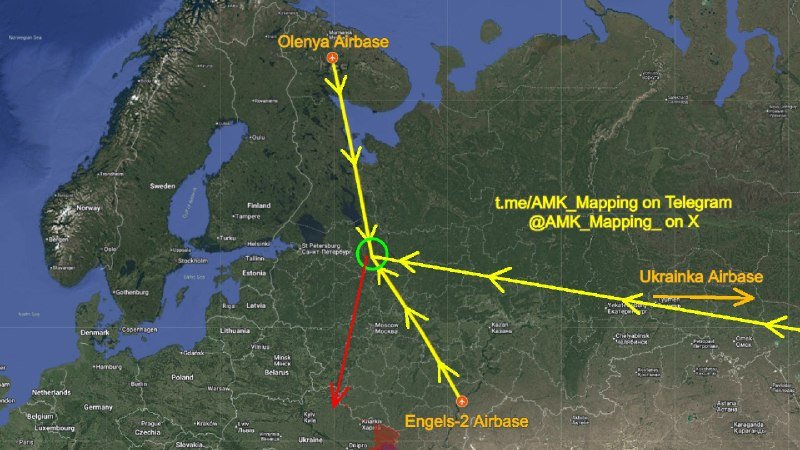
On 1 July 2026, two channels popular with Russia-watchers — the Telegram channel DDGeopolitics at 14:06 UTC and the Rybar English mirror at 12:22 UTC — published near-identical commentary under the heading "On the 'Anchorage Ghosts' and the balance between expectations and capabilities." Both posts concede, in unusually plain language, that "the recent wave of revelations about the Anchorage meeting" has produced theses that "essentially boil down to" a small number of rhetorical shortcuts.
That admission, from two outlets not ordinarily given to self-critique, is itself the story. The diplomatic encounter in Anchorage — a venue better known for Cold War-era summits than for current negotiations — has become a Rorschach blot for analysts trying to read the trajectory of great-power diplomacy. The problem is that the more elaborate the reading, the thinner the underlying sourcing.
What the chatter actually says
Strip the commentary back to its load-bearing claims. There was a meeting. There were participants. There was a discussion framed, by one side or the other, around capabilities and expectations. Beyond that, both DDGeopolitics and Rybar acknowledge that the cascade of "revelations" does not rest on documents, transcripts, or named officials speaking on the record. The theses floating through the ecosystem amount to interpretation stacked on top of interpretation, with no fresh primary material beneath the new layer.
This is the gap the channels themselves identify. Expectations — what one side wanted from the meeting — are routinely conflated with capabilities — what either side was actually able to deliver. Diplomatic theatre is a long-standing instrument of statecraft: signalling intent, managing domestic audiences, buying time. Mistaking the signal for the underlying capability produces confident predictions that age badly.
The structural temptation
The temptation, when a closed-door meeting produces no official communiqué, is to fill the silence with framework. Readers trained on decades of great-power analysis expect the meeting to map onto a familiar template: rising power, incumbent power, alignment, accommodation, confrontation. The template is useful, but it has been over-applied in recent commentary to the point of becoming a substitute for reporting. When the same handful of claims circulate across Telegram channels, Substacks, and X threads, the impression of consensus is mistaken for evidence of substance.
There is also a domestic-audience dimension. For Russian-aligned channels, an Anchorage meeting carries particular narrative weight because any opening to Washington is read as either a strategic opportunity or a strategic trap, and either reading is politically useful. For Western commentary, the same ambiguity tends to be filled with a different template: that diplomacy is being used to manage a conflict rather than resolve it. Both moves are plausible. Neither is, on present sourcing, demonstrable.
What the sources do not say
The two Telegram posts are unusually candid on this point. Neither names the participants, attaches a date, cites a readout, nor quotes an official. They refer to "the Anchorage meeting" in the same way a literary critic refers to "the author" — as a known referent that does not actually need to be specified for the argument to work. That is a tell. A genuine primary document — a leaked cable, a confirmed participant list, an on-the-record read-out — would have settled the question long before commentary ossified into consensus.
What the sources also do not say is whether the meeting produced any follow-on activity: another session, a working group, a written deliverable. Silence on those points is consistent with a meeting that was exploratory, theatrical, or both. It is not consistent with the grander theses doing the rounds.
The stakes of getting the frame wrong
Misreading a closed-door meeting is not a neutral error. If the dominant interpretation overstates the diplomatic opening, Western policymakers may waste political capital on a track that produces nothing, while the underlying conflict continues to set the tempo. If the dominant interpretation overstates the confrontation, an opportunity for de-escalation in a specific corridor may be missed because analysts decided the meeting "could not" have mattered. Both errors have costs, and the costs are paid by people who never read either Telegram channel.
This publication's reading is plain. The available sourcing supports a narrow claim — that a meeting took place, that both sides are managing expectations, and that capability and intent have not yet converged in any verifiable way. It does not support the larger theses now circulating, however tempting those theses are to readers on both sides of the debate.
What would actually settle the question
Three things would move the conversation from framework to fact. First, a confirmed participant list, ideally on the record. Second, a substantive deliverable — a joint statement, a working group, a follow-on meeting with a date. Third, observable movement on at least one of the underlying files the meeting reportedly touched. None of those three has yet appeared in the record. Until at least one does, the "Anchorage Ghosts" will continue to do most of the work that the missing evidence cannot.
Until then, restraint is the editorial obligation. Grand theses require grand evidence. The evidence on Anchorage remains modest.
Desk note: Monexus is publishing this analysis in the opinion register under the staff-writer byline. The Telegram-sourced material cited above is the only primary input on the table; readers seeking independent confirmation should treat the meeting's substance as unverified pending an official or on-the-record disclosure.
Wire provenance
This editorial synthesis draws on the following public wire/social posts:
- https://t.me/DDGeopolitics
- https://t.me/rybar_in_english
- https://en.wikipedia.org/wiki/Anchorage,_Alaska