Araghchi's threat-warning rhetoric and the choreography of escalation
A single sentence from Tehran's foreign minister, broadcast twice in 24 hours, says less about imminent action than about the diplomatic stage Iran wants to keep lit.
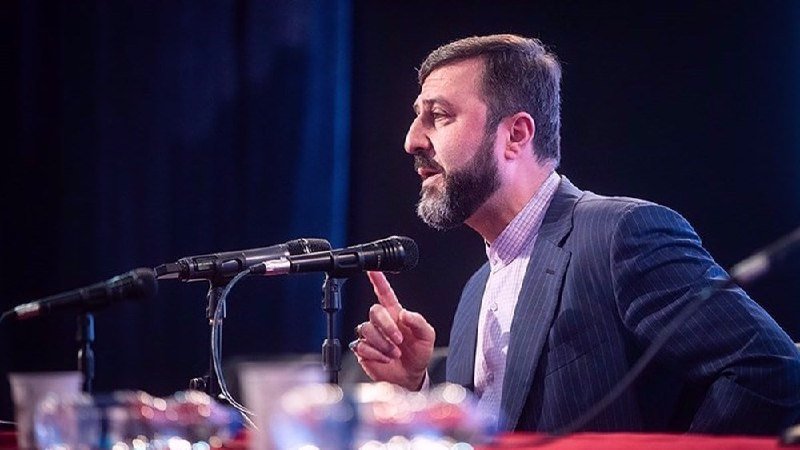
On 1 July 2026 at 14:36 UTC, the Telegram channel BRICS News posted a single sentence from Iranian Foreign Minister Abbas Araghchi: any threat against Iran's people or leaders will receive "an immediate and powerful response." Less than two hours later, at 16:24 UTC, the same line resurfaced on X via the account @sprinterpress, this time rendered as "Every threat to our people and leadership will be met with an immediate and strong response." Two channels, one quote, almost identical wording. The redundancy is the message.
The point of the repetition is not that Tehran is on the verge of striking anyone. It is that Iran wants the language on the public record, in English, circulated through non-Iranian aggregators, before any negotiation table is set. Threat-warning rhetoric is the diplomacy; the diplomacy is the threat warning.
What Araghchi actually said, and what he didn't
The circulated statement is conditional ("any threat") rather than declarative. There is no named adversary, no specific action threatened in return, no timeline. That omission is itself informative. A foreign minister preparing kinetic action typically couples the warning to a deliverable — a closure, a shipment, a vote at the IAEA, a sanctions tranche. Araghchi's formulation is the floor of escalation talk: keep the door open, do not name who is on the other side of it, and let every interested capital read itself into the conditional.
The two source posts add a small wrinkle. The Telegram post carries the phrasing "powerful response"; the X post renders it "strong response." That kind of variance across channels usually reflects either two separate utterances by Araghchi or a single utterance re-translated through two different editorial hands. Without a full transcript of the original Farsi, the distinction cannot be pressed further than that.
Why circulate a quote through BRICS-branded and independent X accounts
The choice of carrier matters. BRICS News on Telegram is a multilingual aggregator that leans towards Global-South diplomatic framing; @sprinterpress on X is an English-language independent account with no obvious institutional backing. Between them, the quote lands in two distinct information ecosystems — one that frames Iran inside a multipolar project, the other inside the general English-language news cycle — without passing through a Western wire. That routing is deliberate. When a foreign minister's words arrive at Western editors pre-localised and pre-circulated, the editorial cost of engagement drops. The story is already moving before Reuters has decided whether to move it.
This is the structural reality of contemporary escalation theatre: the cheapest way to set the agenda is to seed the quote first and let the wires catch up.
The reading the Western frame prefers, and where it strains
The Western mainstream reading of statements like Araghchi's is to treat them as proximate indicators of intent — a meter on the dial between diplomacy and conflict. That reading is not irrational. Iranian foreign ministers do not warn without reason; rhetoric can be preparation.
But the meter-reading model strains when the same sentence is reissued twice in a day through non-official channels with no new underlying event. On the surface, this is the second-order function of such rhetoric: it disciplines counterparties without committing to action. Sanctions drafters, IAEA inspectors, and Gulf mediators all have to ask themselves whether the warning is targeted at them, even when nothing is named.
The counter-reading is that the meter is calibrated in both directions. Quiet backchannels, which Iran has run in the past through Oman and Qatar, often coexist with loud front-channel warnings. A threat-warning line broadcast into the open can be the price of keeping a private channel open — the public posturing that allows a quiet envoy to keep travelling.
What remains uncertain
The available material does not specify what, if any, event triggered the statement on 1 July. The two source items record the quote and the timing; they do not record a precipitating sanctions move, a military deployment, a UN vote, or a diplomatic meeting. It is also unclear whether Araghchi was responding to a specific public remark by a US, Israeli, or European official in the preceding 48 hours. Without that anchor, the statement reads more as routine positioning than as a discrete escalation. Whether that changes in the coming days depends on whether anyone names themselves as the intended recipient.
For now, the choreography is the news. Tehran is keeping the threat-warning stage lit, in English, through channels that guarantee the line reaches both Western and non-Western audiences before any wire has had to decide whether it is worth filing. That is a quieter kind of escalation than a missile test — and a more controllable one.
This publication treats the 1 July statement as posture, not as a forecast. Where wires begin to couple the warning to a specific trigger — a sanctions package, a military redeployment, an IAEA finding — the framing will harden accordingly.
Wire provenance
This editorial synthesis draws on the following public wire/social posts:
- https://t.me/bricsnews