Doha's quiet choreography: why Iran's working-group format matters more than the headlines
Three Iranian-state dispatches on 1 July 2026 confirm a working-group structure for nuclear talks in Doha. The format, not the communique, is the news.
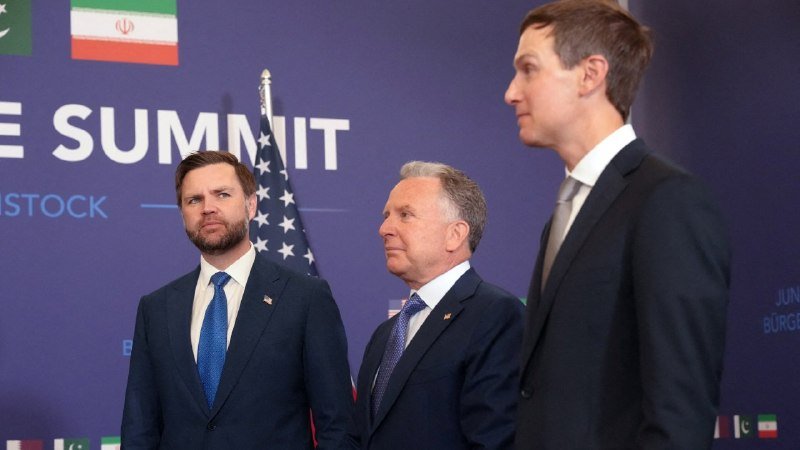
On 1 July 2026, three Iranian state-aligned channels reported, within a 90-minute window, that Iran's senior negotiator had sat down with the Qatari prime minister and that working groups had been stood up in Doha to grind through the remaining substance of a nuclear deal. IRNA framed the meeting as a working-group launch; Tasnim and Al-Alam both framed it as a bilateral with Sheikh Mohammed bin Abdulrahman Al Thani, who is simultaneously prime minister and foreign minister. The substantive news is not the handshake — there have been plenty of those — but the architecture: a structured, expert-level engagement in a Gulf capital that has spent two decades positioning itself as the indispensable intermediary.
What is actually on the table
Kazem Gharibabadi, Iran's deputy foreign minister for legal and international affairs and the country's chief negotiator, travelled to Doha and was received by the Qatari premier on 1 July, according to Iranian state media. IRNA, the official state news agency, reported the establishment of "working groups for a final deal," signalling that negotiations have moved from political theatre to technical drafting. The Tasnim and Al-Alam dispatches, both carrying the same meeting read-out within the hour, confirm the bilateral but do not specify the working-group structure — a discrepancy that itself tells a story. The Iranian state is presenting the same meeting in two registers: to international wire clients via IRNA, as a structured process; to domestic audiences via Tasnim and Al-Alam, as a high-level political gesture. Both versions are real, but neither is the whole picture.
Why Doha, why now
Qatar has held the mediation file on Iran's nuclear dossier since at least the 2010s and has hosted both overt and back-channel rounds. The choice of venue is not incidental. Doha can offer direct air links to Tehran, political cover for an Iranian negotiating team travelling abroad, and proximity to Gulf states whose security concerns are themselves part of the deal's perimeter. The working-group format also lowers the temperature. Closed-door expert sessions, with outcomes to be ratified later by ministers, are a familiar device for governments that need to make progress without committing principals to headlines. The Iranian reports do not name the working-group agenda, the third-party participants, or whether the United States has a seat at the table. That silence is conspicuous. Tehran wants the optics of a sovereign negotiation; Washington, if it is in the room at all, will want those optics minimalised.
The counter-narrative
Western coverage of any Iran nuclear round defaults to a specific frame: Tehran stalls, enrichment creeps, and the diplomatic window narrows. There is a structural reason for that frame — it tracks the history of the 2015 Joint Comprehensive Plan of Action and its collapse. But the framing also flattens what working-group negotiations actually look like. Technical drafting, by design, is slow and unspectacular; it is precisely the phase at which senior officials disclaim progress because the only progress worth claiming is a final text. Iranian state media, for its part, will over-read any meeting as a breakthrough because Tehran needs to demonstrate to a domestic audience that engagement is bearing fruit. The honest read of 1 July is that the format has changed — from summit theatre to working-level grind — and that neither side's preferred headline captures what is happening in the room.
Stakes, over the next ninety days
If the Doha working groups hold a cadence through August and September 2026, the architecture of a possible deal becomes thinkable: verification mechanics, sanctions sequencing, the fate of stockpiled enriched material, and the residual constraints on Iran's programme. If they stall, the diplomatic clock resets and the conversation drifts back to enrichment levels and IAEA inspection access — the parameters on which maximalist positions on both sides have the most room to harden. The Qatari intermediary is the variable that holds the process together; the Iranian reports do not say whether a US delegation is parallel-tracked through Doha, Kuwait, or Muscat, which is the single most consequential unknown. Until that is on the record, what the wires are watching is a format, not a deal.
What remains uncertain
The three Iranian dispatches agree on the meeting and on Gharibabadi's identity and title. They disagree, by emphasis, on whether this was a launch of a new negotiation or a continuation of an existing one. None of them names a US counterpart, an EU coordinator, or an IAEA presence. None discloses the working-group agenda or the timeline for a draft text. Until an external source — a Gulf state readout, a European External Action Service line, or an on-the-record US official — corroborates the structure, Monexus treats the Doha working-group architecture as reported by Iranian state media and not yet independently confirmed on the other side of the table.
Desk note: Monexus reports the Doha meeting as the Iranian state itself framed it, then flags what the framing leaves out — the US role, the agenda, the timeline. That is a different shape from a Western-wire lede that would treat the same facts as a stall narrative, and from an Iranian-domestic lede that would treat them as a breakthrough.
Wire provenance
This editorial synthesis draws on the following public wire/social posts:
- https://t.me/irna_en/1234
- https://t.me/tasnimnews_en/1234
- https://t.me/alalamfa/1234