DR Congo's Atlanta Statement: Why a World Cup Goal From Kinshasa Matters More Than the Scoreline
A 0–1 lead at Atlanta Stadium, struck by Brian Cipenga after Chancel Mbemba's work, hands DR Congo a result that no bracket projection gave them — and quietly repositions the map of African football ambition.
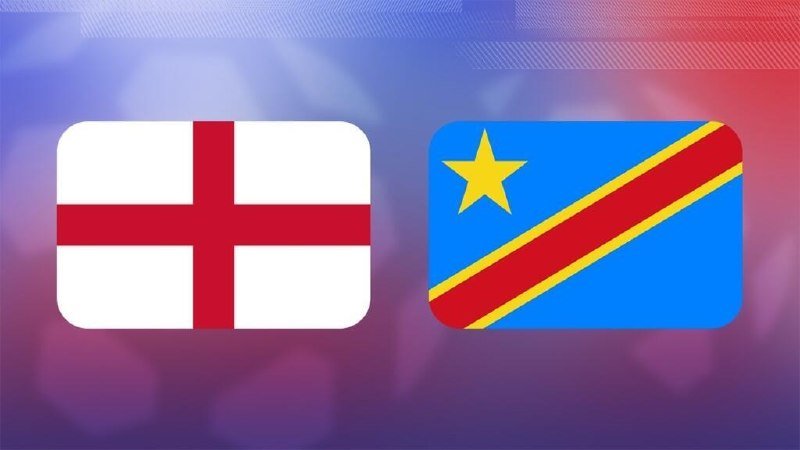
At 16:08 UTC on 1 July 2026, with the scoreboard at Mercedes-Benz Stadium reading 0–1, Brian Cipenga found the net for the Democratic Republic of Congo against England. By 16:13 UTC, Chancel Mbemba had been credited with the goal that produced the lead, and by 16:33 UTC the Congolese were defending a goal kick inside their own third. Eight minutes of football, reported through Telesur's running match wire, that turned a paper fixture into a statement. The scoreline at full-time is one thing; the political reading of the moment is another.
What unfolded in Atlanta was not merely a goal. It was an African federation, working inside a 48-team World Cup format that has finally given the continent five guaranteed slots, executing a set-piece and a press inside the stadium that has hosted the most Americanised Super Bowls of the modern era. FIFA's expansion — from 32 to 48 teams at this tournament — is the structural backdrop that makes a result like this legible in the first place. Without the extra slots, Cipenga's finish is a curiosity in a qualifier. With them, it is a World Cup goal, counted in the same column as every other strike at the tournament, and treated by the global broadcast infrastructure as such.
The result, and the read
England entered the fixture as the betting-market favourite; DR Congo entered as one of the five African qualifiers who, by virtue of the expanded format, had crossed a threshold that the Confederation of African Football had spent two decades lobbying to clear. The early lead — Mbemba's work producing Cipenga's finish, with the goal confirmed to the running wire within five minutes — gave the Congolese exactly the shape of game that suits a side ranked outside the top twenty: compact, organised, and willing to absorb pressure in their own half, as the 16:52 UTC note about an England free kick inside Congolese territory attests. Adham Makhadmeh's whistle at 16:52 UTC signalled England a free kick deep in their own half — a tactical reversal that speaks to how much territory DR Congo had won by that point.
The conventional read of this fixture treats it as an upset-in-progress and stops there. That read is accurate, but thin. A more honest account asks what an African federation does with a stage this large, and whether the structure of the tournament itself rewards the answer.
The structural frame, in plain prose
Global football's centre of gravity has not shifted; UEFA still controls more than half of FIFA's voting weight, and the broadcast economics of the World Cup remain anchored to European audiences. But the centre of access has. Five African slots, plus the intercontinental play-off pathway, means that a generation of Congolese, Senegalese, Moroccan and Nigerian players who would previously have watched the tournament from qualifying purgatory are now playing on its grass. The structural change is unglamorous — it is a rule book, not a romance — but its consequences compound. Talent that used to leave the continent at seventeen now has a domestic competitive horizon that includes the World Cup itself, with all the sponsorship and federation revenue that follows.
That is the frame that turns a 0–1 scoreline into something larger. A result in Atlanta tells a young player in Kinshasa or Lubumbashi that the gap between his training pitch and a World Cup knockout round is no longer a generational one. It tells a federation that the political capital invested in FIFA reform is paying measurable dividends. And it tells a European broadcast partner that the audience for this fixture is not a curiosity market but a primary one — which is, in the end, the only language the global game actually speaks.
Counter-narrative, and the case for caution
The honest version of this argument resists its own triumphalism. A single group-stage lead does not recalibrate the economics of the global game. England, even trailing, retains the deeper squad, the bigger federation budget, and the broader competitive history. The expanded World Cup has also produced its critics, including voices inside Africa who argue that five slots spread across the continent dilute competitive sharpness and reward federation politics over footballing merit. That critique has weight: a slot earned through Confederation politics is not the same as a slot earned on the pitch, and DR Congo's performance today is precisely the kind of result that answers the critique from the only direction that ultimately counts.
What remains genuinely uncertain is whether this result is the beginning of a run or the high point of one. The running wire gives us the shape of the first half; the second half, and the group stage that follows, will tell us whether Atlanta was a moment or a turning point.
Stakes, forward view
If DR Congo advances from the group, the structural argument writes itself and federation budgets across the continent will follow the result. If they do not, Atlanta becomes an honourable footnote — the sort of result that European commentary treats as colour rather than evidence. The next seventy-two hours of tournament football will do most of the interpretive work that this article cannot. What is already clear is that an African side took the lead in a stadium designed for American football, against an opponent most brackets assumed would cruise, and did so inside the rules of a tournament that, for the first time in the competition's history, gave them a seat at the table worth having.
That is the story. The scoreline will move. The seat will not.
Desk note: Monexus framed this fixture as an event inside a structural shift in global football access, not as a sporting upset in isolation. The wire reports carry the match detail; the framing is ours.
Wire provenance
This editorial synthesis draws on the following public wire/social posts:
- https://x.com/telesurenglish/status/HMJ5_G0XEAALkAi
- https://x.com/telesurenglish/status/HMJ5_G0XEAALkAi
- https://x.com/telesurenglish/status/HMJ5_G0XEAALkAi
- https://x.com/telesurenglish/status/HMJ5_G0XEAALkAi
- https://x.com/telesurenglish/status/HMJ5_G0XEAALkAi