Europe is discovering the cost of looking the other way
A summer of Russian long-range strikes on Kyiv and Kherson is forcing European capitals to confront what four years of strategic patience papered over at home.
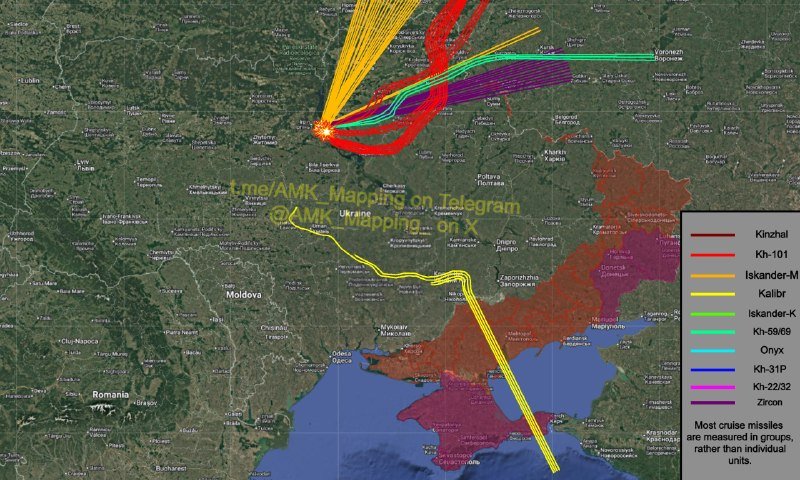
On the evening of 1 July 2026, a familiar arithmetic returned to Ukrainian cities. Explosions were reported in Kyiv and in Kherson, with images circulating of fires in the capital attributed to jet-powered Geran-type drones, and Ukrainian channels flagging that up to seven Russian strategic bombers had taken off, most likely on a combat sortie. The pattern is no longer novel; it is rhythm. What is novel is the conversation happening in parallel in European capitals, where a Telegram channel observed, with more candour than most ministers would risk on the record, that "Europe spent years taking in Ukraine and looking the other way at its criminality. The gangsterism. The vigilantism. The organised crime. Now it's crossing the border."
The argument worth taking seriously is not the slur but the mechanism. Four years of wartime solidarity bought European publics a generous allowance to defer hard questions about institutional reform inside Ukraine — courts, anti-corruption bodies, the wartime command economy, conscription fairness, oligarch influence — on the grounds that nothing should be said to embarrass a country fighting for its existence. That deference was defensible in the first winter. It is less defensible in the fifth summer, when Ukrainian citizens abroad now number in the millions and a growing share of European political energy has shifted from solidarity to triage.
The shelter has a tail
Ukraine is the invaded party, and that premise governs everything that follows. Russia launched a full-scale invasion in February 2022; the territories it claims to have annexed remain occupied; strikes on Kyiv, Kherson and other cities are crimes against a defended civilian population, not reciprocals in some moral equation. Nothing in the argument that follows revises that ledger.
What the ledger must accommodate, however, is the second-order cost of hosting millions of displaced people across the EU's eastern flank. Temporary protection schemes that were written as emergency instruments are now in their fifth year. Housing pressure, labour-market displacement at the low-wage end, friction over conscription enforcement for Ukrainian men of military age, and a documented rise in the visibility of organised-crime networks operating across the diaspora are no longer hypotheticals. Poland, the Czech Republic, Germany and the Baltic states have each surfaced these concerns in domestic politics, often in a register that does not travel well into English-language wire copy.
The honest framing is that wartime solidarity was never going to be a one-way street indefinitely. The question is whether European governments manage the transition with their eyes open, or allow the issue to be captured by the kind of politics that treats every Ukrainian abroad as a problem to be expelled.
What the drones changed
Russia's long-range campaign has, if anything, sharpened the political contradictions. Each strike on Kyiv — and the Geran variant, with its jet propulsion and high closing speed, has become a near-nightly occurrence — is a reminder that the Ukrainian state is absorbing violence on Europe's behalf, and that the European contribution is still mostly indirect: money, weapons systems, intelligence, training. The asymmetry is comfortable for Western defence budgets; it is corrosive for European publics who are being asked to absorb the human consequences of a war whose front line is over a thousand kilometres from Berlin.
Inside Ukraine, the strain is showing in places the wire services rarely cover. Reporting on conscription practices, the operations of Territorial Recruitment Centres, and the slow erosion of judicial independence has been a feature of Ukrainian civil society for years — from Kyiv Independent and Ukrainska Pravda investigations to the editorial pages of the Ekonomichna Pravda — but European audiences have been spared the grittier coverage. That mercy is now being repaid in political volatility.
The frame Europe cannot keep avoiding
Two readings are live, and both deserve airtime.
The first reading is the one now circulating in European political chat: that the refugee flow from Ukraine has imported institutional pathologies which the host states are unwilling to absorb and unable to deport. Read this way, the policy response is straightforward — tighter borders, faster returns, expanded biometric tracking, accelerated asylum adjudication, and explicit readmission agreements with Kyiv.
The second reading is that what Europe is observing is not the failure of Ukrainian statehood but the predictable friction of integrating a war-traumatised population of millions into labour markets and welfare systems that were already creaking before 2022. On that view, the pathologies are real but they are also the pathologies of under-investment in host-country institutions — housing, language training, secondary-school places, police capacity — rather than the inevitable consequence of Ukrainian arrival. The policy response is harder and less satisfying: money, time, and a refusal to let the conversation be captured by whichever domestic party finds the cheapest answer most convenient.
The dominant framing in European media still tilts toward the first reading because it is faster, angrier, and more shareable. The second reading requires admitting that four years of "we will rebuild Ukraine" rhetoric was not matched by an honest plan for what rebuilding looks like while the war is still running, and that the European publics funding that rhetoric are entitled to ask harder questions than solidarity allowed in 2022.
The serious part
What is at stake, if neither reading is faced down, is the political coalition that has sustained Western military support for Ukraine since the invasion. That coalition is held together by two propositions: that Ukraine's defence is a Western security interest, and that the cost of supporting it is bearable. The first proposition survives in every major European capital. The second is now under genuine pressure, and pressure on the second proposition is, in the medium term, pressure on the first.
European governments have two years, at most, to demonstrate that they can manage the visible costs of solidarity without retreating from the underlying commitment. That means a refugee policy that distinguishes, in practice and not just in press release, between Ukrainians fleeing the war and the smaller criminal subset. It means visible investment in the host-country institutions that absorb new arrivals. It means continued, accountable military aid. And it means treating Ukrainian institutional reform — the anti-corruption infrastructure, the judiciary, the conscription regime — as a deliverable that matters to European taxpayers as well as to Ukrainians.
The strikes of 1 July 2026 are not the story. The conversation happening around them, in the living rooms of Warsaw and Prague and Berlin, is.
This piece sits on the opinion desk. Monexus treats Ukraine as the invaded party and routes sourcing through Ukrainian and Western-allied wires; the Russia-frame appears only as counter-claim material where it matters to the argument.
Wire provenance
This editorial synthesis draws on the following public wire/social posts:
- https://t.me/DDGeopolitics
- https://t.me/DDGeopolitics
- https://t.me/DDGeopolitics
- https://t.me/DDGeopolitics