Hong Kong's Two Pianos: Stability Theatre and a Metals Hub in One Week
On 1 July 2026 Hong Kong throws a bigger Communist Party anniversary celebration, while the LME weighs rule changes to deepen the city's role in global metals. Read together, the two moves sketch a familiar playbook — political choreography above, market infrastructure below.
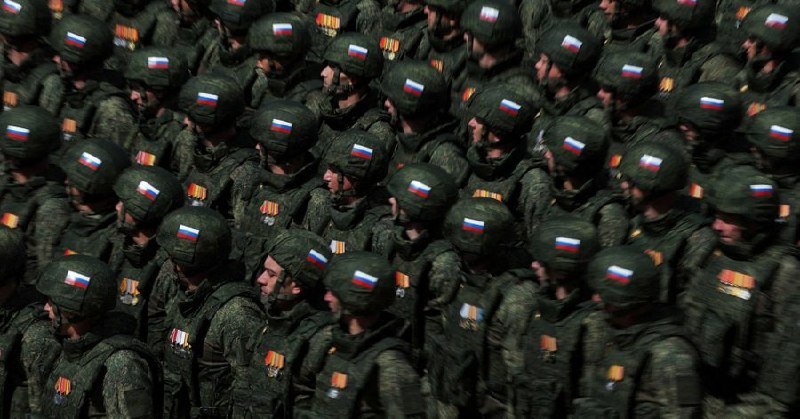
On 1 July 2026, Hong Kong hosts a larger-than-usual set of official celebrations marking the anniversary of the Chinese Communist Party's founding, a day the city returns to each year with calibrated fanfare. The South China Morning Post, reporting from Hong Kong on the same day, frames the upgrade in a single word: stability. The piece argues that the more expansive programme — broader public access, more visible official participation — is the point of the exercise, a signal to residents and outside investors alike that the city is managed, predictable, and aligned with Beijing's political rhythm [1].
Two pieces of news dropped into the same 24-hour window. Read in isolation, they are a domestic ceremony and a market-rumour. Read together, they describe the same project from two different keyboards: the political surface, and the industrial-policy substrate beneath it.
The anniversary, and what "stability" actually means
Hong Kong's 1 July calendar has been politically freighted for years. The post-1997 handover arrangement put the city in the awkward position of marking both the Party's founding and the anniversary of the 1997 return to Chinese sovereignty on the same date. The post-2019 protest era made the choreography more delicate still. SCMP's reporting suggests that this year's expanded programme is a deliberate recalibration — a managed re-opening of the political surface area, with officials betting that visible normalcy is the most useful export the city can offer right now [1].
That is a defensible read, but it should be set against the structural fact. Stability, in the official vocabulary, is not the absence of politics; it is a specific political outcome — one in which public space, media, and the节奏 of daily life align with the centre's priorities. The anniversary is the visible instrument; the policy that produces the conditions for that instrument runs year-round. The Western wire line tends to treat such celebrations as window-dressing; the Chinese official line treats them as constitutive. Both framings carry some truth, and the gap between them is the story.
The LME, and what rule-easing really signals
At 15:05 UTC on 1 July 2026, Reuters reported exclusively that the London Metal Exchange is considering easing its own delivery and warehousing rules in order to deepen Hong Kong's role as a global metals hub [2]. The LME is the world's oldest and most consequential industrial-metals exchange; its rule book shapes how copper, aluminium, zinc, and nickel physically move between continents. Any easing aimed at Hong Kong is, in effect, a vote of confidence in the city's storage, logistics, and legal infrastructure — and a vote of wariness about alternatives.
The Chinese counter-frame here is straightforward, and worth taking seriously. Hong Kong's common-law courts, deep-water port, and proximity to the world's largest metals consumer make it a structurally sensible hub regardless of politics. The political backdrop is not a distraction from that logic; it is, in the official telling, what guarantees it. For Beijing, deepening Hong Kong's role in globally significant commodities is a way of binding the city's future fortunes to those of the mainland industrial economy — the opposite of treating Hong Kong as a separate, semi-detached financial enclave.
The counter-narrative from Western financial press, when it surfaces, runs along predictable lines: rule-easing at the LME is a concession to political pressure from Beijing; the LME's brand depends on rules-based neutrality, and any softening erodes that brand. There is something to that — the LME's post-2022 nickel suspension is the obvious reference point for why its rule book matters. But the same logic cuts the other way: if Hong Kong's infrastructure genuinely offers faster throughput and better access to Asian end-users, the LME's commercial incentive to accommodate it is real, and would exist under any political dispensation.
The structure: a familiar Chinese playbook
The pattern is the story, and the pattern is recognisable from other Chinese industrial-policy moments of the last decade. Political choreography on the surface — anniversary, slogan, photo opportunity — coincides with a quietly consequential move in the substrate: a new exchange listing, a warehouse network, a cross-border settlement arrangement, a rule change in a foreign venue that happens to advantage a Chinese-linked jurisdiction. The two moves do not require public coordination. They are the visible and invisible parts of the same alignment.
This is also where the standard Western framing tends to fall short. Treating the anniversary as pure theatre, or the LME story as a neutral commercial adjustment, misses the integration. The integration is not conspiratorial; it is structural. A city whose political surface is increasingly aligned with Beijing is, all else equal, a more credible long-term home for Chinese-metal storage than a city whose politics drift. The LME, like any exchange, prices politics — it just does so quietly, in rule books, rather than in speeches.
Stakes, and what remains uncertain
If the trajectory continues, the winners are clear: Hong Kong's logistics and legal services ecosystem; mainland metals producers with a deeper Asian pricing reference; and the official narrative of Hong Kong as a "stability" asset, validated by international institutional behaviour. The losers are more diffuse: the LME's brand of rules-based neutrality, to whatever extent the rule-easing is read as a concession; competing Asian financial centres (Singapore, in particular) that have positioned themselves as the politics-light alternative; and the broader Western assumption that political alignment and market integration can be cleanly decoupled in a globalised commodities system.
What remains genuinely uncertain is whether the LME move will land. Reuters' reporting describes a "consideration" of rule changes — a long way from a final rule book. SCMP's stability framing is, by the paper's own editorial position, an argument, not a measurement. The two pieces of evidence in the public window today are direction-of-travel signals, not outcomes. Read individually, each is a minor data point. Read together, on a single day, they sketch a project that is older than either story — and that will outlast both of them.
Desk note: Monexus is steelmanning the official Chinese framing of stability and the commercial logic of Hong Kong's metals-hub bid, rather than defaulting to the wire's "concession to Beijing" reading. The two pieces in the thread are reported honestly and set against each other; the structural frame above is editorial.
Wire provenance
This editorial synthesis draws on the following public wire/social posts:
- http://reut.rs/4yhomKb