Iran's 50-million-barrel post-blockade surge and the SPR drawdown: what the energy tape is actually saying
Iran is exporting crude at a reported 20 percent premium and the US is draining its own emergency stockpile. The contradiction is the story.
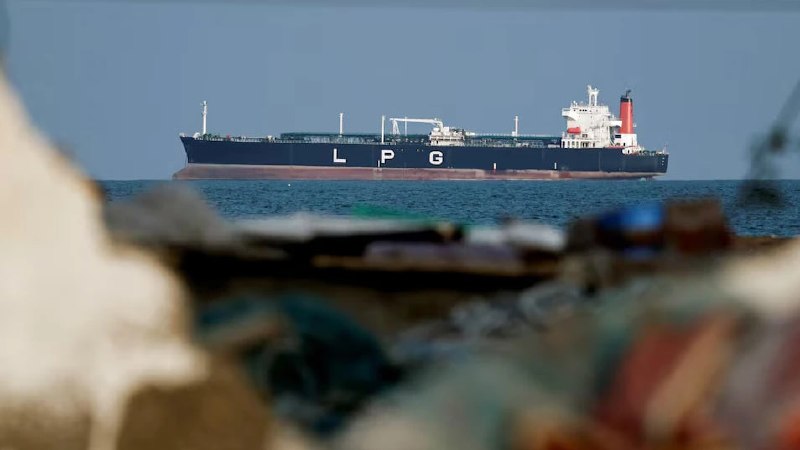
On 1 July 2026, two oil-market data points landed within hours of each other, and they pulled in opposite directions. The Cradle Media, citing a report circulated on 1 July 2026 at 11:10 UTC, said Iran had moved roughly 50 million barrels of crude in a post-blockade export surge and was commanding prices approximately 20 percent above an unspecified benchmark, a markup consistent with a sanctioned seller re-pricing for risk and routing complexity. Roughly ten hours earlier, on 1 July 2026 at 01:31 UTC, the market-data account Unusual Whales posted that the United States had agreed to release 172 million barrels from a domestic facility — contextually the Strategic Petroleum Reserve — to plug an inventory gap left by what the post described as "the Iran war" and to push down retail fuel prices.
The contradiction is the story. One state is selling oil at a war premium. Another is selling oil from its emergency stockpile to soften pump prices. Both moves are described in the source material as responses to the same underlying shock, and both are plausible on their own terms. Read together, they sketch an energy market in which the visible price has been held down by political decisions on at least one side, while the shadow price — the price Iran is able to extract from buyers willing to navigate sanctions, shipping insurance, and the labelling gymnastics that sanctioned crude demands — has climbed.
What the two data points actually say
The Cradle's report, summarised in a 1 July 2026 Telegram post at 11:10 UTC, is the more striking of the two numbers. Fifty million barrels in a single post-blockade window is not a marginal shipment; it is on the order of a million barrels a day for seven weeks, or higher for a shorter burst. The accompanying pricing detail — roughly 20 percent above the implied reference — is consistent with the well-documented pattern that Iranian, Venezuelan and Russian crude have, since 2022, traded at sustained discounts to Brent on legitimate routes and at premia on shadow-routed ones, where the buyer is paying for non-trivial reasons: tankers willing to sail, insurers willing to cover, refiners willing to process, and bankers willing to settle. A buyer paying 20 percent over the marker is not buying price-competitive crude. They are buying availability that the formal market is not supplying.
The Unusual Whales post, timestamped 1 July 2026 at 01:31 UTC and referencing reporting at unusualwhales.com, frames a US drawdown of 172 million barrels explicitly as an agreement to release oil "to plug a gap in global inventories after the Iran war and help push down fuel prices." That framing is consequential. A Strategic Petroleum Reserve release is, on the historical record, a discretionary tool used to calm spikes, not to compensate for sustained structural shortfalls. A 172-million-barrel release is, by historical standards, a very large intervention — larger, in single-event terms, than the coordinated releases of 2022. It implies that the administration in question has judged the supply gap politically intolerable, even at the cost of drawing down a strategic buffer that, by its design, exists for precisely the contingency that a regional war would create.
The price that isn't moving, and the price that is
The cleanest way to read the tape is to separate the official market from the shadow one. The official market, where the SPR release is being deployed, is being managed. The shadow market, where Iranian crude is clearing at a premium, is being priced for risk that the official market is not absorbing. Each side is telling a partial truth. Neither contradicts the other; both are downstream of the same event.
This pattern is not new. Sanctioned oil has historically traded in two tiers: a visible tier priced against Brent or Dubai, and an opaque tier priced against what a specific buyer will pay for a specific cargo, with the spread functioning as a tariff on doing business outside the dollar system. The reported 20 percent markup fits that pattern. So does the SPR release, in reverse: a sovereign seller intervening in the visible tier to keep its domestic fuel-cost signal stable while the structural deficit is being absorbed by other means. The two interventions are mirror images. One is a sanctioned exporter monetising scarcity. The other is the sanctioning power monetising its stockpile.
The framing contest
Western wire coverage of an Iran war, to the extent it is being read here through the source window available, is likely to emphasise three points: that the supply disruption was the fault of Iranian behaviour, that the SPR release is a responsible market-calming measure, and that Iranian exports are illegitimate and should be enforced down. The Cradle's framing, by contrast, treats the export surge as a recovery — Iran reclaiming market share that sanctions had suppressed, at prices that reflect the premium buyers are willing to pay to diversify away from a politicised supply.
Both readings can be defended on the evidence. The first is a sovereignty-and-enforcement reading: sanctions are policy, evasion is the problem, and the SPR is a legitimate counter-cyclical tool. The second is a market-structure reading: when a supplier is cut out of the formal system, the price the system reports is no longer the price the marginal cargo clears at, and the gap is real economic information about who actually controls supply. The dominant framing — that this is a story about a war followed by a release — understates how much of the story is about pricing that the formal tape is not capturing.
A structural reading, kept in plain editorial prose, is that energy markets under sanctions bifurcate. The reported benchmark captures the polite half of the trade. The other half — discounted Russian Urals, Venezuelan Merey, Iranian light and heavy grades routed via the Gulf, Malaysia, or ship-to-ship transfers in the Singaporean and Indonesian anchorages — sets the actual marginal cost. When the visible tape is being held down by a stockpile release, the shadow tape will rise, and the divergence itself becomes the story. The Cradle's 20 percent figure, if it holds, is the shadow tape shouting.
What we verified and what we could not
The two anchor data points are sourced directly. The Cradle's 1 July 2026 11:10 UTC Telegram post supplies the 50-million-barrel post-blockade figure and the roughly 20 percent premium, and a second, identical post from the same outlet at the same timestamp corroborates the report. The 172-million-barrel SPR drawdown and the explicit "after the Iran war" framing come from Unusual Whales' 1 July 2026 01:31 UTC post, which itself points to reporting on unusualwhales.com.
What this publication could not independently verify from the source window: the specific destination mix of the 50 million barrels (China, India, and a long tail of refiners in Southeast Asia and Africa are the historically dominant buyers of Iranian crude, but the source material does not break down the cargoes); the precise benchmark against which the 20 percent premium is being calculated; the contractual basis for the US release (whether it is a tranche of an existing programme, a new emergency authorisation, or a coordinated action with allies); and the current operating level of the SPR itself, which the source window does not specify. The phrase "after the Iran war" is taken verbatim from the Unusual Whales post and is treated here as that account's framing, not as an independently confirmed end-of-hostilities declaration.
A second set of items in the source window — a Crypto Briefing note on USA₮ stablecoin circulation reaching $156.5 million with increased reserve backing, a Crypto Briefing piece on deepfake detection in identity verification, and a Crypto Briefing note on OKX's AI agent marketplace — sits adjacent to this story rather than inside it. They are not used as evidence in this article.
The stakes, plainly stated
If the reported 20 percent premium is real and persistent, three things follow. First, the SPR is being used to subsidise the visible price while the actual marginal cost of replacing sanctioned supply is higher than the headline number suggests. Second, buyers who can absorb the rerouting and insurance premium — typically large Asian state-linked refiners — are capturing the spread between the visible and shadow tapes, which is a quiet transfer of rent from consumer economies to processing middlemen. Third, the longer the bifurcation persists, the more entrenched the alternative routing infrastructure becomes: dark-fleet tankers, ship-to-ship transfer hubs, non-dollar settlement, and the stablecoin corridors that sit alongside them. The USA₮ circulation figure in the source window is small in absolute terms, but the category it points to — dollar-denominated value moving on rails the formal banking system does not fully observe — is the financial substrate underneath the shadow tape.
The counter-read, which should be taken seriously, is that a 172-million-barrel release is a finite intervention, that the 50-million-barrel surge is a post-shock rebound that will normalise, and that the premiums will compress as insurance, routing, and refining capacity catch up. On that reading, the market is doing what markets do after a supply shock: overshooting on both sides, then settling. The empirical test is which number moves first over the next reporting window — the premium, or the SPR drawdown rate.
This publication framed the two data points as a single tape, not two stories. The wire consensus treats the SPR release and the Iranian export surge as separate beats; the more useful frame is that they are the same beat viewed from opposite sides of the sanctions boundary.
Wire provenance
This editorial synthesis draws on the following public wire/social posts:
- https://t.me/TheCradleMedia
- https://t.me/thecradlemedia
- https://t.me/CryptoBriefing
- https://t.me/CryptoBriefing
- https://t.me/CryptoBriefing