Tehran's Hormuz Leverage: A 60-Day Window Dressed Up as a Settlement
Tehran signals it intends to keep the chokepoint as a permanent bargaining chip, with a Polymarket-flagged 60-day MOU on free passage that looks more like an arrangement than a settlement.
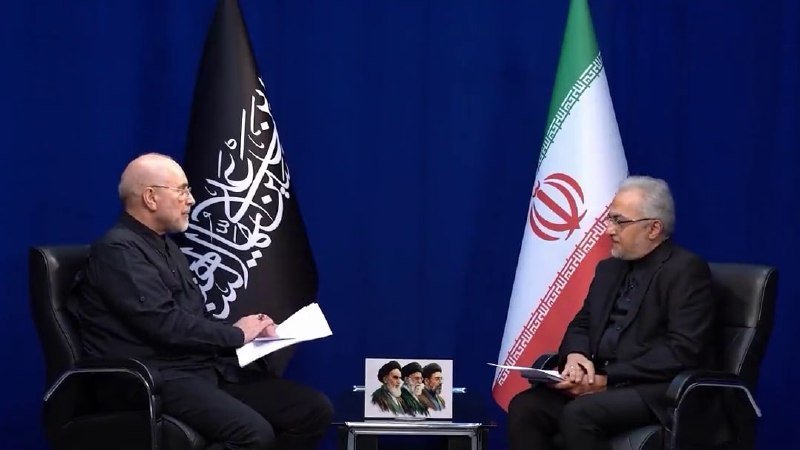
On 1 July 2026, Iran state television reported that a ship ran aground in the Strait of Hormuz after deviating from an Iran-approved transit route. The incident lands hours after Reuters reported that senior Iranian sources insist Tehran will keep control of the strait, and on the same day that Iran's negotiator Qalibaf, via posts circulating on Polymarket, declared that fee-free passage will only hold for 60 days under the current memorandum of understanding. Read together, the three dispatches describe a deliberate posture, not a miscommunication.
Tehran is signalling that the world's most important energy chokepoint will be governed, for the foreseeable future, by an Iranian clock. The political read is straightforward. It restructures the diplomacy: the United States and its Gulf partners are not negotiating a settlement so much as negotiating inside an Iranian-managed framework.
What's actually on the table
The 60-day MOU is the architecture. Fee-free passage is conditional and temporary. Iran's negotiator Qalibaf, per posts circulating on the prediction market Polymarket on 30 June 2026, framed the arrangement as a goodwill gesture rather than a commitment — "passage through the Strait of Hormuz without fees will only last 60 days under the current MOU." That language preserves the option to charge, to throttle, or to vet traffic at will. The Iranian state-television report on 1 July of a ship going aground "not using Iran-approved route" reads as an enforcement warning, not as an apology.
Reuters, reporting senior Iranian sources on 1 July 2026, adds the political backdrop: Tehran intends to keep control of Hormuz. That is consistent with a long-standing Iranian position that the strait is sovereign Iranian territory in frictional waters, and that transit rights are a matter of negotiation, not customary international law alone.
What the Western framing leaves out
Western wire coverage tends to read Iranian leverage as a residual symptom of sanctions pressure: a regime that needs a hostage to bargain with, therefore stage-manages shipping incidents. The framing is not wrong, but it is incomplete. Whatever one thinks of the regime's domestic politics, Iranian custodianship of the strait is geographically straightforward. Roughly a fifth of global oil passes through a channel whose northern coast is Iranian. That structural fact doesn't sit politely inside any sanctions-tightening narrative; it asks what settlement terms are realistic given the geography, rather than what terms a negotiating party would prefer.
A useful counter-narrative, common in Iranian-aligned outlets and absent from most Western wires, treats the current framework as Iranian institutional capacity being put on display: a regime able to set terms for a global shipping lane, with a quietly competent enforcement record. Whether one finds that competent or menacing is a value judgement the wire copy tends to elide.
The structural frame
What we are watching, in plain editorial terms, is the operationalisation of a chokepoint as leverage. The Strait of Hormuz is being treated less as a global commons than as a managed corridor, with Iran asserting the management rights. This sits inside a wider pattern: corridors — Suez, Bab el-Mandeb, the Taiwan Strait, the Malacca Strait — are increasingly politicised as supply-chain choke points, and the parties that physically hold the shore gain negotiating weight that is hard to substitute away from.
Three things follow. First, fee regimes, vessel-vetting protocols, and "approved routes" become the new substance of maritime diplomacy, displacing the cleaner-sounding discussions of de-escalation. Second, the negotiating burden shifts. Buyers of Gulf crude, in Asia and Europe, end up underwriting any settlement that keeps tankers moving at predictable prices. Third, the duration of any truce is now the contested variable — not whether there is one, but how long it runs before the next leverage event.
Stakes and a serious note on uncertainty
The practical stakes concentrate in three places: oil benchmarks (Brent and Dubai), the cost of war-risk insurance on tankers, and the political shelf life of any sanctions architecture that depends on predictable transit. A 60-day countdown places a recurring news peg into the calendar; markets will rerun the risk premium arithmetic every two months.
The serious note is this: the three source items do not, in aggregate, let a reader verify several things that matter. They do not specify which ship went aground, its flag, its cargo, or the cause of the grounding — only that Iranian state TV framed it as a routing violation. They do not record whether Iran's "senior Iranian sources" are reading from a unified decision or expressing a factional position, and they do not name the other party to the MOU beyond the Iranian negotiator. The Reuters and Iranian state TV reports are consistent with each other and with the Polymarket-circulated Qalibaf statement, but they are also the only three sources on the table, and they concentrate on Tehran's voice. Western maritime authorities, insurers, and Gulf-state counterparts have not, in these items, responded on the record. The picture is real; it is also partial.
What this publication will be watching: whether the 60-day clock is renewed in late summer 2026, whether the routing-violation framing produces formal Iranian enforcement notices, and whether Western coverage begins to engage with the chokepoint-as-leverage architecture the way it engages with sanctions — as a fact of life, not an irritant.
This piece was framed to read Tehran's statements on their own terms against the geography of the strait, and to give the structural Iranian position the weight the wire copy usually strips from it.
Wire provenance
This editorial synthesis draws on the following public wire/social posts:
- http://reut.rs/4wljP7w