Tehran Reopens the Hormuz Question as US-Iran Talks Reignite
Iran's insistence on retaining sovereign control of the Strait of Hormuz, paired with an alleged seizure of a cargo ship on a US-suggested route, signals that any reopening of the nuclear file will sit inside a wider contest over the waterway.
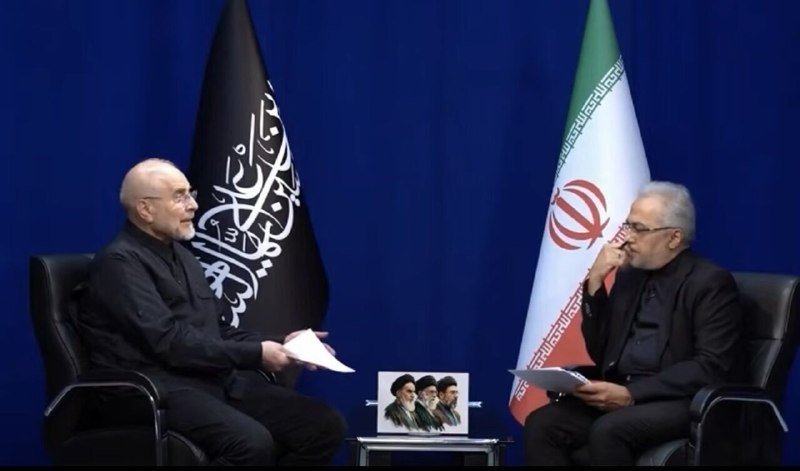
At 17:35 UTC on 1 July 2026, senior Iranian sources told Reuters that Tehran intends to keep sovereign control of the Strait of Hormuz in any arrangement with Washington, hardening the terms of a diplomatic track that only hours earlier looked like it might reopen. The same afternoon, Iran's state broadcaster released footage of a foreign cargo ship that had run aground in the waterway after allegedly attempting to transit via a route the United States had suggested, an incident Iran framed as flouting Iranian rules of passage. Vice President JD Vance, speaking earlier in the day, said the US was "worried about the nuclear issue" and intended to "start talking about that," while describing the Iranian system as a mix of figures who recognise that "the last 47 years of their government has been a mistake" and hardliners still attached to old ways. The collision of those signals — Iranian insistence, an apparent enforcement flashpoint, and a senior US comment about returning to the nuclear file — sketches the shape of the next negotiation: it will be about more than enrichment.
The thesis is straightforward. Any reopening of US-Iran diplomacy in 2026 will be conducted against a backdrop in which the Strait of Hormuz, the narrow chokepoint through which a substantial share of seaborne oil passes, is itself on the table. Tehran's framing — that passage is conditional on Iranian sovereignty, not on US-prescribed routes — collapses the long-running separation between the nuclear file and the maritime file. If Washington accepts that frame, it concedes a lever it has held since the early 1980s. If it does not, the shipping incident of 1 July is a preview of how the disagreement will be policed at sea.
What the immediate incident actually is
The IRIB footage released at 17:07 UTC on 1 July shows a foreign cargo ship stuck in the Strait of Hormuz after running aground while allegedly transiting a US-suggested route earlier that morning, a description relayed by the open-source channel WarFootageWitness via Telegram. The details of the cargo, the vessel's flag, and its owner are not specified in the available reporting. Iranian state media, via Press TV, characterised the episode as an example of what happens when a vessel "tries to bypass Iran's rules in the Strait of Hormuz and took an uncoordinated route" — language that explicitly distinguishes a sanctioned transit regime from a US-alternate one. That distinction is the policy claim. It is also the news.
Two things are worth noting separately. First, the incident is reported in Iranian and Iranian-aligned open-source channels; independent wire confirmation of the grounding, the route change, and the US suggestion has not been published as of 17:35 UTC on 1 July. Second, the framing of the footage — ship-stuck-as-enforcement — is itself a message. Tehran is signalling that compliance with its declared transit rules carries enforcement consequences, including the risk of a vessel being left disabled in shallow water without Iranian rescue coordination.
The US side, and the diplomatic floor beneath it
Vance's earlier remarks, captured in open-source reporting from Clash Report at 16:22 UTC and again at 16:25 UTC, frame the Iran's domestic split — reformists versus hardliners — as the structuring variable of the negotiation. His most concrete policy sentence is that Washington is "worried about the nuclear issue" and intends to "start talking about that." That is a lower expectation than a deal. It is the prelude to a deal: testing whether Iranian decision-making, in his read, has enough internal latitude to transact on enrichment limits, IAEA access, and stockpile disposition.
What the commentary does not address is whether the nuclear deal, if it materialises, will be paired with a maritime side-letter. The Reuters reporting from 17:35 UTC, citing senior Iranian sources, suggests Tehran's answer is no — that Hormuz is sovereign Iranian territory, subject to Iranian regulation, and not negotiable as a concession. In Tehran's framing, the strait is to the nuclear file what the Joint Comprehensive Plan of Action never quite was: an inseparable second front. If the US side insists otherwise, the negotiation has a ceiling before it has a floor.
The structural frame, in plain terms
What is unfolding is a reassertion of territorial control over a chokepoint that the post-1979 US naval posture has, in effect, treated as an international commons to be policed by the Fifth Fleet. The shift is not technical — Iran does not have a competing blue-water navy — but legal and political. By declaring that any US-suggested route is illegitimate unless Iran endorses it, Tehran claims the right to determine the conditions of passage for shipping of any flag, including that of US-allied Gulf states. That claim collides with the long-standing US position that freedom of navigation through the strait is governed by international law and enforced, when necessary, by the US Navy.
This is the larger story that the day's news sits inside. The dollar-system dominance question is downstream of physical control of commodity chokepoints; in oil, that means the strait. Who regulates Hormuz, who enforces rules of passage, and whose courts adjudicate incidents, all bear on how the energy leg of the global economy is priced, insured, and hedged. The contested shoals of 1 July matter to insurers and to oil futures before they matter to diplomats, even if the diplomats are the ones whose language makes the news.
Stakes and what to watch
The cost of an extended standoff is asymmetric. Iran's oil exports are the regime's primary external revenue; sustained enforcement against shipping would invite retaliation against its own crude flows, including sanctions escalation and any GCC-led coordination that the US could organise. The cost to the United States is geopolitical — any visible concession on Hormuz rules rebases the naval role in the Gulf — and macroeconomic, in the form of insurance premia and shipping reroutes that flow into pump prices within weeks.
Three points deserve watching. First, whether the grounded vessel's flag, owner, and cargo become public; the answer shapes whether the incident reads as a warning or as a trigger. Second, whether the ship was insured under a marine policy that has an Iran-exclusion clause, which would imply the incident sits inside a known sanctions risk corridor rather than as a stand-alone event. Third, whether the next round of talks produces a written understanding on transit in advance of any nuclear text — sequencing that would itself be a major concession. The sources available as of 18:00 UTC on 1 July do not specify any of these; the picture is likely to clarify only when wire reporting catches up with the open-source feeds that surfaced the incident.
How Monexus framed this vs the wire: open-source channels carried the shipping incident and the Vance quotes earlier than major wires published; Monexus has treated the Iranian-state framing as the actors' own claim and labelled it as such, rather than restating it as established fact.
Wire provenance
This editorial synthesis draws on the following public wire/social posts:
- http://reut.rs/4wljP7w
- https://t.me/wfwitness
- https://t.me/ClashReport
- https://t.me/ClashReport
- https://t.me/presstv