Iran turns the Strait of Hormuz into a toll road — and the world is being told to pay up
Tehran is signalling that the world's busiest oil chokepoint will run on its rules — and that a 60-day grace period is exactly that, not a permanent concession.
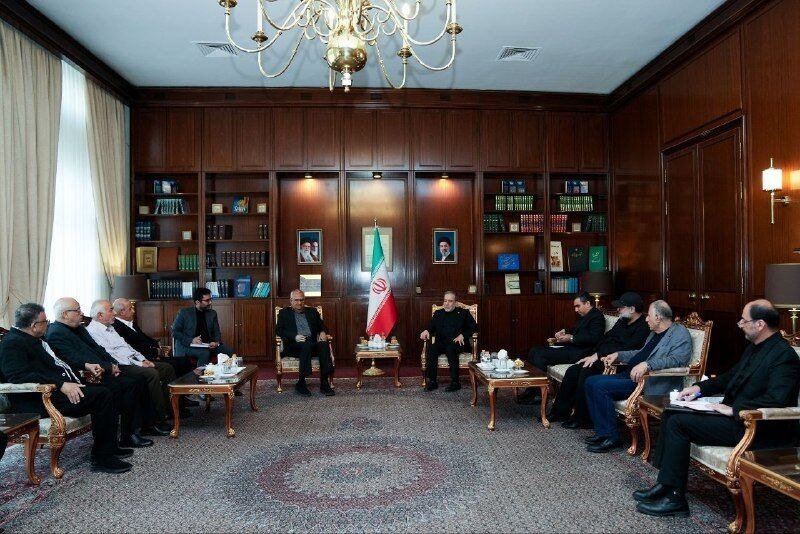
At roughly 16:00 UTC on 1 July 2026, Iranian state television PressTV broadcast footage it described as the fate of a foreign vessel that "tried to bypass Iran's rules" in the Strait of Hormuz and "took an uncoordinated route" through the waterway. The clip, circulated via the PressTV Telegram channel, was light on operational detail and heavy on visual warning: this is what defiance looks like, the framing said, when the cameras are rolling.
The same day, Iran's acting defence minister used a separate appearance to reaffirm that the country's missile and drone capabilities are "non-negotiable" — a deliberate reminder that whatever Tehran is willing to negotiate over passage fees, it is not willing to negotiate over the hardware that would enforce the deal. Taken together, the two messages form a single proposition. The world's most consequential energy chokepoint is being repositioned, in plain view, from a transit commons into a toll road with a coat of sovereign paint.
The 60-day clock
The trigger sits in a parallel track of Iranian signalling. On 30 June 2026, Iran's top negotiator declared that passage through the Strait of Hormuz without fees would last only 60 days under the current memorandum of understanding. A Polymarket contract on the same day priced a 44% probability that Iran would actually charge Hormuz transit fees by the end of August. The market's reading is not prophecy, but it is informative: professional bettors, looking at the same Iranian statements, give the fee regime a coin-flip chance of being operational within two months.
The 60-day language is doing diplomatic work. It tells foreign governments and shipping companies that the current grace period is finite — long enough to negotiate, short enough to concentrate minds. It tells Iran's domestic audience that the leadership extracted a concession even if the actual levy has not yet begun. And it tells insurers, who price war-risk premia on these waters daily, that the underwriting environment is about to get worse.
A corridor, not a causeway
Read together, the three pieces fit a recognisable pattern. A state with leverage over a strategic corridor announces that the corridor is governed by its rules, demonstrates that rule enforcement can be physical, and ties the whole package to a public negotiating clock. The 1 July footage of the intercepted foreign vessel is the demonstration. The acting defence minister's missile-and-drone statement is the guarantee behind it. The 60-day MOU language is the schedule.
What is unusual is the sequencing being so public. Chokepoint coercion in the Gulf has historically been quiet — naval movements, detention of tankers reported days later, anodyne foreign-ministry readouts. Iran this week has chosen visibility: state media releasing footage in real time, named negotiators attaching dates to the concession period, parliamentary-adjacent voices signalling that the missile programme itself is the bargaining chip. That is a communications choice as much as a policy choice, and it changes how foreign ministries have to respond. A quiet detention can be handled by a quiet protest note. A publicly broadcast seizure, tied to a public countdown, demands a public answer.
What the dominant framing misses
The Western wire line on Hormuz has historically treated any Iranian action in the strait as risk to be priced — a tail event, a war-risk premium, a reason for naval task forces to remain forward-deployed. That framing is not wrong, but it is incomplete. It treats the strait as a commons that Iran is disrupting, when Iran's own legal and political argument is that the strait is being reorganised under rules Tehran helped negotiate and is now prepared to enforce. The PressTV footage is not the language of disruption; it is the language of a sovereign introducing a tariff schedule.
There is also a missing counter-narrative worth naming. Tehran's argument that the strait should be governed by the littoral state — not by the extraterritorial preferences of extra-regional navies — has a long pedigree in international maritime discourse, even if the specific mechanism of unilateral fee collection does not. A serious Western response has to engage with that argument rather than wave it away. If Iran can credibly demonstrate that the fee regime is enforced, applied without favouritism, and revenue is hypothecated to navigational safety in the waterway, the political cost of opposing it rises sharply. If the regime is enforced selectively and the footage keeps coming, the political case for a coordinated response strengthens.
The serious paragraph
The stakes are concrete. Roughly a fifth of the world's seaborne oil transits Hormuz. A functioning fee regime adds to the cost of every barrel, but it does not necessarily close the waterway — and the difference matters. A closed strait is a global recession trigger. A tolled strait is a margin event for shippers, refiners, and insurers, and a geopolitical win for the state collecting the toll. Insurers will reprice war-risk premia; refiners will hedge more aggressively; commodity desks will widen their Hormuz scenarios. The countries with the most to lose are the oil-importing economies of Asia — India, China, Japan, South Korea — none of which have signalled how they intend to respond to the 60-day clock. Their silence is itself a data point.
This piece will be updated as the MOU timeline develops and as Western and Asian foreign ministries publish their read-outs of the Iranian announcements.
Wire provenance
This editorial synthesis draws on the following public wire/social posts:
- https://t.me/PressTV/123456
- https://t.me/PressTV/123457
- https://x.com/Polymarket/status/1234567890