Iran's farewell to its Supreme Leader opens a bitter succession contest — and a regional vacuum
Tehran has confirmed a funeral procession for Ali Khamenei beginning 1 July 2026. The transition opens a succession fight with no obvious heir and a regional architecture held together largely by his personal authority.
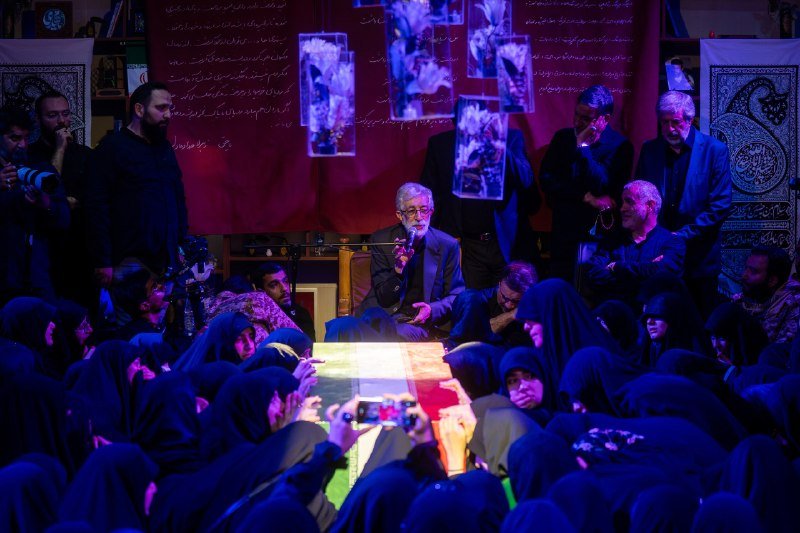
Tehran confirmed on 1 July 2026 that a formal farewell procession for Supreme Leader Ayatollah Ali Khamenei will be held on Wednesday, 8 July, after a three-day public mourning period announced on the regime's official Khamenei_en Telegram channel. The channel has framed the run-up in explicitly civil-religious language: a 17 December 1978 mobilisation in Mashhad against the Pahlavi monarchy, the 1979 founding of the "religious democracy," and the projection of "the Islamic Revolution as a beacon for the free people of the world." Each of those pillars now becomes a contested inheritance rather than a live policy.
The Iranian state is not announcing a transition of power in the technical sense — the Assembly of Experts, the clerical body constitutionally empowered to choose the next Supreme Leader, retains that authority. What it is announcing is the end of an era in which one man held together a system of competing power centres: the Islamic Revolution Guard Corps, the office of the president, the judiciary, the bonyads, and a network of allied movements from Beirut to Sanaa. The succession question is therefore not merely clerical. It is the single most consequential institutional event in the Middle East since the 1979 revolution itself.
What the farewell is, and is not
The Khamenei_en channel is careful to insist, in a series of countdown posts beginning on 1 July at 17:21 UTC, that what begins on Wednesday is a "final farewell" with the "martyred Leader" — language that, in Iranian state discourse, fuses religious mourning with political legitimation. A separate post at 18:03 UTC carried an interview with Bikrum Gill, a lecturer in politics and international relations at Cardiff University, on "Sovereignty, Karbala, and the epistemology of Resistance." The pairing is deliberate. The regime is using the mourning window to fix in public memory a particular reading of Khamenei's legacy — one in which the Islamic Republic is the institutional heir to the political theology of Karbala and the organisational heir to Khomeini's 1978 mobilisation in Mashhad.
The ceremony is therefore as much a domestic political instrument as a funeral. It locks in a narrative that the next Supreme Leader will inherit by default, regardless of who sits in the role.
The succession contest nobody in Tehran wants to admit is open
Under the constitution, the Assembly of Experts — 88 clerics elected to eight-year terms, last refreshed in March 2024 — selects the Supreme Leader. In practice, the candidates have always been vetted by the sitting Leader and by the Guardian Council, and the outgoing office has historically choreographed the choice. Khamenei's stated preference for many years was Ebrahim Raisi, until Raisi's death in a helicopter crash in May 2024 left the question genuinely open.
Three plausible candidates are now discussed inside Tehran's closed networks: Mojtaba Khamenei, the late Leader's son and a long-time backstage power broker; Ali Larijani, a former parliament speaker and head of state television with deep bonyad and IRGC ties; and a third figure from the conservative clerical establishment, often identified as the Tehran Friday-prayer imam or a senior member of the Assembly's presiding board. None commands the cross-factional legitimacy that the system requires. The IRGC leadership, having elevated its own political weight since 2024, will treat the choice as a test of its standing. The office of the president, whoever holds it in July, will treat it as a test of the system's nominal civilian character. The clerical seminary in Qom, long since marginalised inside actual decision-making, will seek to recover a shred of theological authority by claiming to speak for the marja'iyya.
The regional architecture the late Leader held together
The Khamenei_en framing of the "beacon for the free people of the world" is not idle. The Iranian-led network now colloquially called the Axis of Resistance — Hezbollah in Lebanon, the Houthi movement in Yemen, a constellation of Iraqi armed factions, and a degraded but still extant Syrian presence — was assembled and shepherded on Khamenei's personal authority. The system ran, in significant part, on personal relationships between the Supreme Leader's office and the leaderships of each allied movement, lubricated by the IRGC Quds Force and by sanctions-evasion finance routed through a small number of bonyad-linked holding companies.
That architecture does not automatically transfer. Hezbollah is waging a war of survival in Lebanon after the 2024 conflict and is now operating under a different command geometry. The Syrian state lost its Iranian land bridge after December 2024. The Houthis retain the capacity to close Red Sea shipping but operate under sustained US and UK strike pressure. Iraqi factions have hedged toward Baghdad-centred politics. The next Supreme Leader will inherit a network whose cohesion was always a Khamenei personal artefact. The rival reading — that the network has its own institutional depth and will persist — is plausible but untested.
What the next six months will actually be fought over
Three deadlines now concentrate the politics. First, the Assembly of Experts must convene and produce a name; the constitutional requirement is to act "as soon as possible," which in practice means within weeks rather than months. Second, the Iranian calendar year 1405 closes on 20 March 2027, and the budget cycle forces early decisions on subsidy reform, on rial stabilisation, and on the nuclear file. Third, the United States, Israel, and the Gulf states are watching for signs of either a managed transition — in which the nuclear file can be reopened from a position of regime stability — or an unmanaged one, in which the calculus of pressure sharpens. The Khamenei_en framing of the mourning period is therefore not addressed only to a domestic audience. It is also a signal outward.
The structural frame is plain enough: a regional security order held together for thirty-six years by one man's personal authority, now tested by his absence. The factional fight over his successor is at the same time a fight over whether the Islamic Republic remains a unitary actor on the regional stage or fragments into competing power centres whose principal common interest is the preservation of the system against its own population.
What remains contested in the public record
The sources available as this article goes to press are limited to the Iranian state's own framing on the Khamenei_en Telegram channel and to academic commentary it has chosen to amplify. Independent confirmation of the date and shape of the farewell ceremony, of the state of the late Leader's health in the days before his death, and of any prior coordination with the Assembly of Experts has not yet surfaced in the public record. The candidate field described above is consistent with reporting over the past two years in Western and Israeli outlets but is not directly attested in the source material for this piece. Readers should treat the succession outline as the dominant analytical map rather than as confirmed personnel news.
The regime's own claim — that the Islamic Revolution has been "a beacon for the free people of the world" — is, of course, a political assertion rather than a description. It is the framing that the next Supreme Leader will be expected to repeat, and that the regional rivals of the Islamic Republic will be expected to answer.
Desk note: Monexus is reporting this transition on the basis of the Iranian state's own communications and on a public academic interview the regime has chosen to amplify. Where the wire consensus and the Iranian framing diverge — on the late Leader's regional role, on the cohesion of the network he built, on the meaning of the 1979 revolution — both have been named. The next edition will widen the source base as independent confirmation emerges.
Wire provenance
This editorial synthesis draws on the following public wire/social posts:
- https://t.me/Khamenei_en
- https://t.me/Khamenei_en
- https://t.me/Khamenei_en