Israel's southern Lebanon campaign is producing daily artillery, not daily answers
Three Telegram dispatches in twenty minutes on 1 July 2026 describe shelling at Barashit, Nabatieh El Fawqa and Kfar Tebnit. The frequency of fire is the only verifiable metric in a war whose political ceiling is undefined.
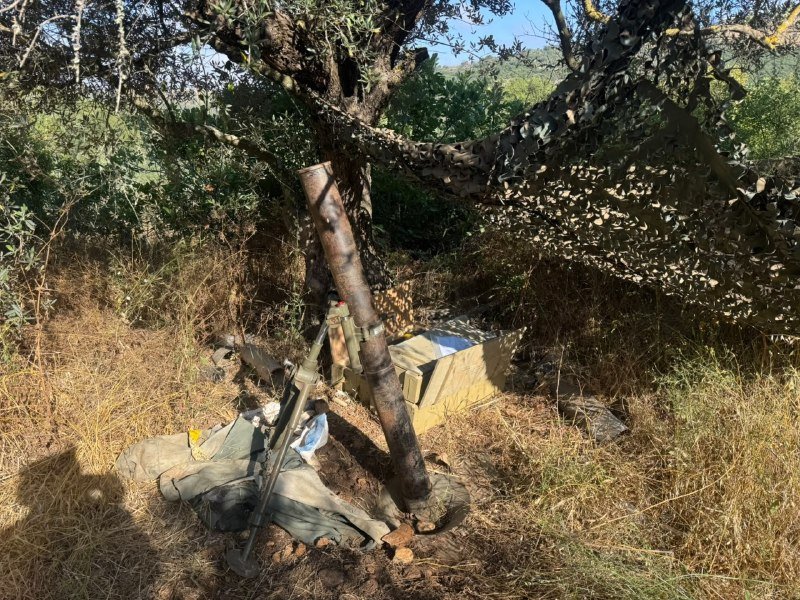
Between 16:08 and 16:28 UTC on 1 July 2026, the Telegram channel @wfwitness posted three short bulletins describing Israeli artillery and tank fire in southern Lebanon. The first reported shelling at Barashit, inside the security belt along the border, and an airstrike on Nabatieh El Fawqa. Two follow-ups, citing MTV Lebanon, added bursts of heavy and light machine-gun fire plus tank shelling around Kfar Tebnit, where the channel said Israeli troops are stationed. The cadence — three tactical dispatches in twenty minutes — is itself the news of the day. There is no announcement of an operation's start, and no announcement of its end.
What is verifiable is that Israeli forces are firing fixed artillery and armour munitions into populated towns inside Lebanon's southern border district, and that Lebanese civilian broadcasters are relaying the fire in real time. What is not verifiable from these three posts alone is the operational logic: whether the firing represents a targeted counter-fire exchange, a deliberate expansion of the existing security belt, or a routine continuation of a posture that has held, with variations, since late 2023.
What the dispatches actually say
Each item is a one-paragraph situational note. @wfwitness names the weapons (artillery, tank shells, heavy and light machine guns), the locations (Barashit, Nabatieh El Fawqa, Kfar Tebnit), and, in the MTV Lebanon-cited cases, the proximate presence of Israeli forces at Kfar Tebnit. The channel does not report casualty figures, does not name a specific IDF unit, and does not link the three events into a single operational narrative. MTV Lebanon, the Lebanese broadcaster cited twice, is a domestic outlet whose reporting on cross-border fire has historically tracked ground-level events with less of an editorial frame than Beirut's political stations; its use here as the named source is consistent with a pattern of attributing tactical detail to a Lebanese outlet rather than to the IDF.
Read across the three posts, the picture is one of layered fire: tube artillery at Barashit, air-delivered munitions at Nabatieh El Fawqa roughly 25 kilometres north of the border, and direct-fire from tanks at Kfar Tebnit. Nabatieh El Fawqa is not inside the border-adjacent security belt that the IDF has previously declared as a buffer; its inclusion in the day's fire plan, if confirmed beyond the Telegram report, is the single substantively new item in the cluster.
The counter-narrative worth naming
Israeli security concerns along this frontier are real and predate October 2023. Hezbollah's rocket and anti-tank capability, its hold on south Lebanon's Shia-majority villages, and its stated commitment to a deterrent posture against northern Israel are first-order facts that any honest accounting has to take seriously. The argument from Jerusalem — articulated in successive IDF briefings and echoed by Haaretz and Times of Israel coverage of the northern district — is that the security belt is a defensive measure aimed at pushing launch positions out of artillery range of Israeli towns. On that reading, the day's fire is maintenance, not escalation.
The counter-narrative, articulated most clearly by Lebanese outlets including MTV and by regional English-language coverage, is the opposite: that daily tube-artillery fire into populated towns is by definition an offensive posture regardless of how it is framed in Tel Aviv, and that the absence of an articulated political ceiling for the campaign — a declared line, a ceasefire channel, a UNIFIL-mediated arrangement — leaves civilians south of the Litani absorbing fire under a one-sided information regime. The three Telegram dispatches do not adjudicate this. They sit on the Lebanese side of the information ledger, with no IDF Spokesperson statement, no casualty figure, and no operational objective attached.
The structural frame, in plain terms
The southern Lebanon frontier has been a slow-burn theatre for the better part of two years, operating under a de facto escalation ceiling that neither party has formally recognised and that no external arbiter has codified. The pattern is familiar: ground-level events are reported first by local outlets and Telegram channels, then partially corroborated by wire services hours later, with operational context lagging further behind. When coverage routinely defers to official spokespeople and dissent is filtered into Telegram by default, the verifiable record becomes whatever the most active local channel chooses to log — which is what a reader is staring at in this article.
The deeper question is what an artillery campaign without a published political objective actually is. If it is a deterrent, the deterrent is daily and continuous, which is a different instrument than the targeted strikes that deterrence language usually describes. If it is a phase of a larger operation, the phase has no announced duration. If it is a holding action, the holding is being done in towns whose names Lebanese broadcasters already know how to pronounce.
What is at stake
For Israeli towns within range of the frontier, the operational answer is the simpler one: the IDF is not prepared to accept cross-border launch capacity inside artillery reach, and the daily fire is the price of enforcing that. For Lebanese civilians south of the Litani, the price is paid in displacement, property damage, and the steady erosion of the distinction between a security belt and a zone of occupation. For regional diplomacy, the cost is that a frontier this active cannot indefinitely remain unmediated — at some point, a UNIFIL-renewal debate, a US–Iran channel conversation, or a Beirut cabinet decision will force a public answer about what the daily artillery is for.
Three Telegram posts in twenty minutes will not produce that answer. They will, however, produce tomorrow's posts, and the day after's, until either the fire stops or the political vocabulary catches up to it.
The Monexus desk treats cross-border fire in southern Lebanon as a high-cadence reporting beat whose verifiable metrics (location, weapon system, time) are reliable but whose operational context lags. Where this article diverges from the wire read of the day is in declining to assert an Israeli operational motive from Telegram traffic alone — a restraint we think the evidence still requires.
Wire provenance
This editorial synthesis draws on the following public wire/social posts:
- https://t.me/wfwitness
- https://t.me/wfwitness
- https://t.me/wfwitness