The cult of the martyr and the choreography of succession in Tehran
A pinned photograph and a granddaughter's video are being read by analysts as soft signals from a closed system. The reading is plausible — and almost certainly incomplete.
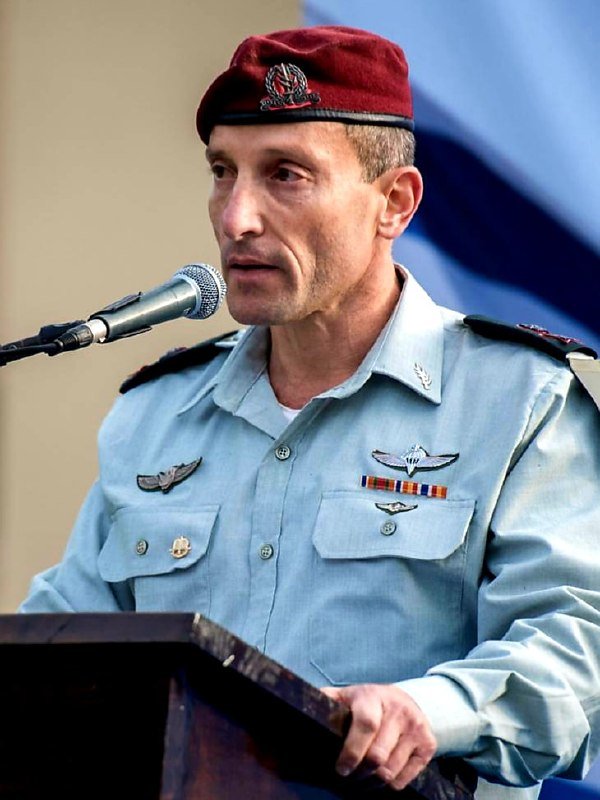
Two items posted within fifty minutes of each other on 1 July 2026 say more about the Islamic Republic than either was meant to. The first, distributed by the French-language channel of Ayatollah Khamenei's office at 14:15 UTC, was a pinned photograph. The second, posted by the Iranian military-affiliated channel @IRIran_Military at 15:02 UTC, was a video of Zahra Golpayegani, identified in the accompanying caption as the Supreme Leader's granddaughter. The word "martyr" is doing real work in both items.
Western analysts have been waiting for a successor story for the better part of a decade. The latest two signals — modest in volume, maximal in framing — will be read as choreographic. That reading deserves to be taken seriously, and also pushed back on.
The shape of the signal
A pinned photograph from the Leader's office is not routine content. Telegram's pin function is a deliberate editorial act: it tells followers that of all available content, this is what should sit at the top of the channel until further notice. The accompanying item — a martyr-frame applied to a direct descendant — is rarer still. The terminology is not improvised; in the Islamic Republic's symbolic register, "martyr" ("shahid") confers a specific religious-political status reserved principally for those killed in service to the state.
Two possibilities present themselves. The first is that these posts are part of a long-running information operation intended to bolster a specific succession candidate by embedding that candidate's family inside the martyrdom narrative that legitimises the post-1989 order. The second is that they are simply devotional content from a system that has, since 1979, woven kinship and sacrifice into a single fabric — and that Western analysts, primed by years of succession-scenario briefings, are over-reading.
Both can be true simultaneously.
What the framing flattens
The default Western commentary — much of it produced by analysts who cannot read Persian-language primary sources and who therefore rely on Israeli, British, or Washington think-tank summaries — has a consistent shape. It treats the Islamic Republic as a system whose legitimacy is brittle, whose succession will be crisis-driven, and whose inner workings can be triangulated from curated media signals. That framing has empirical support; it also flattens several things.
It flattens the genuine religious authority of the clerical class, which does not reduce to a single elderly figure. It flattens the institutional weight of the Islamic Revolutionary Guard Corps, which has its own internal promotion logics and its own relationships with the bazaar. And it flattens the everyday intelligence of a population that, whatever its grievances, has spent forty-seven years learning to read regime signals without being taken in by them. Iranians are not the dupes of either the regime's media apparatus or Western analysts' decoding of it.
The structural reality
Beneath the symbolism sits a harder material fact. The Supreme Leader, whoever holds the office, presides over a system of overlapping power centres: the office of the Leader itself, the presidency, the Majles, the judiciary, the IRGC, the bonyads (revolutionary foundations), and the clerical establishment centred on the seminaries of Qom. No single succession event resolves these tensions; they have been negotiated continuously since 1989, when the office of the Leader was constituted in its current form around Ayatollah Khamenei.
The choreography of martyrdom serves this system precisely because it pre-empts the political language of inheritance. A martyr's family is not a dynasty in the conventional sense; it is a credential. The credential does not automatically convert into institutional authority — and the regime's history shows that the family of a martyr can be promoted, marginalised, or repressed depending on political need.
Stakes
If the succession is managed, the regional consequences are real but bounded: continuity in nuclear posture, continuity in the arming and financing of the Axis of Resistance, continuity in the careful calibration of tension with Israel and the Gulf states. If the succession is contested, the same posture is broadly preserved by the IRGC regardless of who occupies the office — but the period of contest is the period of greatest risk, both for Iranian citizens and for the wider region.
The honest reading of 1 July's two posts is that they tell us the system is thinking about the question in public, in ways that are legible to a domestic audience first and a foreign audience second. They do not tell us who is positioned where. They do not tell us when. And they should not be read as confirmation of any specific Western journalistic prediction about timing or identity.
How Monexus framed this vs the wire: most English-language coverage will treat the two Telegram items as a single beat in the succession story. Monexus read them as devotional content first and political signalling second — and declined to extrapolate from them to a timeline.
Wire provenance
This editorial synthesis draws on the following public wire/social posts:
- https://t.me/IRIran_Military
- https://t.me/fr_Khamenei