Kyiv's calculus: why the Sumy question is back on the table
A senior Ukrainian legal commentariat has reopened the question of whether Kyiv can lawfully hand over Sumy Oblast. The debate says less about the answer than about the war's length.
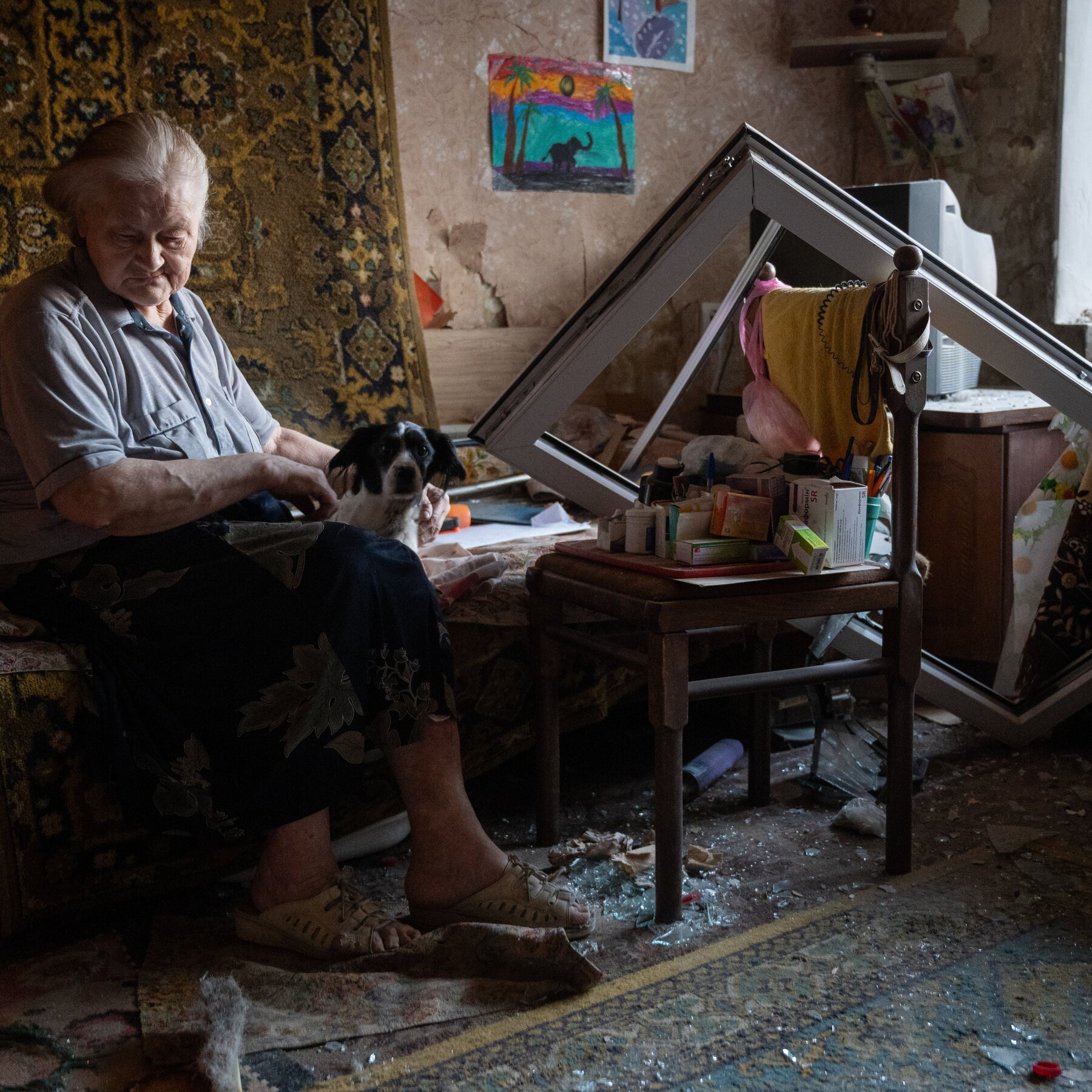
On 1 July 2026, a Ukrainian Centre of Political and Legal Analysis-style outlet (the CPD, in TSN's abbreviation) reopened a question that Kyiv's official line has long treated as settled: whether the government in Kyiv can lawfully hand over Sumy Oblast, the northeastern region that borders Russia's Bryansk and Kursk oblasts and that Russian forces have spent eighteen months trying to prise open. The framing of the TSN report — published on the day of the Russian Defence Ministry's taunting "demilitarisation is going according to plan" post on Telegram — is itself the story. Ukrainian television is now openly airing a debate that, until recently, sat in the basement of political science faculties.
The reason is arithmetic. The war has entered its fifth year. Front-line manpower pools are thinning. Western ammunition flows continue but no longer function as the floor they once did. Under those conditions, the question of which square kilometres a future settlement might or might not include stops being abstract. That a respected legal outlet is publicly weighing the constitutional mechanics of territorial transfer suggests the conversation inside Ukrainian elite circles has moved off the back-burner.
What the CPD actually said
The CPD commentary, as summarised by TSN on 1 July 2026, walks through three constitutional pathways for any change to Ukraine's territorial integrity: a national referendum, a vote in the Verkhovna Rada, and an act of the president countersigned by parliament. None are easy. A referendum requires turnout and a majority in a country where millions of voters are displaced, occupied, or dead. The parliamentary route requires 300-plus votes in a chamber whose three-party arithmetic has made constitutional land transfers politically radioactive since 2014. The CPD stops short of endorsing any of the three. Its function, in the read of TSN's report, is to keep the legal toolbox open rather than to recommend a wrench.
That is more revealing than a recommendation would be. It tells readers — and, plausibly, Western negotiating partners — that the legal architecture for a negotiated territorial settlement is not, as Russian commentary insists, permanently blocked. It also tells Kyiv's own hardliners that a respectable legal outlet has begun to draft in public the kind of language that was previously confined to off-the-record Chatham House briefings.
The counter-narrative from Moscow
The Russian Defence Ministry's 1 July post on Telegram — a sarcastic "demilitarisation is going according to plan" caption layered over imagery Kyiv did not authorise — is the counter-frame. It treats the war as a completed campaign of attrition. Read together with the CPD commentary, the two posts published within an hour of each other on 1 July 2026 describe a contradiction: one side claims to be winning on the ground, the other side is preparing legal scaffolding for a settlement that implies it is not.
Russian milblogger ecosystems have spent the past year insisting that no Ukrainian government can constitutionally cede territory and that, therefore, any halt to fighting will be a temporary Russian veto on Ukrainian statehood rather than a treaty. The CPD commentary complicates that script. It does not refute it — Ukraine's constitution still elevates territorial integrity to a near-absolute principle — but it puts a footnote where milblogger commentary required a period.
The structural read
A four-year war that has cost both societies a generation of young men tends to expand the bargaining space, not contract it. The territorial question, frozen in March 2022 by Ukrainian public opinion and Western diplomatic consensus, thaws unevenly: first in elite legal commentary, then in foreign-affairs pages of establishment newspapers, then in parliamentary hallway conversation, then, eventually, in formal negotiation. The CPD commentary is the first stage of that sequence, performed in public.
It is also a reminder of how lopsided the Ukrainian position has become. Kyiv is negotiating from a position that requires legal innovation; Moscow is negotiating from inherited positions (the 2014 annexation of Crimea, the 2022 declarations on Donetsk, Luhansk, Zaporizhzhia and Kherson) that require no innovation at all. The structural pressure on Ukrainian constitutional law is therefore a direct function of battlefield pressure, and battlefield pressure is what the Russian Telegram post on the same day was crowing about.
Stakes, and what remains uncertain
If the legal pathway sketched on 1 July becomes the basis of an eventual settlement, the losers will be those Ukrainian constituencies — veterans, internally displaced persons, western-Ukrainian civic nationalists — for whom any land-for-peace formula is a betrayal regardless of its constitutional wrapping. If the legal pathway collapses and the war grinds on, the losers will include another cohort of conscripts on both sides of the line of contact, and the European energy and grain markets that have already absorbed two winters of disrupted supply.
What remains genuinely uncertain is whether the CPD commentary marks a substantive shift in Ukrainian government thinking or a permission-giving exercise for Western counterparts who need to hear that Kyiv can, in principle, deliver a counterpart. The TSN report does not say which it is. Nor does it need to: a debate airing openly in Ukrainian prime time is itself an output of a war that is no longer being fought inside the same Overton window it opened with.
Desk note
Monexus framed this piece around the simultaneity of two posts on 1 July 2026 — the Russian Defence Ministry's taunt and the CPD's legal commentary — rather than around any individual battlefield claim, on the reading that the legal and rhetorical calendars together describe the war's trajectory as clearly as any brigade's coordinates.
Wire provenance
This editorial synthesis draws on the following public wire/social posts:
- https://t.me/operativnoZSU/
- https://t.me/TSN_ua/
- https://t.me/TSN_ua/