Nabatieh drone strike and the quiet tempo of southern Lebanon's escalation
An Israeli drone strike on a parked vehicle in Nabatieh al-Fawqa on 1 July 2026 fits a now-familiar pattern of targeted killings in south Lebanon — and underscores how thin the line is between routine operations and a wider war.
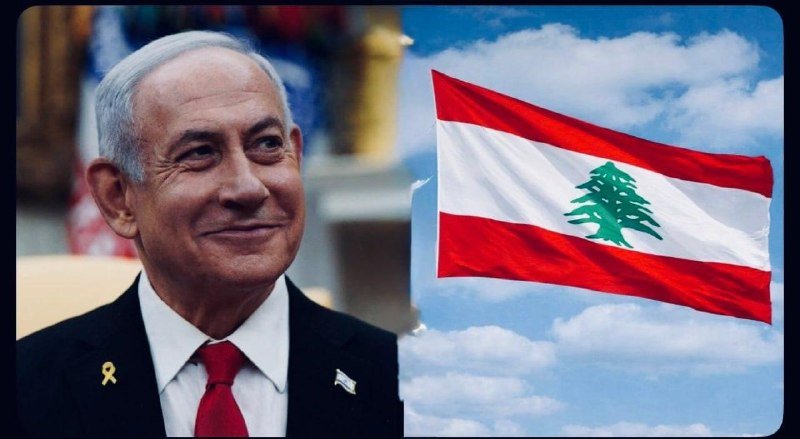
An Israeli drone struck a parked vehicle in the town of Nabatieh al-Fawqa in southern Lebanon on 1 July 2026, in an attack first reported by Lebanon-field channels in the late afternoon local time. The strike was logged by War Front Witness, a Telegram channel covering the south Lebanon security belt, with initial footage circulating at 16:34 UTC, and by Iran's Tasnim news agency at 16:38 UTC. War Front Witness also reported Israeli artillery fire in the occupied town of Barashit in the same security belt earlier in the window, suggesting the drone strike was one part of a wider pattern of fire across the southern border on that day rather than an isolated event.
The strike matters less as a single incident than as another data point in a tempo that has, over the past year, normalised drone targeting inside Lebanese villages near the border. The vehicle, not a building, signals the same logic that has governed the Israeli campaign further south in Gaza and along the northern front: low-collateral, high-precision, identity-based. The escalation is incremental, almost procedural — and that procedural quality is the story.
What the open sources actually show
The clearest single thread is from War Front Witness, a Telegram channel that aggregates field footage from the south Lebanon security belt. In a series of posts between 16:28 UTC and 16:49 UTC on 1 July 2026, the channel reported Israeli artillery fire in Barashit, an Israeli drone strike in Nabatieh al-Fawqa targeting a parked vehicle, and follow-up footage of the strike's aftermath. Tasnim, an Iranian state news agency, ran its own version of the same strike at 16:38 UTC, characterising the attacker as the "Zionist regime" and the target as "the town of Al-Nabatieh Al-Fouqa in the south of Lebanon."
Neither channel provides an identification of the person killed or wounded in the vehicle, a count of casualties, or a statement from the Israeli military confirming the strike at the time of writing. The framing from Tasnim is the standard Iranian-state formulation; the framing from War Front Witness is field-corroborated but unsourced in the conventional wire sense. That gap — no Lebanese civil defence readout, no IDF spokesperson briefing, no Reuters or AP confirmation in the source material — is itself the report. A drone strike of this kind in Nabatieh district, with Israeli artillery active in the same hour in a neighbouring town, normally generates a one-line confirmation from the IDF within hours. Until that lands, the strike sits in an evidentiary grey zone: real, filmed, but not yet officially claimed.
The procedural tempo of cross-border operations
Nabatieh al-Fawqa sits in the eastern sector of the south Lebanon security belt, the same corridor where Israeli forces have, since late 2023, conducted what the Israeli military describes as "targeted operations" against Hezbollah-affiliated cells. The pattern is consistent: a drone loiters over a town, identifies a vehicle or a motorbike, fires, footage is uploaded to field channels within minutes, and the IDF either confirms the strike hours later or stays silent. The bar for confirmation has crept down. Strikes on motorbikes, on residential apartments, on agricultural workers — each is treated by Israeli spokespeople as a discrete counter-terror action; by Lebanese and Iranian-aligned outlets as part of an ongoing campaign of aggression.
The drones are not the loudest instrument in the Israeli arsenal. What they do is compress the decision loop. A brigade commander in northern Israel can authorise a strike on a parked vehicle in Nabatieh district on the basis of a target package, an image, a name — and the operation does not require the political weight that, say, a battalion-level ground incursion would. The cumulative effect of that compression is what is now being felt in south Lebanon: a tempo of strikes that is too slow to be called a war and too fast to be called peace.
What the competing framings do
The Iranian Tasnim wire uses language that treats the strike as evidence of Israeli aggression against Lebanese sovereignty, with no reference to the underlying target or to Hezbollah's presence in the area. War Front Witness is closer to the ground but explicitly field-aligned, and uses the "Zionist regime" formulation in its headline packages only when republishing; its own posts are descriptive. Neither framing in the source material is the framing that an Israeli military spokesperson would use — the IDF's standard line is that such strikes target "terror operatives" and are conducted in response to specific threats.
Readers should hold all three frames at once. The strike happened. The strike was filmed. The target's identity has not been independently established. The Israeli framing of "counter-terror" and the Iranian framing of "Zionist aggression" are not symmetrical: one is the attacker's self-justification, the other is an adversary state's narrative. Both are also incomplete, because neither addresses the question of proportionality or the civilian-cost ratio of a drone strike on a parked vehicle in a town market street.
Stakes and what to watch
The narrow stakes are local. Nabatieh district has absorbed a steady stream of these strikes over the past year; a successful one pushes the security belt another kilometre deeper into what Lebanon considers its sovereign territory. The wider stakes are regional. Each drone strike in south Lebanon is read in Beirut, in Tehran, and in the Shia diaspora as a marker of intent: how far is Israel willing to push the campaign; how much of Hezbollah's residual command structure is still being targeted; whether the November 2024 ceasefire's residual architecture — such as it is — still holds.
What remains uncertain is what the open-source material does not yet show: the identity of the vehicle's occupant, the IDF confirmation or denial, the Lebanese ministry of health casualty readout, and any Hezbollah statement claiming or denying the target as a member. Those four data points usually settle a strike's meaning within 24 hours. Until they land, this is another video, another town, another afternoon — and the procedural tempo continues.
— Monexus framed this strike as one event inside an ongoing tempo, not as a stand-alone escalation, because the open-source record on 1 July 2026 supports the former reading more strongly than the latter.
Wire provenance
This editorial synthesis draws on the following public wire/social posts:
- https://t.me/wfwitness
- https://t.me/wfwitness
- https://t.me/tasnimnews_en