Netanyahu's Permanent-War Pitch Tests the Limits of Israeli and American Politics
On 1 July 2026 the Israeli prime minister declared war is "never over" and called US aid "welfare," while touring occupied southern Lebanon. The framing sits uneasily with both Tel Aviv's politics and Washington's patience.
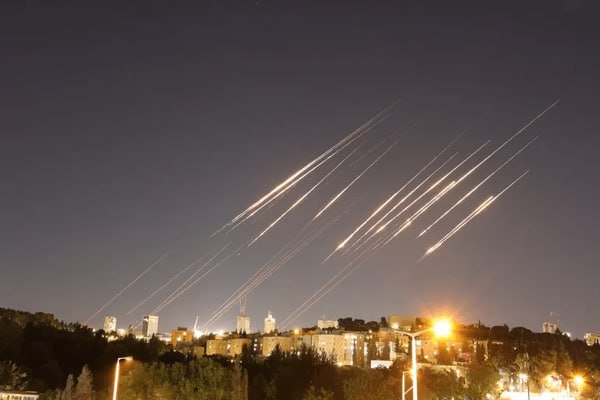
At a rally reported on 1 July 2026, Israeli Prime Minister Benjamin Netanyahu told supporters that "the war is never over," that survival in the Middle East demands a country be "exceptionally powerful," and that Israel "is stronger than ever." The remarks, surfaced via the X account @unusual_whales at 10:37 UTC on 1 July 2026, were framed as a campaign-eve message to the Israeli right. Within hours, separately on 1 July 2026, a Polymarket-linked post at 00:48 UTC relayed that Netanyahu had publicly described US military assistance to Israel as akin to "welfare" — and that he wanted it ended.
The juxtaposition is the story. A prime minister facing domestic pressure on multiple fronts is telling his base that fighting never ends, while simultaneously telling an American audience that the bill — long treated as untouchable in Washington — should be reassigned to the Israeli taxpayer. Both messages are politically rational inside Israeli coalition math. Both are destabilising when read together.
The southern Lebanon trip
The immediate backdrop is a battlefield declaration. According to a report relayed via Polymarket on 30 June 2026 at 17:39 UTC, Netanyahu visited what the post described as "occupied southern Lebanon" and told Israeli soldiers deployed there that Israel would not withdraw "as long as Hezbollah continues to pose a threat." No timeline was given; the formulation leaves the deployment effectively open-ended.
That posture is the heart of the pitch. A Lebanese border that once produced a fixed UN-monitored line of withdrawal now serves, in official Israeli framing, as a forward defensive position with no declared exit condition. The framing places the burden of any withdrawal on Hezbollah's behaviour rather than on Israeli domestic politics or American diplomacy. For soldiers in the field, the message is operational permanence: you are staying.
The "welfare" remark and what it actually means
The "welfare" line, if accurate, is the more consequential of the two because it touches American politics directly. Israeli governments from both Likud and Labour traditions have historically treated the roughly $3.8 billion annual US military aid commitment — formalised under the 2016 memorandum and renegotiated since — as an untouchable pillar of the alliance, even when quietly complaining about delays and conditions.
Netanyahu's reported framing — that the aid should end because it resembles a dole rather than a partnership — is a sharp departure. It is either a negotiating posture designed to extract a better deal under less restrictive terms, or an attempt to reframe American domestic debate by recasting the aid as a discretionary handout rather than a strategic instrument. Either reading is awkward for a White House that has spent two decades arguing, in both parties' voice, that the assistance funds an American interest in regional stability, not an Israeli entitlement.
Why this pitch now
Inside Israel, the message lands where it needs to. Coalition politics have rewarded the most right-leaning base for the better part of a decade; declaring that the country is "stronger than ever" while the war is "never over" is the rhetorical cement for that coalition. The Lebanese visit, with its open-ended language, signals to soldiers and settlers that the government will not be driven from positions by US pressure or by UN debate.
Inside the United States, the pitch lands somewhere else. The aid question is no longer the bipartisan fixture it was even two years ago. A growing bloc in Congress — across both parties — has begun attaching conditions, reviewing transfers, and openly questioning the blank-check era. For Netanyahu to publicly describe that aid as "welfare" is to invite, not pre-empt, the very re-examination he claims to welcome.
The plausible alternative read
The charitable reading is that the prime minister is performing two audiences at once: telling Israelis that strength is unconditional, and telling Americans that the partnership is mature enough to stand on its own. That strategy has historical precedent — Israeli leaders have periodically threatened or signalled alignment with other capitals to extract concessions in Washington. The uncharitable reading is that the dual message reflects an Israeli political class that has stopped calibrating to American domestic opinion, on the assumption that the alliance is structural and therefore immune. Neither reading is comfortable; the second is closer to the structural reality, which is that all alliances are renegotiable.
The sources do not specify whether the "welfare" remark was prepared text or a rally aside, nor how the Israeli defence establishment or the US embassy in Tel Aviv received it. Those gaps matter. A prepared statement would imply strategic signalling; a rally aside would suggest the prime minister is improvising on a stage that no longer tolerates improvisation about the alliance.
What can be said is that on 1 July 2026, an Israeli leader told his base that war is permanent and told Washington the cheque should stop. The two messages each have an audience. The audience that has to reconcile them is the one neither speech addressed.
Desk note
Monexus frames this in the register of regional alliance management: the news is not the rhetoric but the structural drift it reveals between Israeli maximalism and an American political system less willing to underwrite it without conditions.
Wire provenance
This editorial synthesis draws on the following public wire/social posts:
- https://x.com/unusual_whales/status/1940528000000000001
- https://x.com/Polymarket/status/1940476400000000002
- https://x.com/Polymarket/status/1940403400000000003