Russia's petrol paradox: the country that sells the world fuel is now buying from India
A nation that exports crude to half the planet is importing finished gasoline from New Delhi because Ukrainian drones keep hitting its refineries — and the seams in the sanctions regime are starting to show.
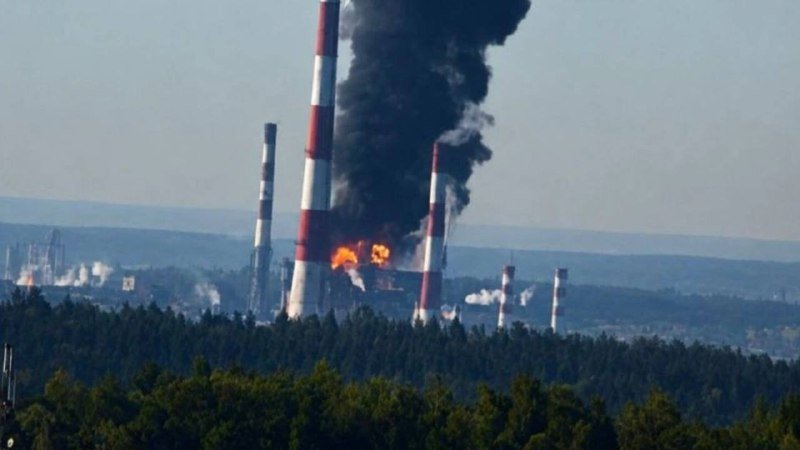
For a country that still sits on roughly six percent of the world's proved oil reserves and runs a state-owned export machine measured in millions of barrels a day, the picture that reached the open-source channels on 1 July 2026 carried a particular kind of humiliation. Russia, the long-time "gas station with nuclear weapons" of international relations cliché, has begun importing finished gasoline from India to keep its own motorists moving. The cause is not a market quirk. It is a sustained Ukrainian campaign of long-range drone strikes against Russian refineries — and the visible cracks that campaign is opening in the domestic fuel balance that Moscow once assumed was unbreakable.
The reporting is consistent across at least four independent Telegram trackers drawing on Reuters. WarTranslated, the open-source intelligence account run by the Dutch researcher who has tracked the war in near-real-time since 2022, posted at 13:44 UTC on 1 July that at least 60,000 metric tons of gasoline had already shipped from India to Russian ports. The same figure was carried by Clash Report at 13:26 UTC and by the Russia-focused open-source channel RN Intel at 13:13 UTC. RN Intel added a forward-looking number — plans, it said, for up to 400,000 tons of imports to follow — that has not yet been confirmed by the wire services but tracks the scale of the gap that domestic reporting inside Russia has been describing for weeks.
The shape of the shortage
The proximate trigger is familiar to anyone who has followed the energy dimension of the war. Ukraine's domestic drone industry — built up over four years of combat necessity, drawing on components sourced through third countries and assembled into airframes measured in the tens of kilograms — has spent the past eighteen months systematically targeting Russian refining capacity rather than crude production. The logic is straightforward: crude that cannot be refined does not generate the diesel and gasoline that fund the war economy. Striking a refinery also tends to put the asset out of service for weeks rather than days, because the catalytic crackers and hydrotreating units involved are custom-built, slow to replace, and largely outside the sanctions-busting trade that has kept Russian oil flowing.
The cumulative effect is now visible at the pump. Russian regional governors have moved to restrict fuel exports, raise wholesale prices, and in some cases suspend diesel sales to foreign buyers outright. The Kremlin has framed the response as a logistical inconvenience, but the open-source channels report queues forming at retail stations across at least three federal districts, and the decision to import finished gasoline from India is the clearest admission yet that the domestic balance cannot be restored quickly enough through administrative tweaks alone.
Why India, and why now
The Indian angle is the politically awkward one for Moscow. New Delhi has spent the past two years positioning itself as the discount buyer of last resort for seaborne Russian crude, processing it at refineries on the Gujarat and Andhra coasts and re-exporting much of the product to Europe under G7 price-cap workarounds. The same refining complex that turns Russian Urals into Euro-compliant diesel is now being asked to turn it into product that ships back to Russia itself — a circular flow that exposes how porous the sanctions architecture really is when the intermediaries are not Western majors but Indian state-linked refiners with their own commercial logic.
For New Delhi, the deal is uncomplicated. India is a structural gasoline deficit economy that imports heavily from the Gulf; the incremental volumes it now sends to Russia represent product that would otherwise have been exported to Africa or Southeast Asia at slightly worse margins. For Moscow, the optics are rougher: a country that still brands itself as an energy superpower, and that built much of its soft-power footprint in the Global South on the promise of cheap fuel, is now a customer.
What this does — and does not — mean
The dominant Western framing will read this as vindication. Ukrainian strikes on refining infrastructure are doing what they were always meant to do: forcing Russia to spend scarce foreign exchange on imports it never previously needed, while degrading the asset base that underwrites the war budget. There is real substance to that read. Russian federal budget data has been deteriorating for two consecutive quarters, and the marginal barrel of imported gasoline carries a cost premium that no discount on Urals crude can fully offset.
The counter-read is equally serious, and the Ukrainian and Global South commentariat that watches the war closely should be heard on it. The same refineries that are being struck were, until 2022, the source of cheap diesel for African and South Asian importers who had been priced out of European supply. Strikes that degrade Russian refining capacity do not just hurt Moscow. They tighten a global product market that is already tight, and the price impact is borne disproportionately by the same emerging-market buyers who have spent three years absorbing the spillover of a war they did not start. The Indian gasoline now heading to Russian ports is gasoline that will not be heading to Mombasa or Chattogram.
The structural frame
The deeper pattern here is the slow inversion of the energy relationship Russia built over two decades. Moscow's offer to the post-Soviet periphery, to parts of Europe, and to a layer of Global South importers was simple: cheap hydrocarbons in exchange for political deference. That bargain assumed that the refining step — the conversion of crude into usable fuel — would always sit inside Russia, generating domestic employment and tax revenue. When the refining step is degraded, the bargain degrades with it. Russia is not yet a net energy importer, and on a crude basis it will not be for years. But it is now, demonstrably, a finished-product importer, and the political consequences of that shift will arrive long after the last drone is recovered from a Russian catalytic cracker.
Stakes, and what to watch next
The near-term stakes are operational. Russia needs to keep its military logistics moving through the autumn mud season and into winter, when domestic heating demand spikes. If the import flow holds, the campaign slows but does not stop; if it is disrupted — by Ukrainian strikes on the loading terminals themselves, by Indian political pressure, or by secondary sanctions from Washington — the fuel balance gets tighter faster than the state can patch it. The medium-term stakes are strategic: every quarter that Moscow spends importing gasoline is a quarter in which it is, in plain terms, financing both sides of the war, paying Ukraine's customers to ship fuel back to the country Ukraine is striking.
The honest caveats are real. The 60,000-ton figure circulating in the open-source channels traces to Reuters reporting that has been paraphrased rather than directly published in full; the 400,000-ton forward number remains an unverified claim from a single Russian-focused channel. Independent verification of Indian shipping manifests will settle the question of scale within days. Until then, the direction of travel is unambiguous even if the exact volume is not.
This article was prepared by Monexus's news desk; the framing above reflects how the open-source intelligence community and Reuters have together characterised the import flow as of 13:13 to 14:01 UTC on 1 July 2026.
Wire provenance
This editorial synthesis draws on the following public wire/social posts:
- https://t.me/wartranslated/
- https://t.me/clashreport/
- https://t.me/rnintel/
- https://t.me/osintlive/