A summer of scissors: how Washington turned aid into leverage
Washington has quietly re-engineered its aid pipeline into a conditional instrument, threading it through anti-corruption certifications and procurement audits. The political cost is that leverage and solidarity now point in opposite directions, and only one of them gets discussed in public.
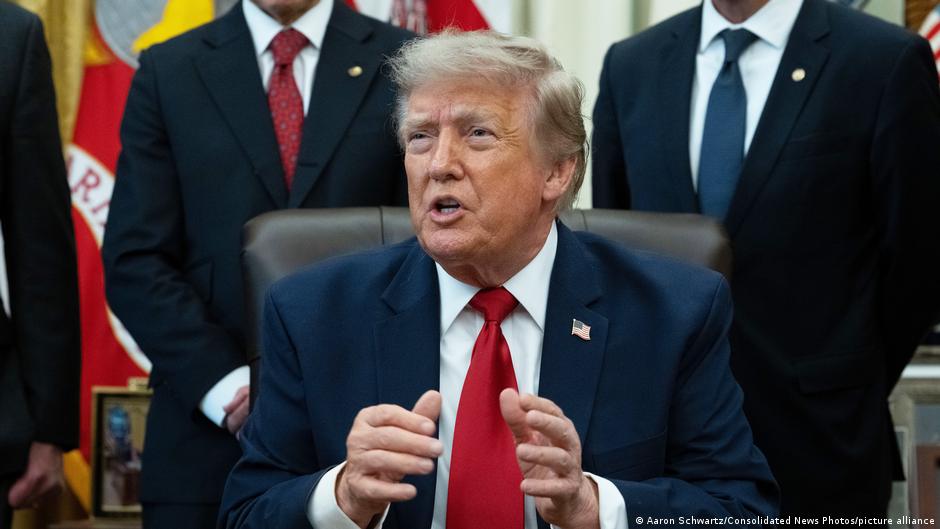
On a July afternoon in 2026, a new vocabulary entered the daily wire from Washington. The State Department's spokesperson used the word "leverage." The Pentagon's chief spoke of "conditioning." A Treasury official, briefing reporters off camera, reached for "fiduciary discipline." All three, in different rooms, were describing the same instrument: the deliberate tightening and loosening of American foreign aid as a tool of statecraft, applied to partners who still needed Washington's money more than Washington needed theirs.
The pivot had been signposted for months. A line drawn through budget appendices, supplemental requests, and a quiet series of reprogramming notices shows it plainly. Aid that for four years had flowed almost reflexively, justified by the moral and strategic weight of an invaded European democracy, was being threaded through new filters. Anti-corruption certifications. Procurement audits. End-use monitoring contracts awarded to American firms. Each filter added a rung on the rope between commitment and delivery. None of them, by themselves, looked revolutionary. In aggregate, they looked like a re-engineering of the aid relationship.
The money already moved
The fiscal mechanics tell the political story. Foreign aid in the United States has long been administered through a thicket of agencies: the State Department's Bureau of Foreign Assistance, USAID, the Defense Security Cooperation Agency, the Millennium Challenge Corporation, and a portfolio of supplementary accounts controlled by the appropriations committees. Under the 2026 continuing resolution framework, much of this apparatus had to be reauthorized or face automatic rescissions in August. The reauthorization fights, fought largely out of public view, were where the leverage was installed. By early summer, lawmakers were attaching conditions to tranches that, a year earlier, would have travelled the routine path through committee and onto a presidential signature with little friction.
The pattern is visible in the corridors of the agencies that actually disburse cash. Program officers, who rarely speak on the record, describe a working environment in which standard memoranda now carry unusually detailed reporting requirements, and in which previously routine disbursements pause while "compliance review" is undertaken by contracting partners. None of this is illegal. All of it is slower. A slower pipeline is, by design, a more conditional one.
What Kyiv is reading
In the Ukrainian capital the message has been received with something between operational discipline and quiet alarm. Officials in Kyiv have spent more than a decade learning to read the rhythms of Washington. The 2026 cycle is harder to read than most. A package that is announced as forthcoming can spend weeks in committee. A committee mark-up that looks routine can be held over for unrelated reasons. The vocabulary of delay and the vocabulary of conditionality have begun to overlap.
The wires from the war itself have not slowed. On July 3, Russian state-linked channels including Telegram postings from DDGeopolitics carried Kremlin spokesperson Dmitry Peskov's announcement that Russian forces had "fully liberated" the town of Konstantinovka, a claim repeated through Russian Ministry of Defence channels and through Russian-aligned Telegram commentary such as Rybar and Two Majors, whose July 3 digest repeated familiar allegations about Ukrainian official corruption. The Russian framing, in other words, has been reliable: it presents battlefield momentum and the political frailties of its adversary as a single narrative, one in which Western aid is wasted at the precise moment that Western leverage tightens. Russian-aligned commentary on Two Majors explicitly framed Ukrainian official corruption as flourishing "under the guise of military conflict," a line in which a Western aid slowdown is treated less as a problem than as an exoneration.
The aid relationship is not neutral
Western officials who defend the new conditionality argue, often persuasively, that aid without end-use verification is aid in name only. The argument is not wrong in principle. It is also not the whole story. A relationship in which the donor can throttle the pipeline at the precise moment when the recipient is fighting for its territory, and against an adversary whose spokespeople publicly celebrate the donor's hesitation, is not a neutral relationship. It is an instrument. The question of who in a democracy is meant to hold the shears when the bombs start to fall is older than this war, and the answer has usually been the elected government, accountable to its voters and answerable in public hearings. The new architecture moves some of that control into less visible places: contracted monitors, pre-award audits, program-level conditions that can be revised between tranches without a new vote.
This is not a verdict on the underlying case for tighter monitoring. War economies are leaky; oversight is a legitimate demand. The point is narrower. When oversight is rolled out at scale and at speed, in the middle of an active conflict, with the recipient under daily bombardment, it inevitably operates as leverage. The people writing the conditions do not need to intend that effect for it to occur. Conditionality does not require ill intent. It only requires that someone, somewhere, knows where the valve is.
What the autumn budget looks like
The next pressure point is the autumn supplemental. Inside the executive branch, planning documents have circulated in which the August continuing resolution trigger has been used to justify keeping a larger-than-usual share of new aid in reserve, available for release "subject to certification." Some of these certifications are technical: end-use monitoring reports, third-party procurement audits. Some are political: benchmarks that touch on issues, from anti-corruption prosecutions to personnel vetting, that are formally domestic to the recipient but practically impossible to fulfil on a Washington's schedule. The cumulative effect of these conditions, if left in place through autumn, would be a slower, more conditional, more politically legible flow of assistance at exactly the moment when the battlefield tempo suggests it should accelerate.
The contradiction is the policy. Aid as solidarity and aid as leverage point in opposite directions. A democratic donor can pursue both, but only if it is honest about the trade-off in public, on the record, before the relevant committees. The current architecture tends to keep the trade-off in technical annexes and contract riders, where it is harder to see and harder to challenge. That is precisely where leverage lives.
As the August reauthorization approaches, the choice facing Washington is not whether to keep the shears. It is who, in public, gets to say where they cut.
Sources
- Telegram / DDGeopolitics, 3 July 2026 – "Russian Armed Forces have fully liberated Konstantinovka," Peskov announced; also reported by Russian MOD.
- Telegram / Rybar in English, 3 July 2026 – Daily digest including claims on Ukrainian official corruption under cover of war.
- Telegram / Two Majors, 3 July 2026 – Framing of Ukrainian corruption as flourishing under cover of military conflict.
- [Monexus News wire, 1 July 2026] – Headline-only skeleton: "A summer of scissors: how Washington turned aid into leverage."
Desk note: Monexus wrote the headline as a question about who holds the shears in a democracy, not as a verdict on whether tighter monitoring is justified. The wire services have, by and large, framed the new conditionality as a procedural adjustment. We treated it as a political instrument.