The Supreme Court's Quiet Reshuffling of American Power
On a single afternoon, the justices tightened gun rules for young adults, opened the door to AR-15 challenges, gutted party-spending limits, and drew a presidential broadside. The pattern is the story.
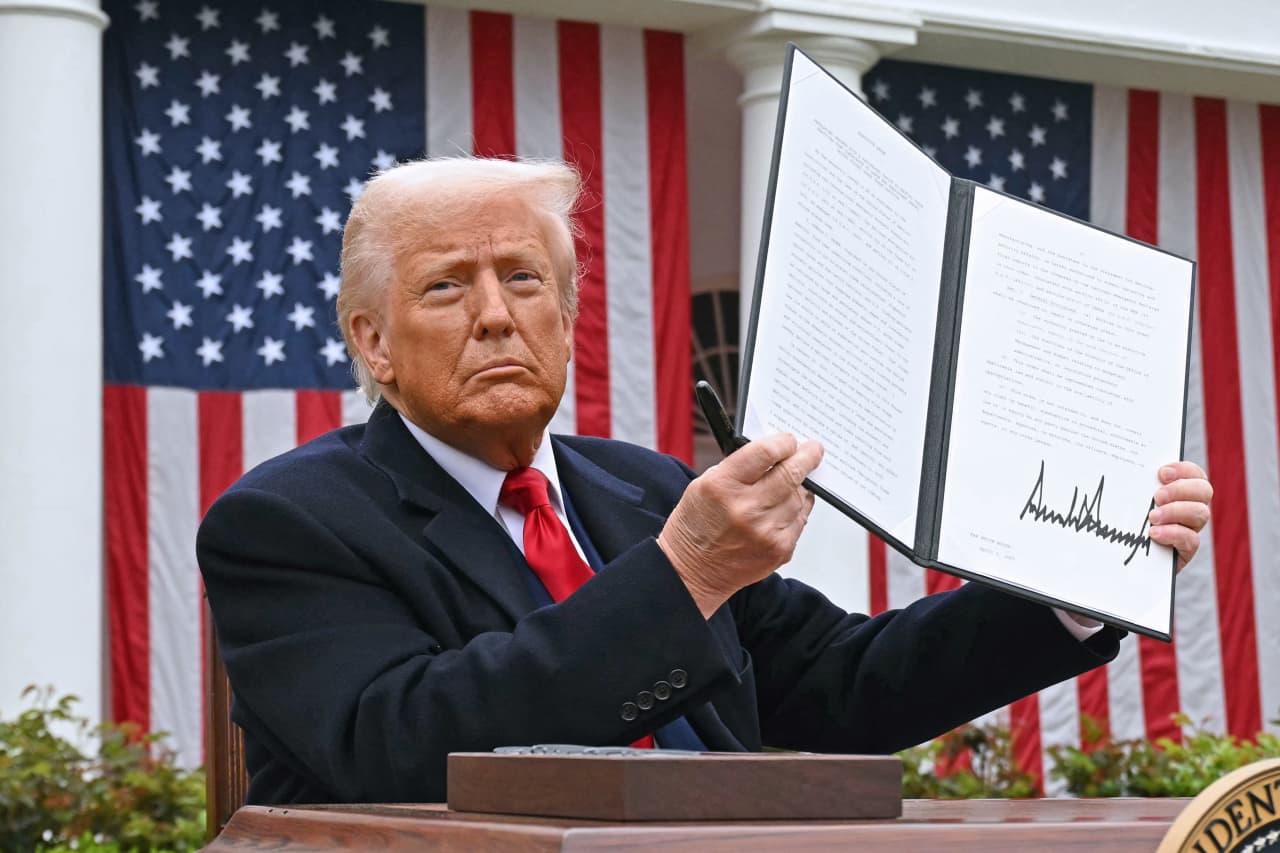
On the afternoon of 30 June 2026 — the second-to-last day of the Supreme Court's term — the justices issued a flurry of orders that, taken together, amount to a quiet redistribution of political power in the United States. They turned away challenges to federal and Florida laws restricting gun purchases by 18- to 20-year-olds, agreed to consider whether bans on AR-15-style semiautomatic rifles violate the Second Amendment, struck down federal limits on how much political parties can spend in coordination with their own candidates, and stood by their recent ruling against birthright citizenship — a decision Vice President JD Vance publicly called "an absurdity" on 1 July and pledged to keep fighting. The threads are discrete. The pattern is not.
The instinct in Washington is to treat each ruling on its own doctrinal merits. That instinct is wrong. The Court has spent the back half of June signalling, in two procedural moves and two merits decisions, that it intends to recalibrate three of the most contested fault lines in American public life: who may own which firearms, how parties may finance their candidates, and who counts as a citizen at birth. Read individually, each is a narrow ruling. Read together, they describe an institution with a clear sense of where it wants the country to go — and with the patience to get there one statute at a time.
The gun docket, narrowed and widened
The same day the Court refused to take up the under-21 purchase cases — letting the federal age restriction and a parallel Florida law stand — it granted certiorari on AR-15-style semiautomatic rifles, setting up what will almost certainly be the most significant Second Amendment case in a generation. The juxtaposition is the tell: the justices are not in a hurry to strike down age-based firearms restrictions, but they are willing to confront the much larger question of whether the AR-15 platform itself can be banned.
That sequencing matters. Refusing the 18-to-20 cases removes the most emotionally charged entry point from the docket without resolving anything. Granting the AR-15 case invites the gun-rights movement to spend the next term arguing that the most popular rifle in America is protected by the Second Amendment — a framing the Court has shown increasing comfort entertaining. By 30 June 2026, prediction markets gave a 61 percent chance of a Supreme Court vacancy opening by year-end, which is its own kind of signal: the justices and the parties around them both expect this term's choices to be litigated for the rest of the decade.
Campaign finance, unravelled from the inside
The party-coordination ruling is the under-reported earthquake. For decades, the post-Watergate settlement treated the line between a party's national committee and its own candidates as the line that mattered. Federal coordination limits existed to keep party money from functioning as a pass-through for wealthy donors. On 30 June, the Court dismantled that line.
If party committees can now move money directly in concert with their candidates, the practical effect is to compress the distance between official party organisations and the donor class that funds them — the opposite of what the post-Watergate reforms were designed to do. The institutional parties grow more powerful relative to outside super PACs and small-donor outfits; the donor class grows more powerful relative to the parties. Both compressions favour incumbents, both parties' national committees, and the small universe of donors with access to them. The ruling reads as a deregulatory technicality. It is a structural transfer of influence.
Citizenship, the Vance dissent, and the executive branch
The birthright-citizenship fight is the one with the loudest political volume. The Court's recent ruling, which curtailed the universal reading of the Fourteenth Amendment, drew a public broadside from the vice president on 1 July 2026 — a rare moment of a sitting administration openly treating a Supreme Court decision as illegitimate. Vance's vow to "keep fighting" the ruling is more than rhetoric: it sets up the 2026 midterms and the 2028 presidential cycle as referenda on whether the executive branch will treat the Court's constitutional reading as binding or as advisory.
The same polling infrastructure that prices Supreme Court vacancies has the birthright ruling trading as an unresolved political asset — useful in fundraising mail, dangerous in suburban districts. The Court's choice not to revisit the issue this term, even as the vice president attacks it, is its own signal: the justices believe the doctrine is settled on their terms, and the political heat will eventually cool.
What this looks like from the outside
None of this is the kind of story that will lead evening newscasts. No single ruling produces a march, a White House press secretary resignation, or a market move. But the cumulative effect — narrower gun access for the youngest adults, broader gun access for the most popular platform, looser party-finance rules, and an open executive attack on the citizenship ruling — describes a court that is comfortable rewriting the procedural architecture of American politics while leaving the headline-grabbing questions for another day.
The pattern is familiar to observers of courts in newer democracies, where constitutional benches routinely combine technical restraint on the surface with substantive restructuring underneath. The Supreme Court of the United States has not historically operated that way. The back half of June 2026 suggests it is now willing to.
The contested point — and it is contested — is whether this is restraint or abdication. The defenders say the Court is doing what appellate courts are supposed to do: letting lower courts work out the age cases while reserving the big questions for full merits review, and striking down a coordination rule that had outlived its doctrinal justification. The critics say the Court is picking winners, term by term, in the long conservative project of reshaping who governs and under what rules. Both readings fit the evidence. The proof will be in the cases the Court takes next term — and in whether a 61-percent-vacancy prediction market turns out to have been too low or too high.
A second contested point sits half a world away. On 1 July 2026, the government of Tamil Nadu moved the Supreme Court of India against a high-court order banning cow slaughter — a separate supreme court, a separate constitution, a separate argument about whether religious sentiment can be encoded into criminal law. The cases share a structural feature: both involve the highest courts of large democracies being asked, simultaneously, to mediate between elected majorities and minority rights, in ways that will outlast any single administration. None of the available reporting ties the two dockets together; they are linked here only because they happened in the same news cycle, and because the editorial question — who decides, and on what grounds — is the same one.
What remains genuinely uncertain is whether the U.S. Court will treat its June orders as the perimeter of its ambitions for the term, or as the opening salvos of a more aggressive agenda. The polling infrastructure and the political incentives both suggest the latter. The justices, for now, are not saying.
This publication framed the 30 June orders as a single pattern rather than four discrete rulings, on the view that the sequencing is the story; the wire services led on each decision individually.
Wire provenance
This editorial synthesis draws on the following public wire/social posts:
- https://poly.market/SSuZ3jK