The funeral Tehran staged, and the valuation San Francisco forgot
Two stories landed within an hour of each other on 1 July 2026 — a state-orchestrated mourning in Qom, and an $800m round for an open-model neocloud. Both are about who gets to run the next era's compute.
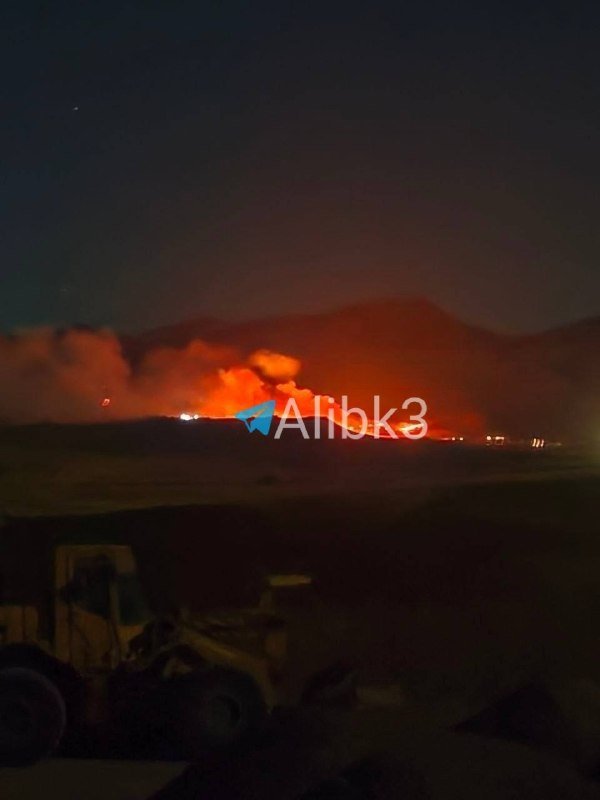
By 17:49 UTC on 1 July 2026, the streets of Qom were already filling for what Iranian state media was calling the biggest funeral in the country's history. Within forty-five minutes, the same Telegram feed was carrying the chant — I didn't know that this sea has a wave of blood — and describing a procession designed to demonstrate that the Islamic Republic can still command mass mobilisation in moments of crisis. At 18:34 UTC the messaging sharpened: the biggest funeral in history. Whatever the underlying political reality behind the cortège, the performance was unmistakable.
Two thousand kilometres of fibre-optic cable away, the day's other signal was quieter but arguably more consequential for the decade ahead. At roughly the same hour, TechCrunch reported that Together AI, a San Francisco-based neocloud provider specialising in open-source model hosting, had closed an $800 million round that vaulted its valuation to $8.3 billion — up from $3.3 billion in early 2025. The capital is flowing toward the firms that own the racks, not the firms that brand the chat window.
Both stories, on their face, are unrelated. They are not. They are both about who controls the infrastructure of the next era — physical infrastructure in one case, compute infrastructure in the other — and about how the rest of us are invited to misunderstand that fact.
The pageantry is the policy
The Qom footage matters less for what it shows about Iranian grief than for what it tells outside observers about the regime's operating capacity in July 2026. Funerals in the Islamic Republic are not merely commemorations; they are administrative events, choreographed by the Supreme Leader's office and broadcast on a loop through outlets such as Tasnim and IRNA to project an image of unbreakable popular legitimacy. Western coverage tends to read such images through the lens of theatre — as evidence of regime fragility, a Potemkin gesture masking decay. That reading is plausible, but it is also convenient. The structural reality is that Tehran continues to convert symbolic infrastructure into diplomatic leverage: every image of a million mourners is a quiet message to Washington, Riyadh and Tel Aviv that the regime can still set the terms of domestic conversation when it needs to.
The more uncomfortable question is what comes after the funeral — succession politics, succession theatre, or both — and what the West's reflexive dismissal of the spectacle costs it in analytical accuracy. The sources do not specify the identity of the 'martyred leader'; the framing is Iranian-state framing, and should be read as such. But to laugh off the mobilisation is to miss the point.
The neocloud is the new oil major
Now to the second story. Together AI's $8.3 billion post-money mark, on an $800m raise, represents roughly a 2.5x markup in eighteen months. The neocloud category — firms that rent GPU capacity to enterprises running open-weight models — has become the single most capital-intensive layer of the AI stack. The chat products get the press. The neoclouds get the cash.
This is the part of the AI economy that almost nobody outside the industry talks about, because it is unfashionable: it is plumbing. Together AI and its peers — CoreWeave, Lambda, Crusoe — are not building consumer brands. They are building the utility-grade compute layer that everyone else assumes will exist. When a Fortune 500 bank runs a fine-tune of an open-weight model, it is almost certainly renting time on one of these neoclouds. When a sovereign AI programme in Jakarta or Riyadh wants a domestic stack, the same.
The structural frame
What we are watching, stripped of branding, is the emergence of a new class of infrastructure oligopolists. In the previous cycle, it was the cloud hyperscalers — Amazon, Microsoft, Google — that aggregated the capacity and rented it out. In this cycle, the neoclouds are inserting themselves as a wholesale layer beneath the hyperscalers, owning specialised capacity optimised for AI workloads rather than general cloud compute. The valuations reflect a market bet that this layer will become permanent.
That bet has a geopolitical twin. In an era of chip export controls, data-sovereignty regulation and disaggregated supply chains, the country — or bloc — that hosts the neoclocks controls the speed of everyone else's AI deployment. The Iranian funeral reminds us that physical control of territory still confers a certain kind of authority. The San Francisco funding round reminds us that ownership of the silicon, the racks and the electricity contracts confers a different, quieter, and arguably more durable authority.
What the two stories share
Both are performances of power. One is loud, religious and politically compulsory; the other is quiet, financial and commercially voluntary. Both rely on a kind of infrastructure — bodies in a street, GPUs in a warehouse — that the headlines seldom name. Both succeed, when they succeed, by making the infrastructure invisible and the story dominant: the martyrdom, the innovation.
The trap for outside observers is to engage only with the story. Western analysts spent the day either mocking the Qom footage or scrolling past the funding round. The harder, more useful work is to ask what both events tell us about who controls the next era's substrate — and whether the rest of us have any purchase over that control, or are content to rent it month by month from whoever happens to own the rack.
Stakes and uncertainty
If the neocloud valuations hold, a handful of firms will become the utility-scale electricity utilities of the AI era — regulated, politically consequential, hard to displace. If the Qom mobilisation is read in Tehran as a successful stress-test, it sets the template for future succession moments. The sources do not tell us how durable either signal is. They tell us that, on 1 July 2026, both were made loudly enough to be heard.
Desk note: Monexus paired two same-day signals — one from Iranian state media via Tasnim, one from TechCrunch's AI desk — because the structural pattern (infrastructure-as-power) is the same in both. The Qom footage is presented with explicit sourcing caveat; the Together AI valuation is a reported figure from a tier-one tech outlet.
Wire provenance
This editorial synthesis draws on the following public wire/social posts:
- https://t.me/tasnimnews_en
- https://t.me/tasnimnews_en