Tehran's script on Israel hasn't changed — and that's the story
On 1 July 2026, Iran's Supreme Leader restated the doctrine his father first codified in 1995. The repetition is the headline — and Western analysts keep mistaking it for escalation.
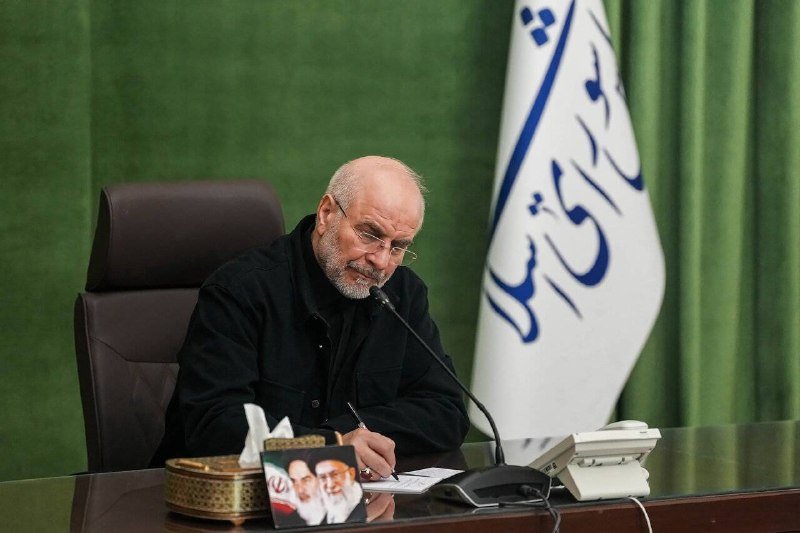
On 1 July 2026, at 13:51 UTC, Iran's official Tasnim News Agency published a written declaration from Supreme Leader Mojtaba Khamenei that could have been cut and pasted from any one of a dozen previous statements issued over the past three decades. "Supporting the resistance against the Zionist-American enemy is the constant policy of the Islamic Republic of Iran," the office said, framing the doctrine as continuity rather than rupture. Open-source monitors picked up the same language minutes later, and by 14:01 UTC the text was circulating in English on channels tracking Iranian state output. There was nothing in the words themselves that broke new ground. That is precisely the story.
Monexus has watched a steady drumbeat of these declarations for years, and a pattern is now impossible to ignore: the rhetoric is frozen, the calendar is not. What changes around the speeches — the assassinations, the Gaza toll, the diplomatic choreography with Washington — moves in cycles the speeches themselves never acknowledge. Read literally, each new statement is an escalation. Read against its predecessors, it is a refrain.
The doctrine, briefly
Iran's posture toward Israel has rested on a tripod since the early 1990s: rhetorical rejection of the state, material support for armed non-state actors arrayed against it, and refusal to recognise the legitimacy of any government in Tel Aviv. The 1995 formulation by Khamenei's father — Ayatollah Ali Khamenei, then Supreme Leader — that Israel would not survive another twenty-five years is the canonical reference point, and it is the one Western analysts tend to invoke whenever a new statement lands.
The text published on 1 July repeats the posture in exactly those terms. It is the line of succession speaking: the son invoking the father's framing, in a year when Israeli strikes on Iranian proxies have killed commanders in Lebanon and Syria, when the Gaza war has produced a civilian casualty count that Western wire services report in the tens of thousands, and when a fresh round of nuclear-file diplomacy sits somewhere on a desk in Geneva. The Supreme Leader's office chose to reissue the script, not revise it.
Why the timing matters — and doesn't
Western media coverage of Iranian declarations tends to follow a familiar sequence. A speech is published; wire copy frames it as a "threat" or a "provocation"; analysts debate whether it foreshadows direct Iranian action against Israel; within forty-eight hours the story has been displaced by the next round of regional violence. The cycle trains readers to treat each statement as an event, when in fact it is the background music.
The 1 July text should be read the other way around: as a deliberate non-event, issued at a moment when any deviation from the script would itself be news. Iran's leadership is signalling to three audiences at once. To its domestic base, the reaffirmation of the resistance line forestalls any perception of doctrinal drift during a year of regional losses. To its proxies, it is a public certificate of continued patronage. To Washington and European capitals negotiating over the nuclear file, it is a reminder that the diplomatic envelope sits inside a much larger ideological envelope — and that the larger one is not negotiable.
The structural frame
The wider pattern this declaration sits inside is the gap between Iranian declaratory policy and Iranian operational policy. The two rarely coincide by accident. When Tehran wants to escalate, it does so through proxies, deniable operations, or accelerated nuclear work — not through speeches. When Tehran wants to de-escalate, it does so through back-channel diplomacy and quiet releases of frozen funds — again, not through speeches. Speeches function as a third register: a ritual of sovereignty, performed for a domestic and allied audience, calibrated to be ignored by anyone who matters operationally.
Western reporting that treats each new restatement as fresh evidence of Iranian aggression is, in this reading, mistaking the liturgy for the policy. The more telling indicators over the past year have been the pace of proxy reconstitution after Israeli decapitation strikes, the technical work at Iranian enrichment facilities, and the willingness of Iranian negotiators to accept or reject specific confidence-building measures in talks mediated by Oman and Qatar. None of those moved on 1 July. The liturgy did.
Stakes, and the limits of this reading
If the script-unchanged reading holds, the practical consequences are modest. Expect another such statement in the autumn, probably around a date of symbolic significance to the Iranian calendar. Expect Western headlines treating it as news again. Expect the underlying operational tempo to be set by events in Gaza, southern Lebanon, and the Strait of Hormuz — not by Tehran's rhetoric desk.
The reading has limits. Iran retains the capacity to translate declaratory policy into operational policy under sufficient pressure or provocation — an Israeli strike on a senior Iranian figure, a collapse of the nuclear-file talks, or a US military action against an Iranian asset. On 1 July, none of those triggers fired. But a doctrine that has survived three decades intact is a doctrine worth taking at face value as a baseline — and worth ignoring, each time, as a leading indicator of imminent action. The repetition is the point. The repetition is also the warning, in a register that is easy to miss precisely because it is so familiar.
Desk note: wire copy on 1 July treated Khamenei's declaration as fresh news; Monexus framed it as continuity, and let the chronology of previous statements do the analytical work.
Wire provenance
This editorial synthesis draws on the following public wire/social posts:
- https://t.me/osintlive
- https://t.me/tasnimnews_en