Bombing Then Bonding: Reading Trump's Iran Pivot Through Its Own Contradictions
On 1 July 2026, Trump's announcement of strikes on three Iranian nuclear sites ran headlong into Ghalibaf's food-stamp counter-punch, exposing a contradiction the wire cycle had packaged as three separate stories.
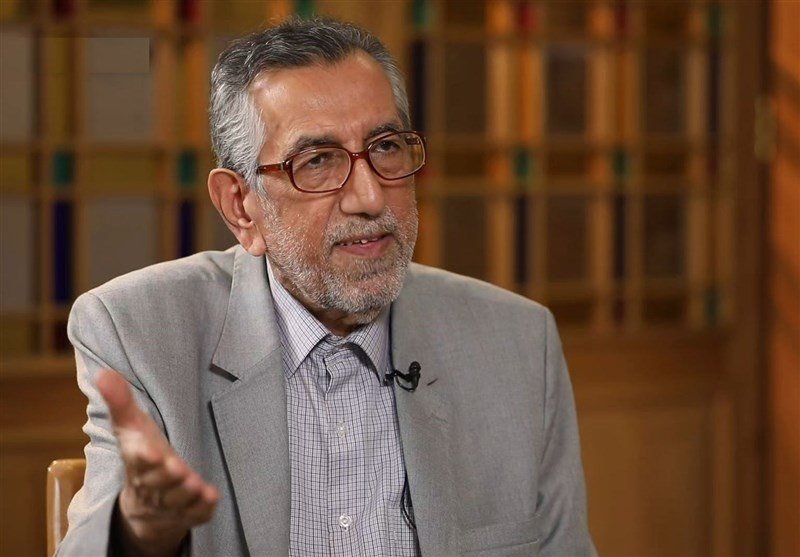
On 1 July 2026, Donald Trump told reporters that the United States had struck three Iranian nuclear facilities the previous weekend, and that a new arrangement with Tehran was already taking shape. Within hours, Iran's parliament speaker, Mohammad Bagher Ghalibaf, fired back with a line aimed squarely at the American president: a country that keeps more than forty million of its own citizens on food stamps, he said, should not be lecturing another nation about hunger.
Two statements, one news event. The wire cycle broke them apart: the strikes in one feed, Ghalibaf's rejoinder in another, the broader diplomatic opening in a third. The substance is a single story about what American coercion looks like when it tries to convert itself into a deal, and what Iranian counter-framing looks like when it tries to absorb the blow without losing the room. Both halves are now on the record, and they sit awkwardly next to each other.
The strikes, as Washington described them
Trump's 1 July account, carried across the wire cycle, framed the operation as a completed fait accompli. Three Iranian nuclear sites had been hit, the US president said, and the rationale ran through a familiar Trump-era logic: maximum pressure had produced the conditions for diplomacy, diplomacy required a demonstration that the pressure was real, and the demonstration was now in the rear-view mirror. The framing mattered less than the cadence. The announcement was built for a domestic audience that had been told, repeatedly, that a nuclear-armed Iran was unacceptable and that the previous administration had paid for the privilege of pretending otherwise.
What the announcement did not do was specify terms. There was no published text of any new arrangement, no named interlocutor beyond the president himself, and no timeline for the kind of verification regime that previous arms-control episodes, including the Iran nuclear deal that Trump withdrew from in his first term, had treated as table stakes. The story was the strike; the diplomacy was atmosphere.
Ghalibaf's counter, on its own terms
Ghalibaf's reply, transmitted via Iranian state-linked channels and picked up by Western aggregators, was not a denial. It was a re-framing. The Speaker of Parliament did not dispute that facilities had been hit. He disputed the moral authority of the country that hit them. Forty-something million Americans on food assistance, his line ran, should worry about their own hunger before diagnosing Iran's.
The figure is doing rhetorical work rather than analytical work. SNAP and related programmes routinely enrol close to that share of the US population in any given month; the comparison is deliberately graceless. Ghalibaf's point was not that the US domestic safety net is comparable to Iranian sanctions exposure. His point was that the moral vocabulary Washington uses to justify the strikes collapses the moment it is pointed back at the country doing the pointing. That is a posture, not a negotiating position. It is also the posture of a parliament speaker who understands that his audience is at home as much as it is in Washington.
The diplomatic tableau forming around it
Around these two poles, a third layer of activity is visible. Saudi and other Muslim delegations are arriving in Iran for what Iranian outlets describe as a farewell ceremony for the late Supreme Leader, Ali Khamenei. Iranian state media has framed the gathering in explicitly religious terms: a Quranic verse recited for each delegation, with the Saudi selection carrying an unmistakable political edge. Saudi-Iranian rapprochement is not new; the choreography around it, performed under the shadow of an active US-Iran confrontation, is.
The reading here is not that Tehran has suddenly acquired a coalition. The reading is that regional states are hedging. A US strike on Iranian nuclear infrastructure removes the cover under which the region's quieter de-escalation with Iran had been advancing. Everyone in the Gulf now has to ask whether the next American move will require a position. The funeral procession is the first public occasion on which that question is being answered with cameras present.
The contradiction at the centre
Trump's framing assumes that the strike creates the conditions for a deal. Ghalibaf's framing assumes that the strike forecloses one. Both cannot be right at the same time, and both can be partly right, which is the more uncomfortable reading. A bombing campaign followed by an openness to talk is not the same thing as a bombing campaign followed by a deal. It is a posture in which the coercing party reserves the right to claim victory in either outcome, and the coerced party reserves the right to deny that any outcome has occurred.
The Iran file has lived inside this posture for most of two decades. What 1 July added was the explicit pairing, on a single news day, of the strike narrative and the counter-narrative, with no diplomatic text bridging them. That is the contradiction worth watching. It is not a contradiction that resolves by either side conceding the other's framing. It resolves, if it resolves, by one side running out of either capability or patience before the other does. The capability gap is well known. The patience gap is what the next few weeks will actually test.
What to watch next
Three indicators will tell readers whether the deal-shaped aperture Trump described on 1 July is real or atmospheric. First, whether any written framework emerges, with a named Iranian signatory and a verification mechanism attached. Second, whether the funeral-period regional choreography produces concrete bilateral movement or only symbolic verse selections. Third, whether the next round of sanctions and counter-strikes, in the long tail that always follows an operation of this size, slows or accelerates. None of these are the kind of indicators that resolve inside a news cycle. They are the kind that quietly settle the question of whether 1 July 2026 is remembered as the day the file turned, or as the day the file was re-frozen under a thinner layer of diplomatic language.
How Monexus framed this vs the wire: the wire cycle broke the strikes, the rejoinder, and the regional diplomacy as three discrete stories. Monexus treats them as one news event, on the view that the contradiction between Trump's deal-shaped language and Ghalibaf's re-framed denial is the actual story.
Sources
- http://reut.rs/4xUZ30d, Reuters wire, 1 July 2026
- https://t.me/ClashReport, Clash Report aggregator, July 2026
- https://t.me/insiderpaper, Insider Paper aggregator, July 2026
- https://t.me/presstv, Press TV (Iranian state media), 3 July 2026, on Ghalibaf's food-stamps remark
- https://t.me/tasnimnews_en, Tasnim News (Iranian state-linked), 3 July 2026, on the farewell ceremony and Quranic verse selections
- https://t.me/ClashReport, Clash Report aggregator, July 2026
- https://t.me/ClashReport, Clash Report aggregator, July 2026