The president, the portfolio, and the press conference: Trump's market remarks meet a $250m Micron pledge
On 1 July 2026 the president told reporters he is profiting from a market he is also steering. Hours earlier his team was touting a Micron commitment to a flagship savings scheme. The two threads belong in the same story.
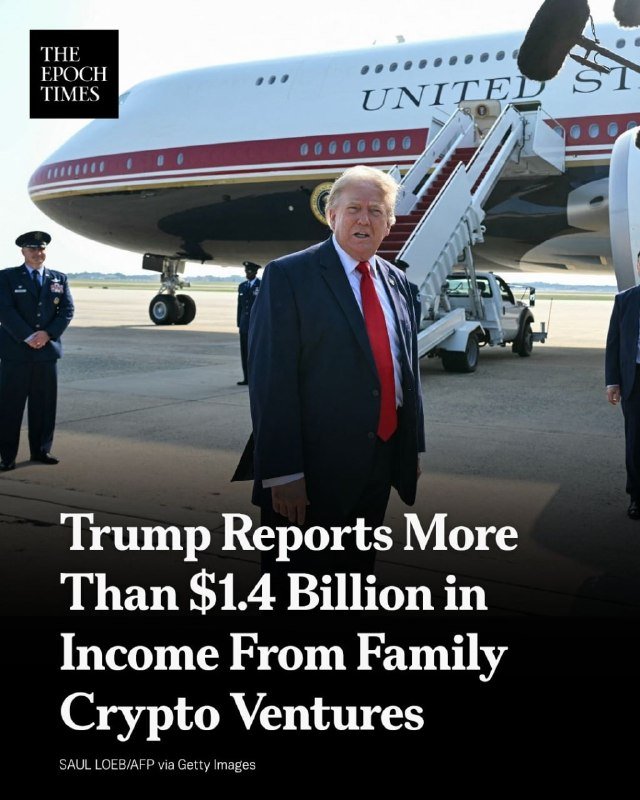
At 14:17 UTC on 1 July 2026, the President of the United States told a press pool that he is benefiting from stock-market gains. At 14:37 UTC he clarified that independent managers handle his investments. At 14:57 UTC he added, plainly, that he is profiting because the market is going up. By 16:32 UTC, the same afternoon, his team was celebrating what it called a "historic" $250 million Micron commitment to Trump Accounts, the administration's flagship children-and-young-workers savings programme. The sequence is the story.
The two strands — a sitting president openly acknowledging personal market gains while in office, and a corporate announcement made to a programme bearing his name — sit on the same shelf. Neither is, on its own, a scandal. Taken together they raise a question every modern White House has had to answer: where does the presidency end and the family balance sheet begin, and who is responsible for telling the public where the line sits.
What the President actually said
The remarks came in three short bursts, captured by the wire accounts that monitor the pool. The first line was the candid one: the President is benefiting from a rising market. The second was the prophylactic one — independent funds, blind trusts in spirit, professional managers at the tiller. The third was, again, the candid one: he is profiting. None of the three statements is a revelation in isolation. Presidents from both parties have held diversified equity exposure. The novelty is the willingness to say so, on camera, in those words, while still in office.
Independent management is a real legal architecture, but it is not a wall. Money managers operating under a trust still allocate to indices, sectors, and instruments that respond to executive-branch decisions on tariffs, antitrust, permitting, and industrial policy. The disclosure regime tells the public the President holds certain assets; it does not neutralise the political economy of those assets. Saying "I am profiting" and "it is independently managed" in the same breath, on the same day, is a posture — not a contradiction, exactly, but a posture the press has historically not had to cover in quite this form.
Micron, $250 million, and a programme that bears a name
Hours after the market remarks, the administration announced that Micron would commit $250 million to Trump Accounts. The framing from the White House was celebratory: "historic," tied to a vehicle designed to give American children a savings foothold. The dollar figure is real; the announcement is real. What is worth noting is the architecture of the moment. A named company, a named programme, and a President's name in the same sentence create a halo effect that disclosure law is not built to measure.
The conflict-of-interest machinery that has governed modern presidencies — divestment, blind trusts, recusals, ethics pledges — was designed for a slower news cycle and a clearer separation between governing and brand. A programme that takes a President's name, and a press conference in which that same President volunteers that he is personally profiting from market conditions he helps set, sit awkwardly inside that older machinery. The law has not caught up; the press conference has.
The other emergency in the room
A day earlier, on 30 June 2026 at 20:08 UTC, the administration declared a power emergency for the nation's largest grid ahead of an extreme heat wave. Energy policy is itself a market mover. Permitting, transmission build-out, and emergency dispatch orders are all factors in utility valuations, in independent power producers, and in the cost-of-capital calculations that feed the same indices the President says he is benefiting from. The grid emergency is a real public-safety action; it is also, unavoidably, an input into the market the President is watching.
This is not a claim of wrongdoing. It is a claim about optics, and optics matter when the executive branch is asking the public to accept that personal gain and public duty are fully separated by a stack of fund prospectuses. The press has an interest in saying so plainly.
What the press has not yet done
The wire accounts reported the President's remarks as discrete lines. Few have stitched them into a single narrative that also includes the Micron announcement and the grid emergency as inputs to the same market the President is personally exposed to. The stitching is this publication's job. The President's lawyers will say the trusts do their work. The President's critics will say the trusts do not. Both can be partly right; the public is entitled to the question being asked at full volume, with all the relevant facts on the same page.
The nuance the reporting has not yet absorbed: the President's own statements, taken at face value, do not concede a legal conflict. They concede a political one. The law treats the President as a single natural person with disclosure obligations; the Constitution treats the office as a public trust. The distance between those two framings is the space this story lives in. It is not, by itself, a constitutional crisis. It is a transparency problem, and transparency problems have a way of compounding when the press is too polite to name them.
This article sits at the intersection of market reporting and White House coverage. The wire services carried the President's remarks as discrete lines and the Micron commitment as a separate business item. Monexus reads them as one story about the distance between disclosure and independence, and about what the press owes readers when the executive branch volunteers the connection itself.
Wire provenance
This editorial synthesis draws on the following public wire/social posts:
- https://t.me/s/insiderpaper