Declassify whatever you want: Trump's order to Pulte turns the 2020 file into raw political fuel
A standing instruction to "declassify whatever you want" handed to a partisan intelligence chief is not transparency. It is the conversion of classification authority into campaign material.
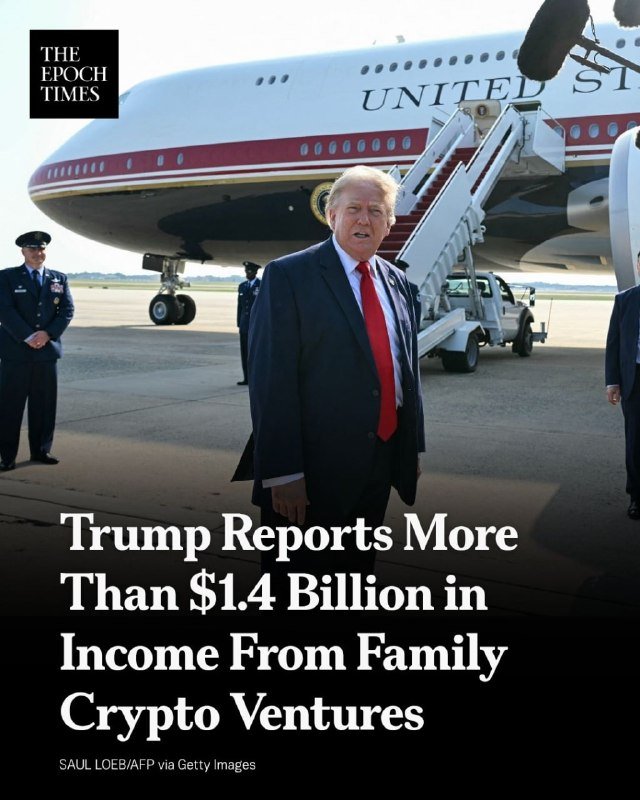
On 1 July 2026, Donald Trump used a public appearance to confirm what had been rumoured in Washington for the better part of a week. He told reporters he had instructed the acting director of national intelligence, Bill Pulte, to "declassify whatever you want," with the immediate target being documents tied to the 2020 election. The remark, carried across cable and social media within minutes, was not a leak. It was a boast.
The substance of the order matters less than the architecture around it. A sitting president has now publicly authorised a political appointee — Pulte was installed in an acting capacity at the intelligence community's coordinating office — to release material from the most contested episode in modern American politics, on the president's own instruction, with no judicial or congressional gatekeeping described. This is not transparency in the conventional sense. It is the conversion of classification authority into campaign inventory.
What was actually said
The trigger was a 14:30 UTC appearance on 1 July in which Trump disclosed, in his own words, that he had told Pulte to "declassify whatever you want." Roughly four hours later, at 19:03 UTC, the same news cycle carried an unrelated dispatch from Havana — a senior Cuban official publicly warning the US president against "underestimating the Communist government's resolve." That second story is irrelevant to the substantive question of what Trump just authorised, but it is worth flagging because it reveals the tempo of the day: the White House is running multiple pressure tracks at once, against multiple adversaries, real and rhetorical.
The 15:53 UTC report framed the order more narrowly — Trump has, according to that account, directed Pulte to declassify documents specifically tied to the 2020 election. Read together, the three items describe a two-stage disclosure: a sweeping, almost open-ended standing instruction, followed by a more specific application to a known political target.
Why Pulte is the story
The intelligence community exists, institutionally, to serve the presidency while insulating analysis from political direction. The acting-DNI role is the connective tissue between raw collection and the president's daily brief. Putting a partisan-aligned actor in that chair — and then publicly tasking him with a politically charged release — collapses the insulation the role was designed to provide. Even supporters of broader declassification argue that release decisions should be governed by inter-agency review, with a record of what is withheld and why. The framing on offer here is the opposite: a presidential green light to an individual, with no described process.
The countervailing case is straightforward. The executive branch does hold original classification authority, and presidents of both parties have used it selectively. The 2020 file has been the subject of years of partisan combat; some Americans will read a release, whatever its contents, as overdue accountability. That reading deserves its space. It does not, however, answer the harder question of who reviews what is held back, and on what standard.
The structural pattern
What we are watching is the steady migration of administrative tools into direct political use. The intelligence apparatus, the justice department, the regulatory state — each in turn has been asked to perform functions that double as campaign messaging. The 2020 election file is, in that sense, simply the next item on a list. The release of material on the president's instruction, to a politically sympathetic audience, in an election year, is a pattern with prior instances. The question is not whether it is legal — classification authority is broad — but whether the institutional culture of the intelligence community can absorb the precedent without eroding the working assumption that analytical work is separable from political work.
That assumption is older than the modern intelligence apparatus and more fragile than it looks. Once it cracks, the rebuild takes decades. There is no evidence in the public reporting that the order on 1 July included any internal-review trigger or any independent oversight step.
Stakes and what to watch next
Three things follow over the short horizon. First, the actual release. Pulte has been given the latitude; the political pressure to deliver will be intense. Second, the response from career intelligence officials, who will either signal quiet acquiescence or, less likely, push back through normal channels. Third, the legal exposure around any material that touches ongoing matters, including federal investigations, where declassification does not automatically waive downstream prosecution issues. The sources do not specify which documents are queued for release, which agencies were consulted, or whether Congress has been briefed in advance. That absence is itself part of the story — a release of this sensitivity is normally preceded by some procedural footprint, and there is no public one.
The honest reading is that this is less about the 2020 election than about the precedent. A standing instruction to "declassify whatever you want" is not a transparency policy. It is the surrender of a boundary.
Desk note: Monexus framed this around the institutional question — what the order does to the intelligence community's working norms — rather than the contents of the 2020 file itself. The file's substance is contested; the authority being exercised is not.
Wire provenance
This editorial synthesis draws on the following public wire/social posts:
- https://t.me/polymarket/2031
- https://t.me/polymarket/2029
- https://t.me/polymarket/2028