A borrowed throne: Trump's Air Force One stunt and the normalization of foreign gifts
The president boarded a Qatari-donated Boeing 747-8 on 1 July 2026 for a domestic trip to North Dakota, treating a constitutional anomaly as a tailhook-and-flyby photo-op.
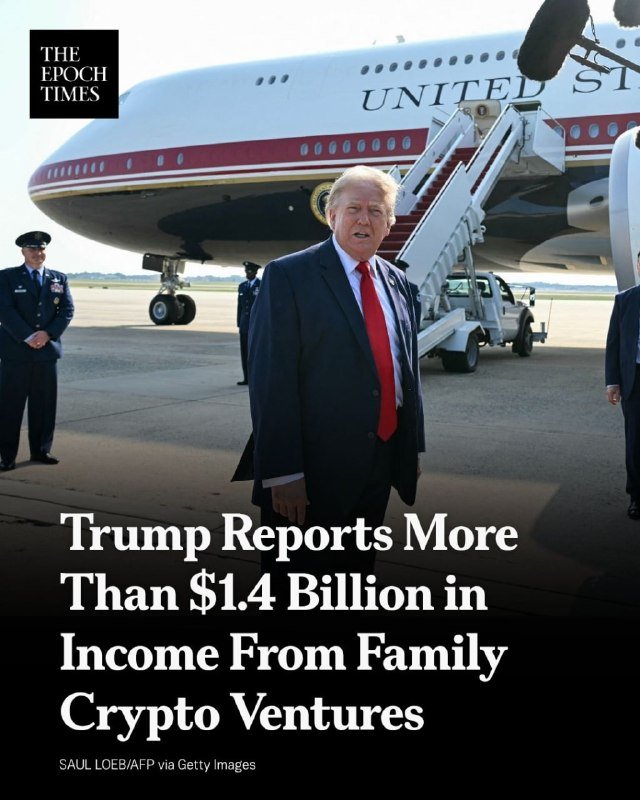
At roughly 16:15 UTC on 1 July 2026, Donald Trump boarded a Boeing 747-8 widebody on the tarmac at Joint Base Andrews and used it for what the White House styled as the inaugural flight of a new Air Force One. The aircraft was not American-owned, and it was not the long-promised VC-25B. It was a widebody donated by the State of Qatar, accepted as a presidential transport while still technically registered abroad.
The trip was scheduled for North Dakota. The politics are domestic. The plane, and what its presence says about how the American presidency is allowed to receive things, is the story.
A palace guard in a borrowed uniform
Presidential aviation has its own mythology for a reason. Air Force One is not a tail number; it is the call sign that activates when the sitting president is aboard any U.S. Air Force aircraft. The mystique is not branding. It is the operational guarantee that the aircraft, its crew, its communications suite, and its defensive countermeasures are under American command and meet American specifications for continuity of government.
What rolled up to the Andrews ramp on 1 July is a 747-8i that, by the admission of the Telegram channels that have tracked its arrival, was only recently airlifted into the United States and is described in the same reporting as "the modified Qatari 747." Until refit, defensive hardening, and presidential communications integration are complete and certified, the aircraft is a passenger jet that happens to carry the president. Calling it Air Force One in a domestic press moment may be the marketing language of an administration that prefers image to process.
The emoluments problem, updated
The U.S. Constitution's Foreign Emoluments Clause is short and almost never litigated. It prohibits any federal officeholder from accepting, without congressional consent, "any present, Emolument, Office, or Title, of any kind whatever, from any King, Prince, or foreign State." A $400 million Boeing 747 from the government of Qatar, used as the official aircraft of the President of the United States, falls comfortably inside the plain text of that prohibition. Whether the Clause is enforceable, and through what mechanism, has been the subject of academic and political argument since at least 2017, when the first Trump-emoluments suits were filed.
What is new is not the legality. It is the casualness. A previous generation of presidents treated foreign gifts to the office as embarrassments to be catalogued, displayed in a presidential library, or quietly declined. This administration has chosen to fly the gift, brand it American, and let the constitutional complaint land somewhere in the slow queue.
Soft power, in the literal sense
There is a counter-reading worth steel-manning. A small petro-state such as Qatar does not produce a presidential 747-8 from domestic industrial capacity. Boeing built it. American workers assembled the airframe, the engines, the avionics, the cabin. The aircraft's actual service to U.S. taxpayers, on this telling, begins the moment it lands. The donation is, in part, an indirect offset to an American export contract Doha placed years ago. In that frame, the Qatari "gift" is closer to a marketing concession than a coronation.
Even so, marketing concessions between governments are usually run through procurement, with disclosure, with conditions, and with congressional notification. None of those normal channels appear in the public record around this aircraft. What we have instead is a televised handover and an early-morning departure.
What the two Telegram wires actually say
The two source wires describe the same event with different emphasis. The OANNTV thread published at 16:15 UTC frames the sortie as a milestone: the "inaugural flight as Air Force One" of a Qatari-donated jet, with the president boarding "Wednesday morning" for North Dakota. The wfwitness thread published about an hour earlier, at 15:10 UTC, treats the same aircraft as the "VC-25B Bridge" — an interim platform meant to fly alongside the ageing VC-25A and the C-32 fleet while final flight tests proceed on the replacement programme.
That tension is the story. One frame is ceremonial; the other is logistical. Both can be true. Neither resolves the underlying question of who owns the aircraft during its service life, what happens to it after, and what precedent the gift sets for the next administration, the next donor, and the next foreign leader who decides that the most efficient way into the White House is via a widebody.
Stakes and a quieter worry
The headline question is whether the plane is constitutionally clean. The quieter worry is precedent. Once a foreign state has successfully placed an aircraft at the centre of the U.S. presidential transport stack, the door is open for the next gift from the next capital with the next interest. The cost of saying no to a free 747 turns out, in the long run, to be much lower than the cost of explaining, in five or ten years, why the U.S. flag is painted on the side of a fuselage that was ordered, financed, and delivered by a foreign government.
The sources do not specify which U.S. agencies have signed off on the transfer, what the post-presidency disposition of the airframe will be, or whether congressional leadership has been formally notified. Until those gaps are filled, "Air Force One" is the label on the nose and a question mark over the tail.
How Monexus framed this vs the wire: the wires led with the photo op; this piece treats the photo op as evidence and asks what it photographs.
Wire provenance
This editorial synthesis draws on the following public wire/social posts:
- https://t.me/OANNTV/
- https://t.me/wfwitness/