The trucks no one films: how Ukraine's long-range drone campaign is rewriting the logistics war
While the wire leads on city names and casualty counts, the open-source record of July 2026 shows a quieter, more methodical campaign: Ukrainian FPV and long-range drones systematically burning Russian fuel trucks and logistics convoys along the M4 and Mariupol–Donetsk highway, rewriting the economi
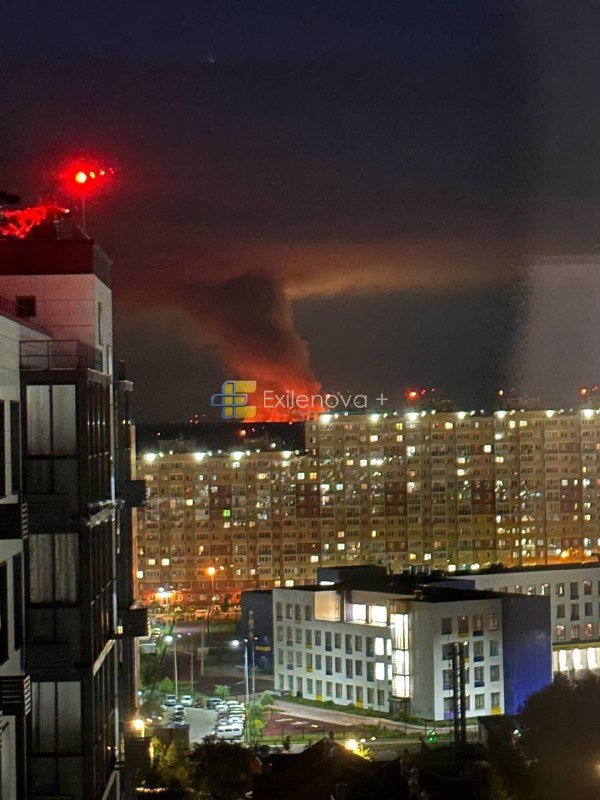
At 9:39pm Kyiv time on 3 July 2026, Andriy Tsaplienko's channel posted footage of a Russian drone strike on Sumy: three of six incoming aircraft exploded in the city centre, twenty-seven people injured, seven of them children. The Osinttechnical thread carried, the same evening, a compilation of Ukrainian first-person-view (FPV) drones hitting nearly two dozen power substations across Russian-occupied Crimea in a single week, with the peninsula's grid now under daily rolling outages. Both clips went viral within hours. Neither was the story of the day. The story of the day, on the Russian-language milblogger networks and the open-source feeds that translate them, is a quieter, more methodical footage-set: fuel tankers and logistics trucks, burning in convoys along the M4 and the old Mariupol–Donetsk highway, one after another, all week. The trucks are no one's headline. They are the headline.
The campaign that the open-source record now documents is the steady, almost industrial degradation of Russian rear-area logistics by cheap, long-range Ukrainian drones. Bowes Chay's English-language feed noted on the night of 3 July that guided and autonomous strike drones are now being utilised on a huge scale against Russian fuel depots, with the explicit prediction that soon no fuel station across a wide swathe of Ukrainian-held and contested territory will be operating. The Ukrainian commander Mykola Kolesnyk, head of the 422nd Separate Regiment of Unmanned Systems, posted the same evening that a single strike of his own had burned a Russian gas station and, more importantly, harvested the drone's crash-site message traffic: Russian crews switching from Iranian Shahed-136 imports to the locally produced Gerbera decoy in large numbers. A logistics network does not collapse when one truck explodes. It collapses when the next twenty refuse to run.
The wire framing, for once, has been inverted. International coverage this week led on city names and casualty counts: Konstantinovka, announced by Peskov and the Russian Ministry of Defence as fully liberated, with state media distributing drone footage of the city to Putin; Sumy, struck by Russian Gerbers and Shaheds; the Crimean substations, where Ukrainian attack drones have sent the grid into rolling crisis. The trucks appear in the same feeds, often in the same hour, almost always in the background of the more dramatic clip. The Osinttechnical thread and the Rybar, Two Majors and DDGeopolitics digests carry them as a slow drumbeat: fuel trucks burning, logistics convoys ambushed on the M4, fuel stations torched in a string of rear settlements. A reader who only watched the city-level coverage would conclude the war is a war of front-line assaults and air-defence duels. A reader who watched the truck-level footage would conclude the war is, increasingly, a war of supply chains.
What the open-source record shows is not a single dramatic operation but a campaign of cumulative denial. The M4, which runs deep into Russian rear areas from the occupied south, and the Mariupol–Donetsk highway, which feeds the ground lines of communication into the Donbas, are the two arteries whose names recur in the truck-strike compilations. Highway interdiction is not new to warfare; what is new is the cost curve. FPV drones priced in the low four figures of dollars are forcing armoured logistics drivers off roads that would, in earlier wars, have required dedicated hunter-killer units, attack helicopters or guided artillery to threaten. The Russian response, visible in the same feeds, is a counter-campaign of equal method: guided and autonomous drones working over Ukrainian fuel infrastructure in a way that boweschay's feed explicitly analogises to a mirror image. The two campaigns are now eating each other's logistics in real time, and the trucks are the unit of exchange.
The structural shift is easier to read in plain terms than to say in doctrine. Industrial wars run on fuel, ammunition and the trucks that move them. For the first two years of the full-scale invasion, both sides fought a relatively classic artillery-and-manoeuvre war in which logistics targets were hit opportunistically, when an artillery battery or a loitering munition happened to be in range. The open-source record of July 2026 shows something different: both sides have built dedicated drone regiments whose daily产出 is the systematic harassment of the other's fuel and ammunition supply chain. The Molnyia drone, which boweschay's feed noted on 3 July is being deployed in ever increasing numbers and which evades air defences by carrying no remote-control systems at all, is the production-line answer to a tactical problem. Its existence is the proof that rear-area logistics is now a primary battlefield, not a supporting one.
What to watch, in the weeks ahead, is not the next city. It is the price and availability of diesel on both sides of the line, the rate at which truck convoys move by night rather than day, and the frequency with which the open-source feeds substitute fuel-truck footage for front-line footage as their lead item. A war of supply chains does not produce a single decisive battle. It produces a slow, dated, countable accumulation of burning trucks, and a moment, some months from now, in which one side's logistics network is visibly thinner than the other's. The cameras are already there. The footage is already being shot. The question, as ever, is who is counting.