Vance's Iran pitch: leverage worked, talks continue — but the escalation runway is shorter than it looks
The Vice President says US strikes pushed Iran's nuclear program further back than at any point in two decades. Critics hear the same old escalation runway — and ask what comes after the leverage runs out.
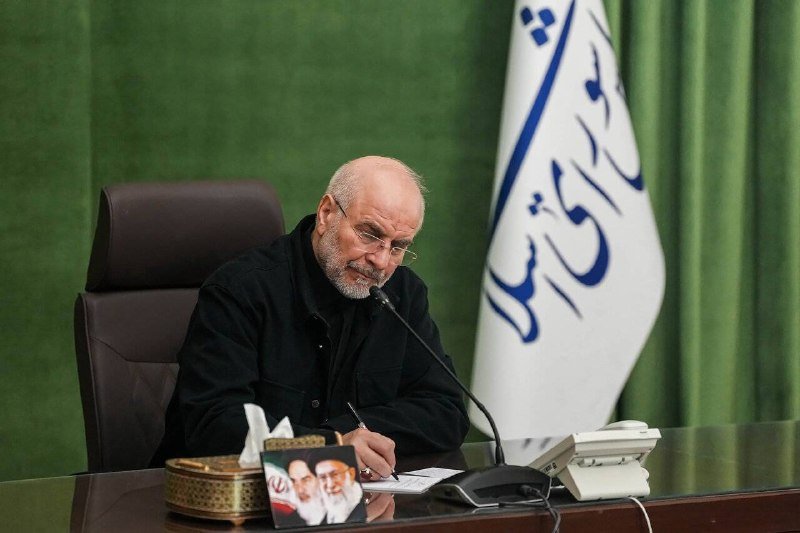
On 1 July 2026, Vice President JD Vance gave the most expansive public read-out yet of the administration's Iran doctrine: a sequence of US strikes on Iranian assets in the days prior, a reopened negotiating track, and an explicit warning that any Iranian move to rebuild a nuclear weapon or threaten regional shipping would be met with further force. The Vice President framed the bombing run as a response to Iranian attacks on commercial vessels and claimed, without elaborating, that the operation had pushed Tehran further from a bomb than at any point in two to three decades.
The Vice President's message is the new operating theory of the US–Iran relationship in this administration: maximum pressure, conducted in concentrated bursts, paired with a door that nominally stays open for talks. The pitch to the American public is that bombing works precisely because it is not endless war. The pitch to Tehran is that the next round arrives faster than the last, and that diplomacy is the available alternative rather than a sign of weakness.
What the Vice President actually said
The remarks, circulated by Telegram channel Clash Report, ran through four pillars. First, the Vice President defended the recent strikes as a direct response to Iranian fire on commercial shipping — "We dropped some bombs a couple of days ago. You know why? Because the Iranians were shooting at commercial ships. We dropped some bombs, we applied some leverage, and we've had free commerce." Second, he claimed the effect was durable, not symbolic: "Iranians are further away from developing a nuclear bomb than they have ever been since basically the last 20-30 years." Third, he cast engagement as a posture of strength rather than accommodation: "Why do we engage in negotiation? It's not out of weakness, but it's out of strength." Fourth, he left the escalation runway wide open: "If the Iranians try to rebuild the nuclear program, the President's got options. If the Iranians try to threaten their neighbors or fund terrorism, we've got options." The Vice President dismissed critics of the policy as people who "want to keep going and keep going" — a swipe at the more hawkish end of the foreign-policy debate who argue that only regime change or full dismantlement will resolve the file.
The leverage theory — and where it frays
The doctrine on display is what officials in successive administrations have, in private, called "escalation management" rather than containment or rollback: a recurring use of force calibrated to Iranian behaviour, bracketed by talk channels to avoid crossing into a war neither side appears to want at scale. The Vice President is selling two propositions at once — that the strikes have set Iran's program back, and that the diplomatic door is real rather than rhetorical. Each one is contestable on the evidence available.
On the strikes' effect, no independent confirmation has yet surfaced that buried centrifuge halls, hardened fuel-production sites, or known personnel nodes were hit. Israeli outlets and Western wires have reported new bunker-buster usage against Fordo-adjacent infrastructure in prior rounds, but the specific claim that Iran is "further away from developing a nuclear bomb than … the last 20-30 years" is unusually strong and relies on intelligence assessments that have not been declassified. On the diplomatic door, prior cycles of bombing-then-talking under this administration have produced interim understandings but no published framework on enrichment limits, inspection access, or ballistic-missile constraints — the three baskets that have historically defined a deal.
What the critics on the right and left are warning
The hawks being implicitly rebuked in the Vice President's remarks — and the doves being lectured — converge on one structural complaint: the administration has not stated what the off-ramp looks like if Iran does rebuild. The right-leaning critique is that periodic strikes without an ultimatum invite reconstitution; the left-leaning critique is that "the President's got options" is the language of an authorisation that has not been asked of Congress. Both critiques can be true at once. A policy that is neither maximum pressure in the Republican-study sense nor restraint in the diplomatic-restraint sense tends to drift, and drift is what produced the pre-2025 cycle of escalation, near-war, de-escalation and reconstitution.
Stakes — what the next ninety days decide
The narrow stakes are commercial. The Vice President cited "free commerce" in the wake of the strikes; restoring sustained freedom of navigation through the Strait of Hormuz is the testable claim, and insurance and freight rates in the coming weeks will be the market's verdict. The medium stakes are technical: whether Iran uses the negotiating window to external-site centrifuge work, freeze it, or simply slow it down while preserving the option. The larger stakes are about the architecture of non-proliferation itself — whether the United States has settled into a pattern of managing the Iranian program as a recurrent crisis rather than resolving it, and whether the Gulf states, Turkey, and Egypt adjust their own civilian nuclear timelines in response. This publication finds that the case for the policy rests almost entirely on the next quarter's intelligence picture. If the "further back than twenty years" claim survives independent review, the leverage theory has its first real evidence; if it does not, the Vice President has sold the country a strategy whose central premise cannot be checked.
Sources
- Telegram thread: Clash Report, "JD Vance on Iran — strike rationale, leverage, options," 1 July 2026 (timestamps 15:51 / 15:53 / 15:57 / 16:03 UTC).
Desk note
How Monexus framed this vs the wire: the Western wire line on the Vice President's Iran comments is split between those who treat the remarks as a coherent doctrine and those who read them as campaign-trail reframing of an unsettled policy. We treat neither framing as settled, foreground the explicit quotes rather than paraphrase them, and flag that the central empirical claim — that Iran is further from a bomb than in two decades — has not been independently corroborated.
Wire provenance
This editorial synthesis draws on the following public wire/social posts:
- https://t.me/ClashReport